TL;DR
Beco, a small sustainable homecare brand, ran a campaign called #WarOnWhatsHidden that does something most brands are terrified to do: it names Hindustan Unilever's Surf Excel and Vim directly, and calls out "hidden" chemicals it says its own products skip. Bold on its own. Then the billboards allegedly started coming down, and co-founder Aditya Ruia went to LinkedIn and reframed the whole thing: a giant using its budget to silence a small brand's right to inform people. That single move flipped a comparative ad into a consumer cause, and the buzz and support that followed weren't luck. Beco picked a fight it was built to win, on a value nobody argues against, wrapped in a story everyone roots for. Here's the anatomy.
The Campaign
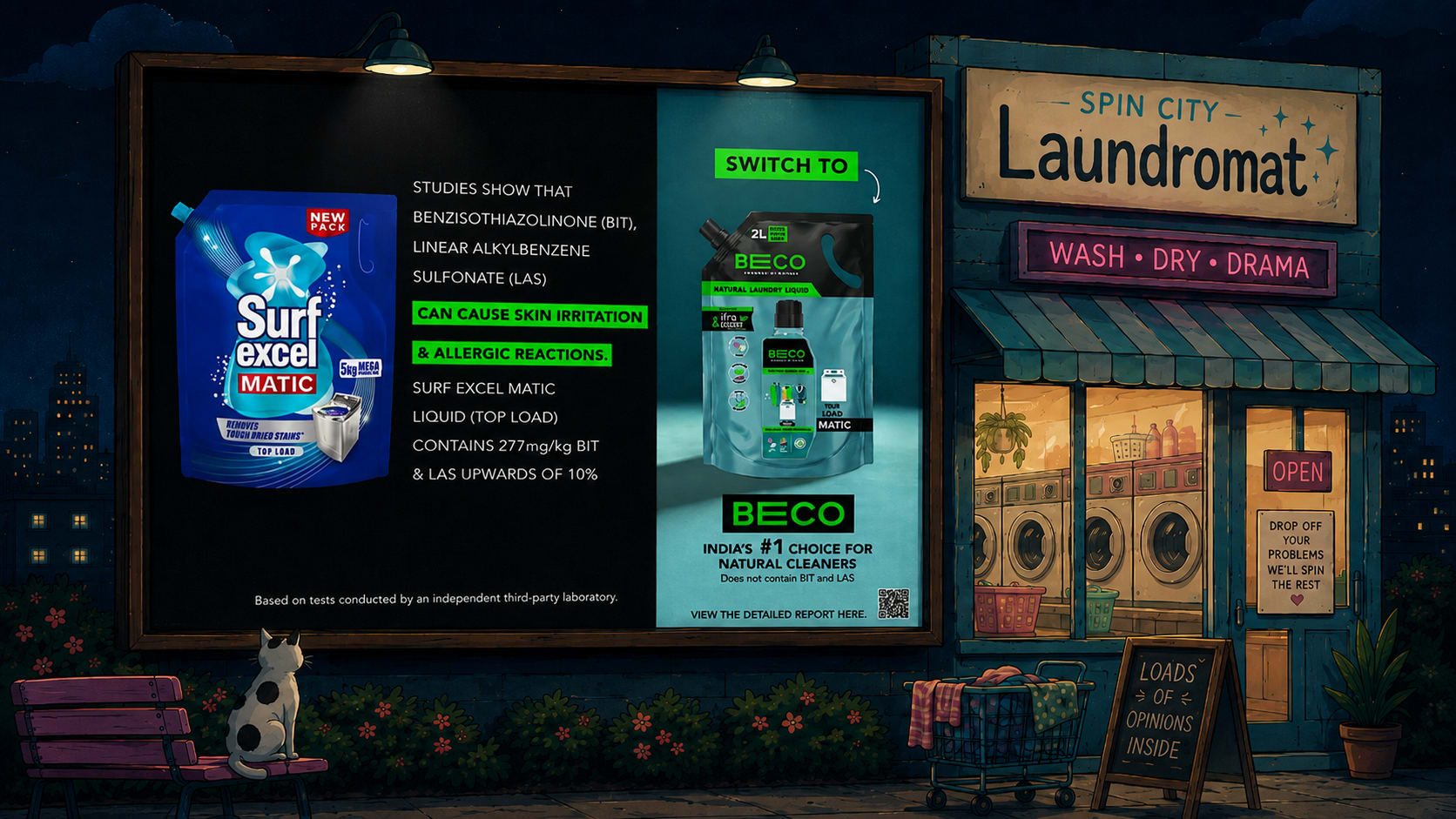
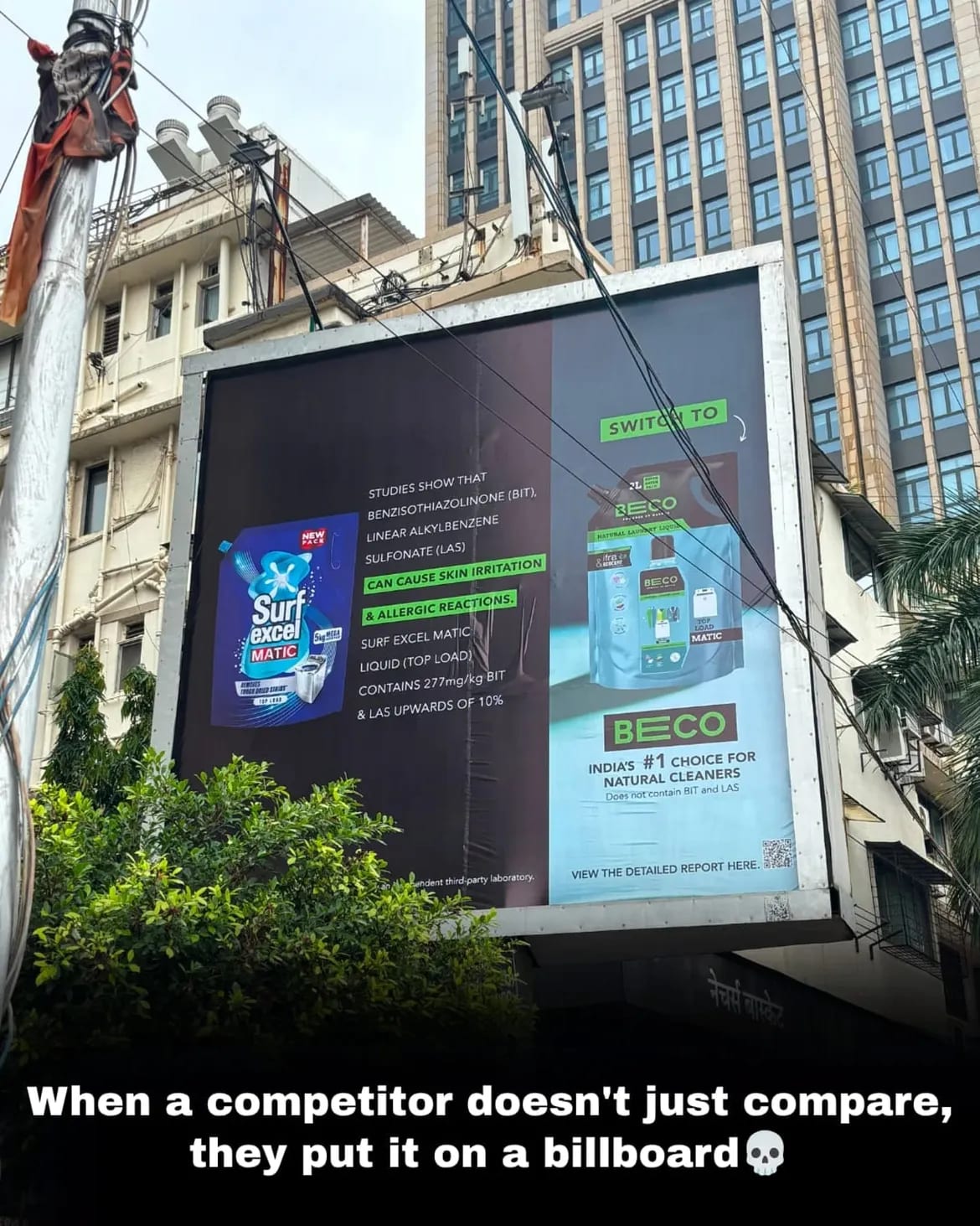
Here's the setup. Beco, an eight-year-old D2C brand, launched #WarOnWhatsHidden, created by the independent agency Colloquial, with two films that don't play coy about who they're aiming at.
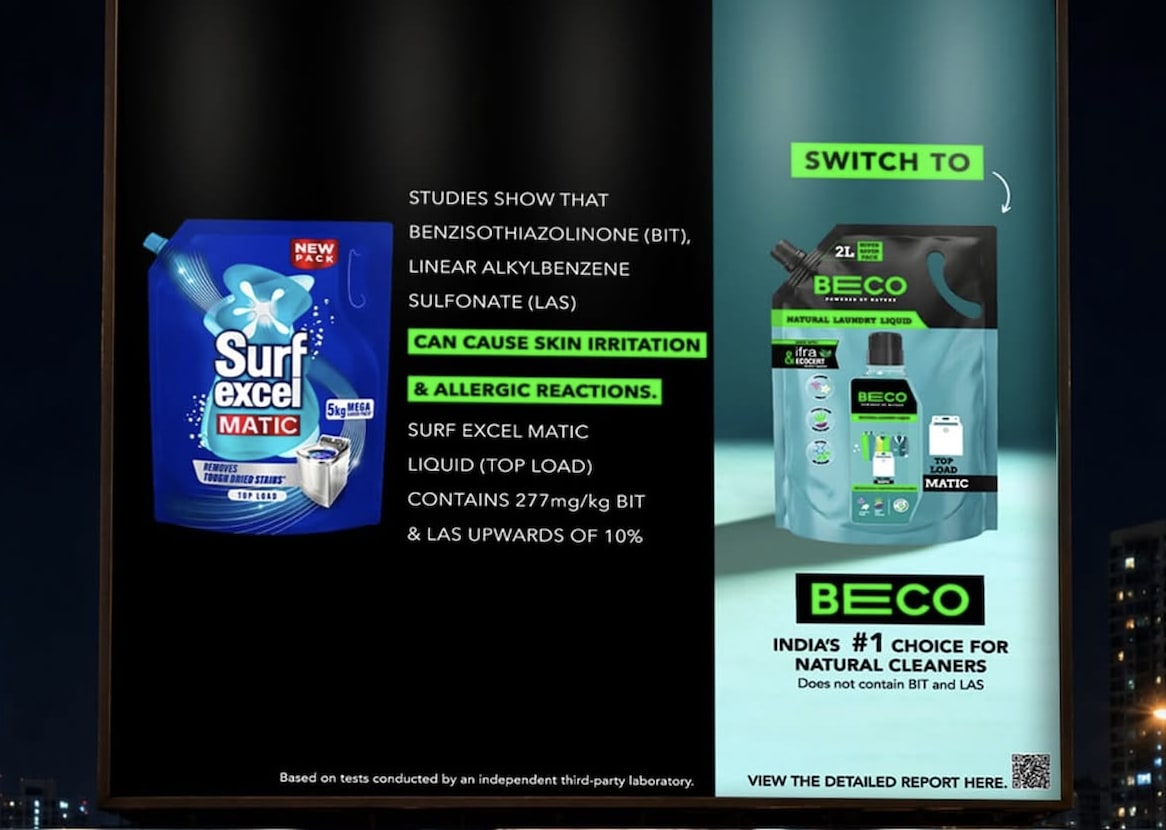
The what: instead of the usual "cleans better" pitch, Beco goes after ingredients. It names Surf Excel Matic Liquid and Vim Dishwash Gel and points to two chemicals, BIT and LAS, that it says independent NABL-accredited lab testing found in those products, citing published material linking them to skin and eye irritation. Beco then shows its own range as formulated without them.
The why: the strategic insight is that we now scrutinize what's in our food and our skincare, but almost never what's in the stuff we clean our homes with. Beco is trying to drag homecare into that same transparency conversation, and to make itself the obvious answer once you start asking.
And it's not subtle about the ask. The films close on a blunt line: what's in Surf Excel and Vim isn't in Beco, so switch to Beco. The agency's own description gives away the play: they called it a David-versus-Goliath brand war, and said they made sure their David came with sass without being crass.
The Response
This is where it stops being a campaign and becomes a story.
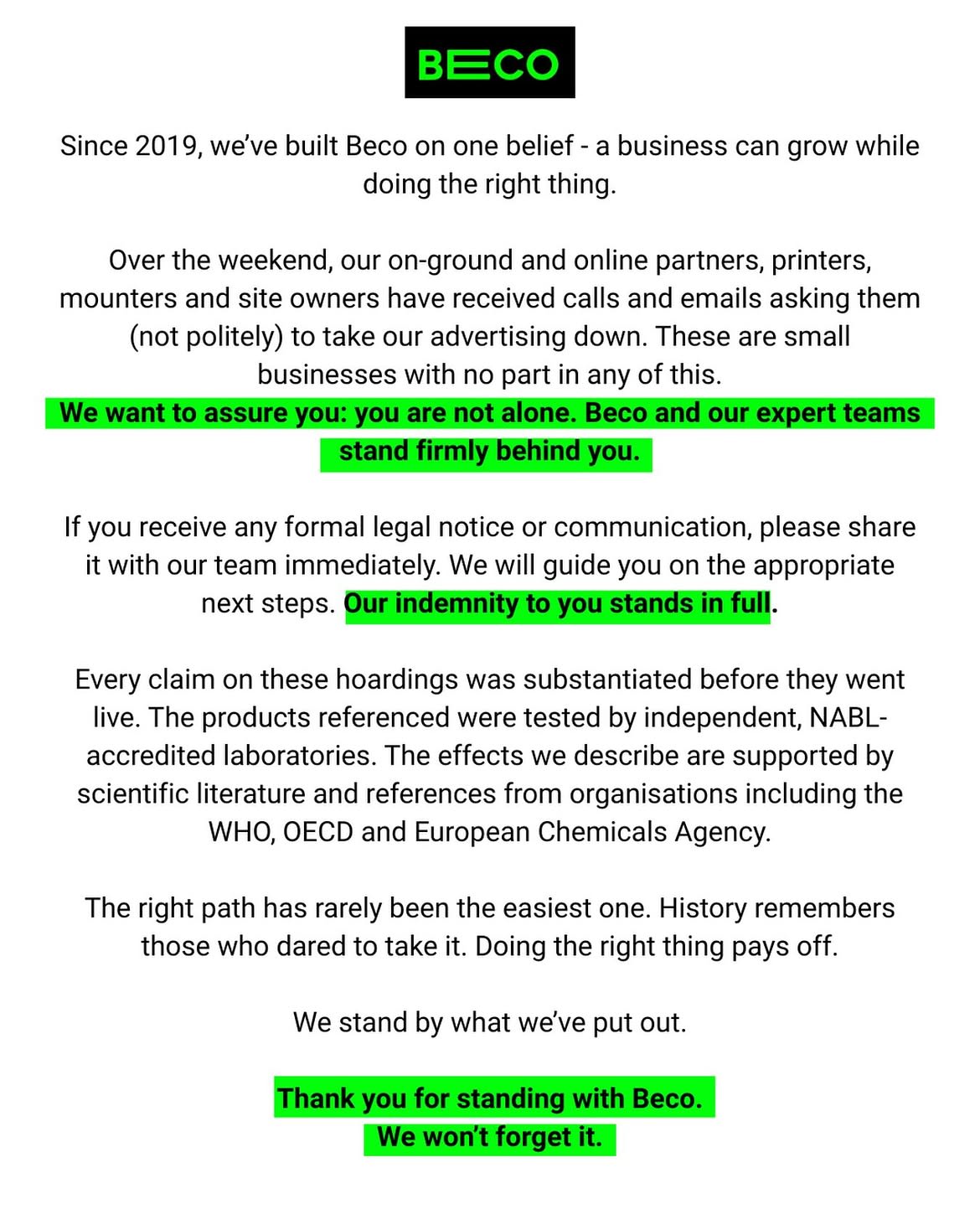
Within days, Ruia said on LinkedIn that Beco's hoardings had started coming down, and crucially, not because of a court order or a regulator. He alleged that Beco's outdoor, OTT and digital partners were being pressured by a much larger advertiser with far greater commercial weight. He didn't name them. He didn't have to, since the campaign targets two HUL brands. He said he spent the night convincing vendors to keep the boards up, offered those partners full indemnity, and framed the whole thing around one idea: the company with the biggest ad budget shouldn't get to decide what consumers are allowed to see.
That reframe is the masterstroke, and you can feel why it worked emotionally. A comparative detergent ad is a marketing story that most people scroll past. A small brand being quietly muscled off billboards by a giant is an injustice, and injustice is shareable. It converts a passive viewer into a partisan. Suddenly buying Beco, or even just posting about it, isn't shopping, it's taking a side.
So the sympathy tilted hard toward the underdog. The buzz stopped being about detergent chemistry and became about fairness, free speech, and rooting for the little guy, which is a far bigger and more emotional audience than "people who read ingredient labels." Note the important caveat: this is largely Beco's account of events, and HUL hasn't publicly litigated it in the press. But in narrative terms, that almost doesn't matter. Beco got to be the brave small brand telling a truth the giant didn't want told, and that's a role people instinctively defend.
The Mechanics
Strip it back and Beco ran a near-perfect challenger playbook, in two moves.
Move one: change the axis. You cannot out-spend HUL on "cleans better," so don't compete there. Beco shifted the battlefield to "what's hidden inside," a dimension where a toxin-free brand wins by definition and the incumbent's scale becomes irrelevant. Naming Surf Excel and Vim wasn't reckless, it was efficient: it borrows the giants' enormous familiarity and makes the fight instantly newsworthy. You get the incumbent's salience for free.
Move two: turn the friction into the fuel. The billboards coming down could have been a defeat. Instead, Beco made the takedown the headline. This is the judo move of challenger marketing: when the giant pushes back, you don't absorb the blow, you point at it. The pushback became the proof of the very point Beco was making about power and hidden information.
Why It's Working
Because Beco picked a fight it was designed to win on two fronts at once.
The value is unarguable. Nobody publicly defends the position "you shouldn't know what's in your products." Transparency is a one-sided value, so the incumbent can't openly fight the premise, only the specifics.
And the story is irresistible. David versus Goliath is possibly the most reliably rootable narrative there is, and Beco cast itself in the role perfectly, then handed the audience a reason to care beyond soap: your right to know, and your dislike of being pushed around. When your customers feel like allies in a cause, they become your media, and earned support is worth more than any budget the giant can bring.
The Risk
A fair breakdown has to name what could sink this, because the same boldness that's winning attention carries two real hazards.
The first is the science. BIT and LAS are common, regulated surfactants and preservatives, and "contains X% LAS" is not, by itself, a danger, because the dose and the rinse matter. Naming hard-to-pronounce chemicals to imply harm is the "clean" and "toxin-free" fear-marketing playbook imported from beauty into homecare, which sits a little awkwardly with Beco's stated goal of replacing fear with information. If experts push back on the framing, "transparency crusader" can flip to "chemophobia opportunist" fast.
The second is legal. Comparative advertising that names rivals has a fraught history in India: Sebamed's campaign against HUL's Dove, Lux and Pears ended up in the Bombay High Court, and HUL's own Rin-versus-Tide fight went legal in 2010. Beco clearly saw it coming and armored up with NABL testing, external counsel, ASCI and CCPA vetting, and QR codes linking to its evidence. Whether that holds up is the open question the whole industry is now watching.
Tips to Steal From This Campaign
Don't fight the giant where it's strong. Change the axis of competition to a dimension you win by definition, and its scale stops mattering.
Name the leader on purpose. Comparative callouts borrow the incumbent's salience and make your fight newsworthy, if you can back the claims.
Pick a fight on an unarguable value. Transparency, fairness, honesty. The incumbent can't publicly oppose the premise, only quibble the details.
Turn pushback into proof. If the giant reacts, don't flinch, point at it. The reaction can become better content than the original ad.
Give people a side, not a product. When customers feel like allies in a cause, they market you for free, and that's the one thing budget can't buy.
Beco's real product this week wasn't detergent. It was a story where supporting a small brand felt like standing up to a bully, and where the giant's every move only made the small brand look braver.
That's the trick worth remembering. You don't beat a giant by being louder.
You beat it by picking a fight it can't be seen to win.
Continue Reading
On X: the contrarian cut, why Beco didn't win with better ads, it picked a fight it couldn't lose, here.
On LinkedIn: the strategy lens, the challenger playbook for out-marketing a giant without outspending it, here.
On Instagram: the "a tiny soap brand just called out a giant by name" version, at
Frequently Asked Questions
What is Beco's #WarOnWhatsHidden campaign?+
It's a comparative campaign by the homecare brand Beco that names HUL's Surf Excel and Vim and questions the chemicals in them, positioning Beco's own products as formulated without those ingredients. The goal is to push ingredient transparency in household cleaning products.
Which brands did Beco name, and what did it claim?+
Surf Excel Matic Liquid (Top Load) and Vim Dishwash Gel (Lemon). Beco says independent NABL-accredited lab testing found the chemicals BIT and LAS in them, and cites published material linking those to skin and eye irritation. Beco says its own range is made without BIT and LAS.
Why did Beco's billboards come down?+
According to co-founder Aditya Ruia, the hoardings started being removed not due to any court order or regulator, but because Beco's media partners were allegedly pressured by a larger advertiser he did not name. This is Beco's account, and it became the center of the story.
Are BIT and LAS actually dangerous?+
They're common, regulated ingredients in cleaning products. Published material links them to possible skin or eye irritation in some people, but the concentration and whether a product is rinsed off matter a lot. Critics argue naming such chemicals to imply danger is closer to fear-marketing than neutral information, which is part of the debate around this campaign.
Is naming a competitor like this legal in India?+
Comparative advertising is allowed but heavily contested. Claims about a rival must be truthful, relevant and substantiable, and disputes often end up at bodies like ASCI or in court, as earlier HUL-related cases show. Beco says it vetted the campaign against ASCI and CCPA guidelines and has evidence ready.
Has HUL responded?+
As of now, the loudest account of the billboard removal is Beco's own. Whether HUL responds publicly, legally, or not at all is the open question the industry is watching.
Written by

I’m Ramaa, a writer and creator at Scribble. I’ve written two books, and writing is something I always find my way back to, whether that’s articles, scripts, captions, or overly long notes app rambles I swear will “be useful later.” I enjoy thinking about why people create, how ideas spread online, and what makes content feel genuinely human. When I’m not writing, I look after regulatory compliance and legal admin at Scribble, and I’m a graduate of the School of Policy, New Delhi. Outside of work, I’m a musician and an avid reader.