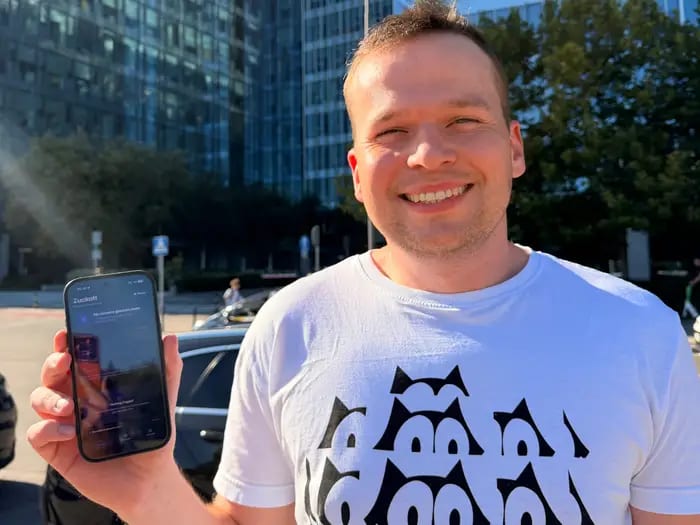
A Polish developer built an app just to detect Meta's smart glasses nearby. Fake safety notices appeared on the London Underground mocking wearers. A browser company sold sunglasses with no camera at all, on purpose. None of this was coordinated. All of it is the same backlash.
TL;DR
Meta's camera-equipped smart glasses have triggered a real, spreading discomfort, and three completely unrelated responses have emerged from it in the space of a few months. Paweł Szydłowski, a 30-year-old Polish developer, built an iPhone app called Zuckoff that detects nearby smart glasses over Bluetooth, after watching videos of people being secretly filmed and doxxed without consent. It hit 5,000 users within a month. Separately, fake Transport for London-style safety notices appeared inside Tube carriages, styled exactly like official signage, mocking smart glasses wearers, the latest stunt from an activist group with a track record of guerrilla anti-tech campaigns. And a month earlier, DuckDuckGo sold sunglasses with no camera, no mic, and no AI at all, marketed entirely on that absence. An indie app, a street art stunt, and a real commercial product, all built on the exact same discomfort, without any of them planning it together.
The Trigger
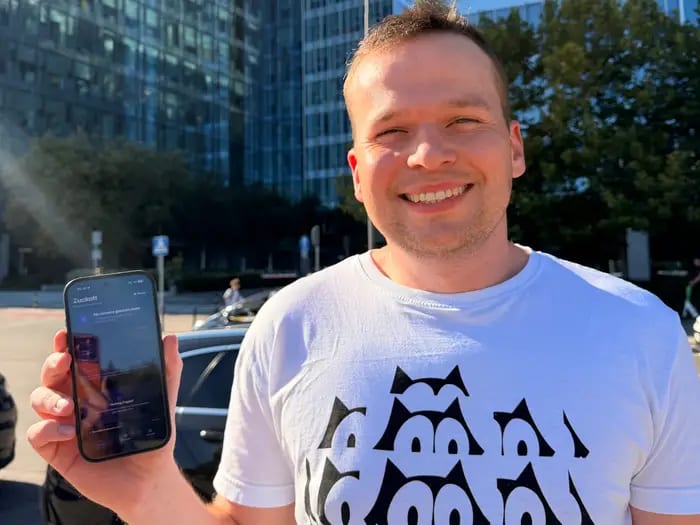
Here's what actually pushed Szydłowski to build Zuckoff. He'd been watching a pattern of viral videos where people wearing smart glasses secretly filmed strangers, often during flirtatious or invasive interactions, then posted the footage without consent. One specific case stuck with him: a 21-year-old shop assistant named Dilara was filmed during a conversation with a man wearing Ray-Ban Meta glasses. The clip hit over a million views on TikTok. Her phone number was visible in the footage. Strangers used it to spam her.
That's the incident Szydłowski points to directly when explaining why he built the app. His reasoning is simple: "We as a society have the right to at least know that someone is recording."
What Zuckoff Actually Does
The app works by scanning for the Bluetooth signals Meta's smart glasses emit, using known device fingerprints, UUIDs, and manufacturing information to identify them and estimate how close they are. It launched on Apple's App Store and gained over 5,000 users within a month, with a paid "Pro" tier that sends background alerts when compatible glasses are nearby, so you don't have to keep the app open to get a warning.
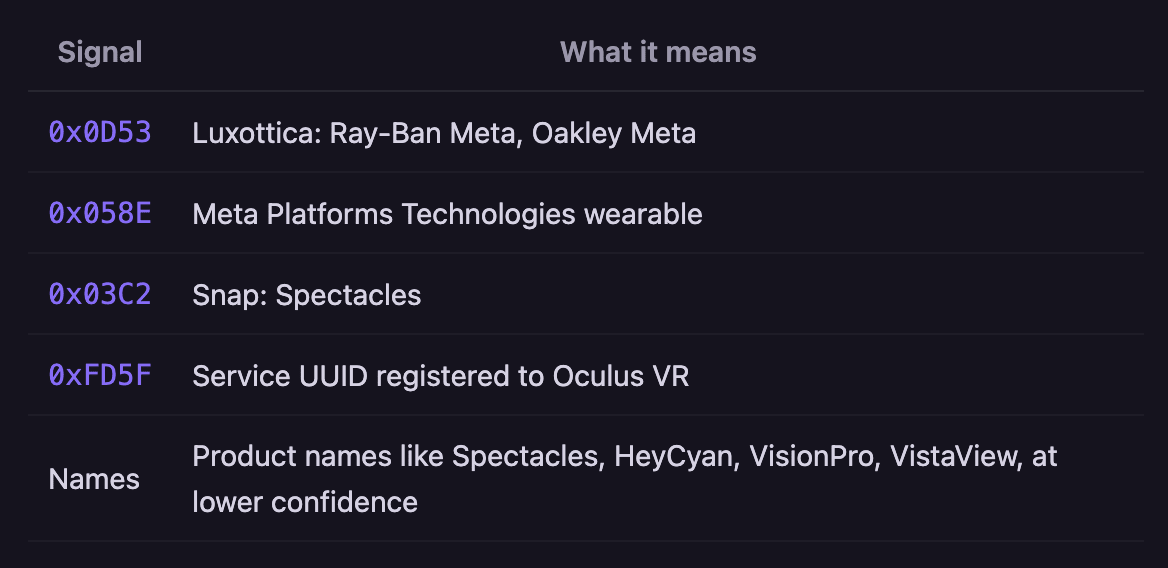
It has a real limitation worth stating plainly: the app can tell you smart glasses are nearby. It cannot tell you whether the wearer is actually recording. That's not a small caveat, it means Zuckoff functions more as an anxiety-reduction and awareness tool than a genuine recording detector, since the visible LED light on Meta's glasses is still the only real-time recording indicator that exists.
Meta's own chief technology officer, Andrew Bosworth, has defended the glasses' design on exactly this point, arguing the camera's LED is built "to be noticed by the people around you." Szydłowski's app is, in a sense, a public statement that a lot of people don't trust that answer.
The Name That Accidentally Landed on Someone Else
One detail makes this story stranger and, honestly, a little sweeter than a typical privacy-app launch. Szydłowski's chosen name, Zuckoff, a jab at Mark Zuckerberg, happens to be the actual surname of a real person: Mitchell Zuckoff, a journalism professor at Boston University. Zuckoff wrote about the coincidence himself in the Boston Globe. Rather than pursue any complaint about his name being used without permission, he said he agreed the underlying privacy concern mattered more than the mix-up. A journalism professor, of all people, siding with the argument for knowing when you're being recorded.
The Street-Level Response
While Zuckoff was quietly gaining users on the App Store, a different kind of pushback was playing out in physical space. Fake safety notices, designed to look identical to official Transport for London signage, appeared inside London Underground carriages mocking smart glasses wearers directly.
This wasn't a one-off. It's the latest stunt from an activist group called Everyone Hates Elon, which has a track record of this exact playbook: fake bus-stop ads targeting smart glasses earlier in the summer, fake Amazon Alexa ads, and a viral anti-Tesla bus shelter stunt. The group's method is consistent, borrow the visual authority of official signage or established ad formats, then use that borrowed credibility to deliver a message the actual authority never approved.
The Commercial Response
And then there's the version of this backlash that shows up wearing a price tag. A month before the London Underground stickers appeared, DuckDuckGo, the privacy-focused browser company, sold sunglasses with no camera, no microphone, and no AI features at all. The name did the marketing for itself: Normal Sunglasses. The entire pitch was the absence of the exact technology everyone else was racing to add.
That's the moment a backlash stops being purely reactive and becomes a market. Once enough people are uncomfortable with a category of product, "doesn't have the thing you're worried about" becomes a legitimate, sellable feature on its own.
Why This Pattern Is Worth Watching
Line these three up and you get a clean anatomy of how a genuine, spreading discomfort moves through culture in stages. First, individual frustration finds a tool, someone builds the thing that lets people protect themselves, usually cheap, fast, and a little rough around the edges. Then it finds a public stage, activists or creators borrow existing formats and institutional credibility to put the grievance somewhere impossible to ignore. Finally, it finds a market, an established brand notices the discomfort is now widespread enough to build an entire product positioning around it.
None of this required a coordinated campaign. It required one real, well-documented harm, a viral video, an unwanted spam wave, and enough people recognizing themselves in it to build, mock, and sell their way toward the same underlying demand: let me know when I'm being watched.
Tips to Steal
A real, specific incident travels further than a general concern. Szydłowski didn't build Zuckoff because of an abstract privacy worry. He built it after one particular story, with a name and a consequence attached.
Borrowed institutional format is a powerful, low-cost message carrier. Fake safety notices work because they look real for just long enough to land the joke before the mismatch registers.
Absence can be the whole feature. DuckDuckGo didn't need to build anything clever. It needed to build nothing, and market that nothing loudly.
A tool doesn't need to solve the whole problem to be worth building. Zuckoff can't confirm recording. It still gives people something they didn't have before: a reason to look up.
Watch for the same discomfort showing up in different registers. An app, a street stunt, and a product launch responding to the same trigger within months of each other is a strong signal a market response is coming, whether or not anyone's planning one yet.
Nobody coordinated an app, a set of fake Tube posters, and a pair of camera-less sunglasses.
They didn't need to. A widely shared video of one woman getting doxxed did the coordinating for them.
When enough people feel the same discomfort at the same time, someone builds the app, someone else makes the joke, and somebody else sells you the absence of the thing entirely.
Frequently Asked Questions
What is the Zuckoff app?+
An iPhone app built by Polish developer Paweł Szydłowski that detects nearby Meta smart glasses using their Bluetooth signals, estimating proximity through known device fingerprints. It gained over 5,000 users within a month of launch, with a paid tier offering background alerts.
Can Zuckoff tell if someone is actually recording?+
No. The app can only detect that compatible smart glasses are nearby, not whether the camera is currently active. Meta's glasses have a physical LED light intended to indicate recording, which remains the only real-time indicator available.
Why is the app called Zuckoff?+
It's a play on Mark Zuckerberg's name. Coincidentally, Zuckoff is also the real surname of Mitchell Zuckoff, a Boston University journalism professor, who wrote about the overlap and chose not to pursue a complaint, saying he agreed with the app's underlying privacy concern.
What happened on the London Underground?+
Fake safety notices, styled identically to official Transport for London signage, appeared inside Tube carriages mocking Meta smart glasses wearers. It's the latest campaign from activist group Everyone Hates Elon, which has previously run similar stunts targeting smart glasses, Amazon Alexa, and Tesla.
What are DuckDuckGo's "Normal Sunglasses"?+
A product from privacy-focused browser company DuckDuckGo, sold explicitly without a camera, microphone, or AI features, marketed entirely on the absence of those capabilities in response to growing discomfort with smart glasses.
Written by

I’m Ramaa, a writer and creator at Scribble. I’ve written two books, and writing is something I always find my way back to, whether that’s articles, scripts, captions, or overly long notes app rambles I swear will “be useful later.” I enjoy thinking about why people create, how ideas spread online, and what makes content feel genuinely human. When I’m not writing, I look after regulatory compliance and legal admin at Scribble, and I’m a graduate of the School of Policy, New Delhi. Outside of work, I’m a musician and an avid reader.