TL;DR
In the space of about eleven months, Reliance has struck AI distribution deals with three of the biggest names building the technology: Google, Meta, and Canva. Jio users get Google's AI Pro plan, including Gemini 2.5 Pro, worth ₹35,100, free for 18 months. Reliance Intelligence, a joint venture Reliance formed with Meta, is building enterprise AI tools on Meta's Llama models. Jio users recharging with specific prepaid plans get a year of Canva Pro or Pro Lite, free. And most recently, Google's AI Mode got written directly into the storylines of Anupama and Yeh Rishta Kya Kehlata Hai, two of India's most-watched soaps, reaching a network of over 800 million weekly viewers. None of these products are Reliance's. All of the distribution is. That's not an accident, it's the whole strategy, and it's the same one Reliance used to disrupt Indian telecom a decade ago, now aimed at AI adoption instead of data plans.
The Partnerships, One by One
Here's what Reliance has actually assembled, deal by deal.
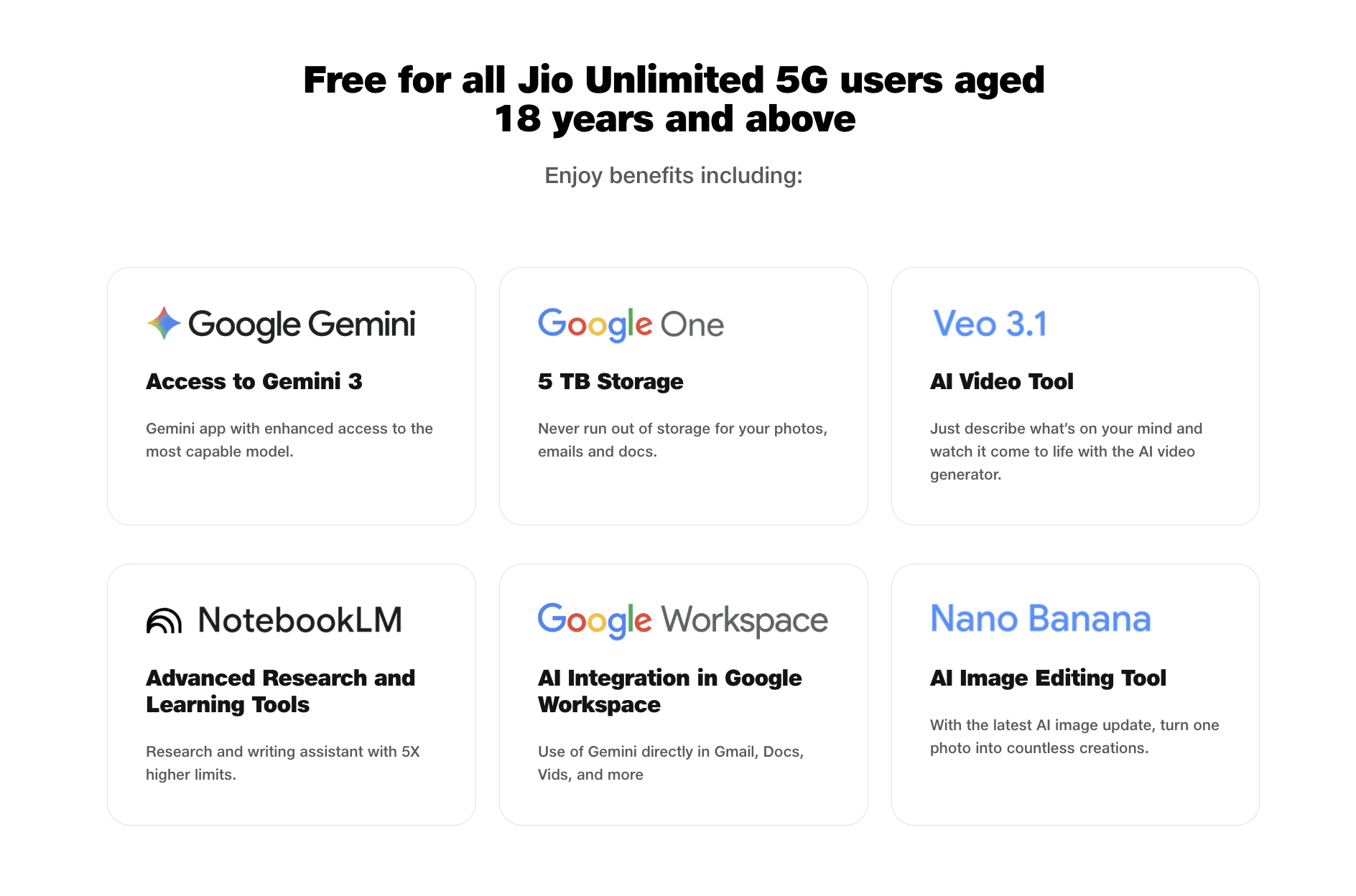
Google, October 2025. Reliance Intelligence partnered with Google to offer eligible Jio users an 18-month free subscription to Google's AI Pro plan, a package valued at ₹35,100 and normally priced at ₹1,950 a month. It includes Gemini 2.5 Pro, higher generation limits on Google's Nano Banana and Veo 3.1 image and video tools, expanded NotebookLM access, and 2TB of cloud storage. The rollout began with Jio's 18-to-25-year-old 5G users and is expanding to the full customer base, reported at over 505 million subscribers. On the enterprise side, Reliance Intelligence also became a strategic go-to-market partner for Google Cloud's Gemini Enterprise, building its own prebuilt AI agents on the platform for Indian businesses.
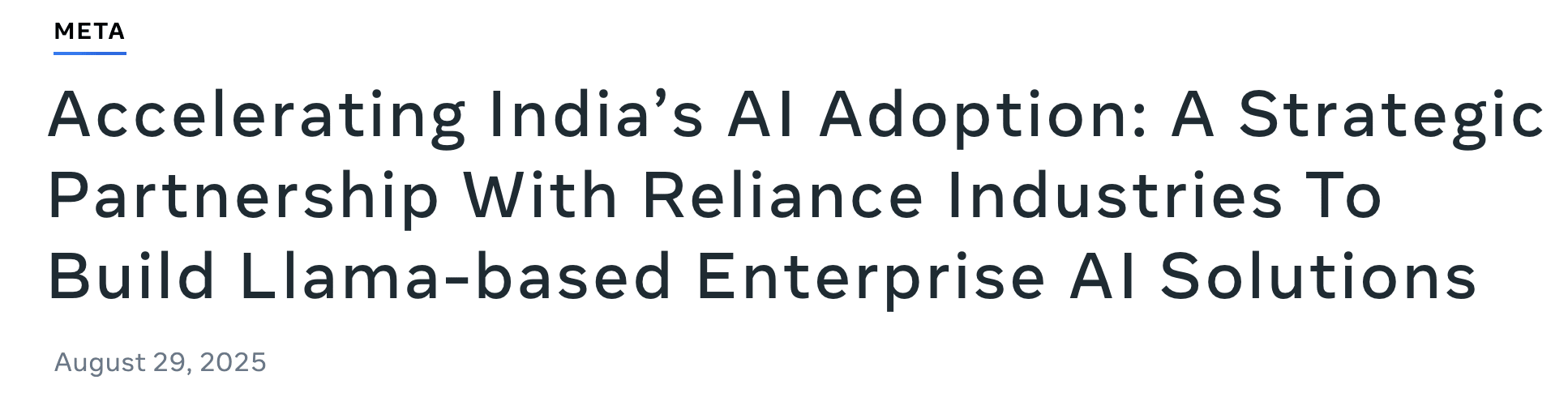
Meta, ongoing. Reliance Intelligence itself, the entity that struck the Google deal, is a joint venture between Reliance and Meta, formed with a combined investment of roughly ₹8.55 billion on a 70/30 ownership split in Reliance's favour. It's building enterprise AI solutions on Meta's open-source Llama models for the Indian market.
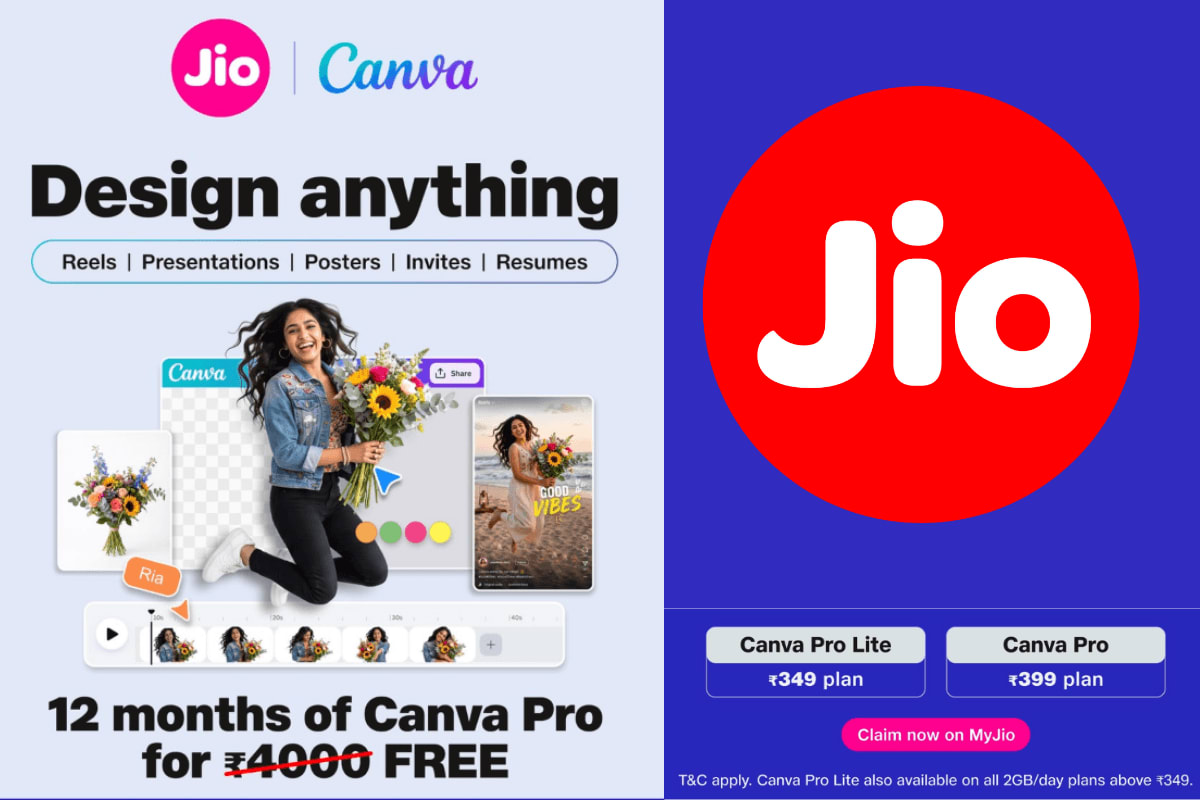
Canva, September 2026. Jio and Canva launched a partnership giving prepaid customers up to 12 months of free access to Canva Pro or Canva Pro Lite, depending on their recharge plan, activated directly inside the MyJio app. Canva Pro includes its full AI design suite, chat-to-design tools, and a background remover, aimed at students, creators, small businesses and professionals, with support for Hindi and other Indian languages.
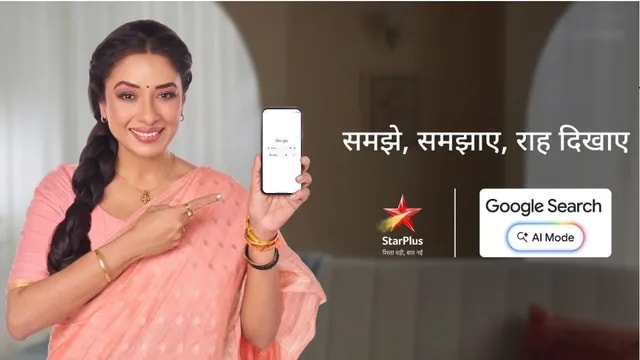
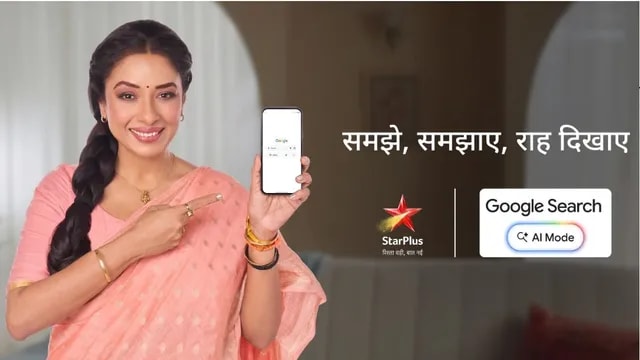
JioStar and Google, the same week. Days later, AI Mode in Google Search was written directly into the storylines of Anupama and Yeh Rishta Kya Kehlata Hai, two of Hindi television's longest-running soaps, reaching JioStar's network of over 800 million weekly viewers.
The Detail That Makes This Genuinely Interesting
Here's the part worth sitting with. Reliance Intelligence, the vehicle Reliance built specifically to develop AI products, is co-owned by Meta. And that same, Meta-backed entity is the one that turned around and struck a landmark distribution deal with Google, a direct AI competitor to Meta, to bring Gemini to hundreds of millions of Indian users.
Meta didn't lose out on this deal by being excluded. It's structurally inside the company that made it happen. That's a genuinely unusual position for a tech giant to be in, co-owning the exact pipe that's now carrying a rival's flagship product to the largest single AI market outside the US and China. It only makes sense if you stop thinking of Reliance as picking a side in the AI race and start thinking of it as the toll road every side needs to use.
Why Distribution Is the Actual Asset
Here's the strategic logic, and it's not new, it's the same one that built Jio in the first place. When Jio launched in 2016, it didn't try to build a better version of an existing telecom product. It gave away data for free at a scale competitors couldn't match, using pure distribution reach to disrupt a mature market it hadn't built any core technology for.
The AI version of that same move is playing out now. Reliance doesn't need to build a foundation model to matter in the AI race. It has something every AI company building one desperately needs and cannot manufacture on its own timeline: over 500 million already-connected telecom subscribers, 27 million connected homes, a television and streaming network reaching 800 million weekly viewers, and a billing and app infrastructure, MyJio, that can activate a premium AI subscription in a few taps, no new download, no new account, no new trust to build.
For Google, Meta, and Canva, that distribution is worth paying for, in equity, in revenue share, in co-investment, because building it themselves in India would take years and billions more than the partnership costs. For Reliance, hosting all of them costs comparatively little and locks in a role no single AI company's success or failure can dislodge. Whichever model wins the underlying AI race, Reliance already owns the road it has to travel on to reach Indian consumers.
Why This Matters for Mass Adoption
The genuine effect of all this stacking up is that AI stops being something Indian consumers have to seek out and starts being something that shows up inside things they already do. A student on a ₹399 recharge gets Canva Pro without ever comparing subscription tiers. A viewer of Anupama sees a fictional character they already trust use AI Mode without watching a single tech ad. A Jio 5G user in their twenties gets Gemini 2.5 Pro bundled the same way they'd get extra data.
That's a fundamentally different adoption curve than the one AI companies have relied on everywhere else, sign-ups, app store downloads, word of mouth among people who already follow tech news. Reliance's bet is that mass AI adoption in a market of 1.4 billion people won't be won by the best product convincing people to switch. It'll be won by whichever distribution network can make switching unnecessary, because the AI tool simply arrives inside the plan, the app, or the show you already have.
Tips to Steal
Distribution can be a strategy on its own, not just a supporting one. Reliance hasn't built a competing AI model and doesn't appear to be trying to. Owning the reach is a complete position by itself.
You don't have to pick a side to profit from a race. Co-owning the vehicle that distributes a rival's product is a stranger, and often more durable, position than competing head-on.
Bundle the unfamiliar inside the familiar. A recharge plan, a soap opera, a telecom app. Each is a format people already trust, which does the persuading a standalone product launch can't.
Adoption at true mass scale rarely comes from the best product winning attention. It comes from removing the need to seek the product out at all.
A decade-old playbook can be reused for a new technology. Reliance's 2016 strategy for telecom and its 2025-26 strategy for AI are structurally the same move, aimed at a new category.
Google, Meta, and Canva each spent years and billions building the AI products themselves.
Reliance spent that time building something arguably harder to replace: the only road in India wide enough for all of them to travel on at once.
In a race to build the smartest AI, the company that owns the distribution doesn't need to win. It just needs everyone else to need it.
Frequently Asked Questions
What AI partnerships has Reliance made?+
Reliance has partnered with Google to offer Jio users free access to Google's AI Pro plan including Gemini 2.5 Pro, formed a joint venture with Meta called Reliance Intelligence built on Meta's Llama models, partnered with Canva to offer free Canva Pro and Pro Lite subscriptions to Jio prepaid users, and partnered with Google again to embed AI Mode into two major Hindi TV soap operas via JioStar.
Is Meta involved in Reliance's Google partnership?+
Indirectly, yes. Reliance Intelligence, the entity that struck the distribution deal with Google, is itself a joint venture between Reliance and Meta, meaning Meta holds a stake in the vehicle now distributing a competing AI product to hundreds of millions of Indian consumers.
How many people can these partnerships reach?+
Jio reports more than 505 million telecom subscribers and 27 million connected homes. JioStar's television and streaming network reaches over 800 million viewers weekly, giving these partnerships an unusually large combined footprint.
Why would Google, Meta and Canva want to partner with Reliance instead of building their own distribution in India?+
Building comparable distribution independently would require years of investment and infrastructure that Reliance has already built through its telecom, streaming, and app ecosystem. Partnering lets AI companies reach hundreds of millions of users quickly through channels Indians already use and trust.
Is this similar to how Jio originally disrupted Indian telecom?+
Yes. Jio's 2016 launch used free data distributed at mass scale to disrupt a mature telecom market without building a fundamentally new core technology. The current AI strategy follows the same logic, applied to AI adoption instead of mobile data.
Written by

I’m Ramaa, a writer and creator at Scribble. I’ve written two books, and writing is something I always find my way back to, whether that’s articles, scripts, captions, or overly long notes app rambles I swear will “be useful later.” I enjoy thinking about why people create, how ideas spread online, and what makes content feel genuinely human. When I’m not writing, I look after regulatory compliance and legal admin at Scribble, and I’m a graduate of the School of Policy, New Delhi. Outside of work, I’m a musician and an avid reader.