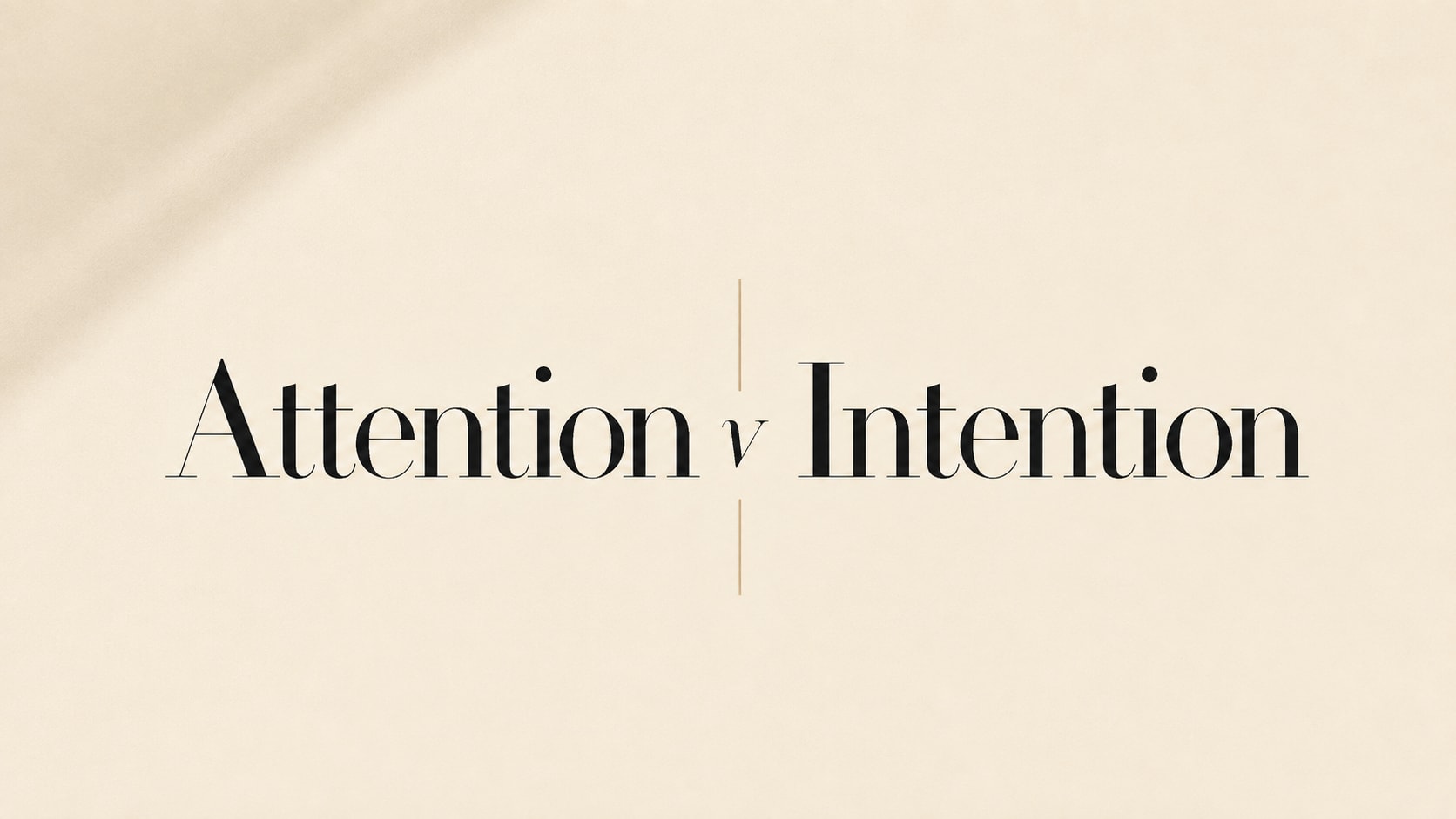
The best marketing quietly switched from attention to intention, and got immersive, real, and human to do it.
TL;DR
For decades, marketing chased attention: interrupt, dazzle, stop the scroll. Polish was the weapon, because a slicker image grabbed more eyeballs. Then AI made attention-grabbing perfection free and infinite, and attention stopped being worth anything. The game moved to intention: not whether someone glances at you, but whether they choose to lean in, stay, feel something, and act. You can't buy intention with polish. You earn it by being immersive, real, and human. The proof is already on the street and in your feed: Rare Beauty's scented billboard, Paper Boat's hand-drawn Independence Day, and Spotify Wrapped. None of them are trying to grab you. They're built to hold you.
The Shift
Here's the whole idea in one line: marketing stopped competing for your eyes and started competing for your intention.
Attention was the scarce resource of the old economy. There was only so much of it, so the job was to interrupt and capture as much as you could. Intention is the scarce resource of the new one: a person's genuine, chosen engagement, the decision to stop, stay, feel, and do something. The difference matters because attention is rented and fleeting, while intention is earned and sticky. One is a glance. The other is a step toward you.
For a long time, the two were close enough that you could treat grabbing attention as the goal and assume intention followed. That assumption just broke.
Why Attention Stopped Working
Polish was always a tool for one specific job: stopping a scroll in a feed you're interrupting. It worked because polish was scarce and expensive, so a slicker, more professional image genuinely stood out.
Then AI made attention-grabbing perfection free and infinite. More than half of new web content is now machine-made, and any brand, or any content farm, can manufacture a scroll-stopping image in seconds. When everyone can produce the thing that grabs the eye, the grab stops working. Attention inflated into worthlessness, the way a currency does when you print too much of it.
You already know this in your body. Think about every ad you saw yesterday. Now name one. Exactly. Your eyes were "captured" hundreds of times and almost nothing stuck, because a glance you didn't choose to give leaves nothing behind.
What Intention Looks Like
If attention is grabbed, intention is earned, and three qualities earn it: immersive, real, and human. Here's each one, with a campaign that proves it.
Immersive: Rare Beauty's scented billboard. Rare Beauty put its Rare Beginnings perfume on a scratch-and-sniff billboard in New York, at nose height, on a busy sidewalk. It doesn't ask for a glance. It asks you to walk up and smell it. And the moment you do, you've stopped being a passerby and become a participant. That's the essence of intention: the ad didn't capture your eye, it earned a step. You don't look at it. You're in it.
Real and human: Paper Boat's Independence Day. No product hero shot, no gloss, no perfect render. Just a hand-drawn scene of kids making tricolour paper caps, the exact texture of a childhood memory. It isn't trying to stop your scroll with polish. It's trying to make you feel something you recognize. And an earned emotion is a form of chosen attention that no interruption can buy. You give Paper Boat a moment because you want to, not because it ambushed you.
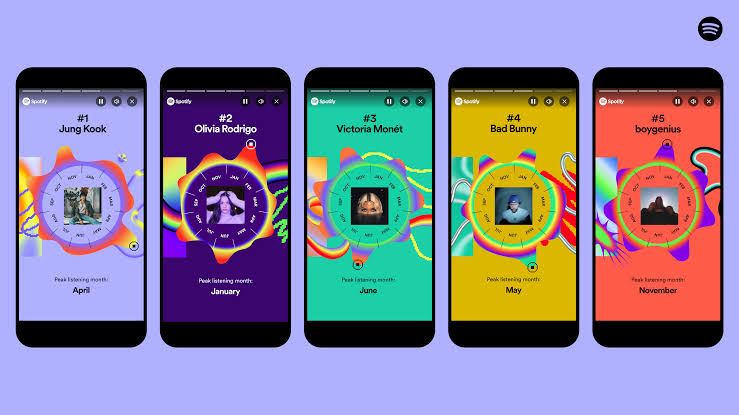
Personal and participatory: Spotify Wrapped. The clearest attention-to-intention machine going. You are not interrupted by Wrapped. You open it. It's made of you, about you, and you choose to explore it and share it, which turns an entire audience into people who market the thing for free. Wrapped barely reads as an ad, and it out-engages almost every ad, because it runs on intention instead of renting attention.
Why Intention Wins
Because intention is behavior, not eyeballs. It gets remembered, it gets shared, and it converts, where a captured glance evaporates the instant the thumb moves. Attention is a rented moment; intention is the start of a relationship.
And here's the part that makes it durable: intention is the one thing AI cannot manufacture for you. A machine can generate infinite attention-grabbing perfection, but it cannot generate a real person's genuine choice to lean in. That choice has to be earned by something immersive, real, or human, which is exactly the ground machines are worst on. The scarcer synthetic perfection makes "real," the more valuable intention becomes.
Tips to Steal From This Shift
Stop optimizing for the glance. Impressions and reach measure attention, which is now cheap. Track whether people lean in, stay, participate, and come back.
Design for a step, not a stare. Give people something to do, feel, smell, make, or share, not just something to see.
Trade polish for presence. Immersive, real, and human beats polished and perfect. Perfect is a monologue. Immersion is a room people want to stay in.
Make it about them, not you. Wrapped works because it's a mirror. Intention follows self-interest and identity, so hand people themselves.
Earn the emotion. A genuine feeling is chosen attention. Nostalgia, warmth, delight, and awe hold, where interruption only grabs.
Attention was always rented. The algorithm gave it, and the algorithm took it back, and AI just drove its price to zero. Intention is the only thing you actually get to keep, because a real person chose to give it to you.
So stop building things that grab eyes for a second.
Build things people choose to stay inside.
Continue Reading
On X: the contrarian cut, why attention is worthless now and what actually holds, here.
On LinkedIn: the strategy lens, why you're measuring the wrong thing, here.
On Instagram: check it out here.
Frequently Asked Questions
What's the difference between attention and intention in marketing?+
Attention is a glance you capture by interrupting someone. Intention is genuine, chosen engagement: the decision to stop, stay, feel, and act. Attention is rented and fleeting; intention is earned and lasting.
Why doesn't polished content grab attention anymore?+
Because polish used to be scarce and expensive, so it stood out. AI made professional-looking, scroll-stopping content free and infinite, so it no longer separates you from anything. When everyone can grab the eye, grabbing the eye stops working.
What makes an ad "immersive"?+
It gives you something to step into rather than just look at: a scent to smell, an experience to enter, a thing to do. Rare Beauty's scratch-and-sniff billboard is immersive because it turns a passerby into a participant.
Isn't this just experiential marketing?+
Experiential is one way to earn intention, but the shift is bigger than events and activations. Spotify Wrapped is digital, Paper Boat's is an illustration. The common thread isn't the format, it's that each earns a chosen response instead of capturing a glance.
How do you measure intention?+
By behavior rather than eyeballs: dwell time, participation, saves and shares, return visits, and conversion, rather than raw impressions and reach.
Does polish still matter at all?+
Yes, where polish is genuinely the point, like a hero product film. The mistake is believing polish alone earns attention or trust. It no longer does, so it has to serve something immersive, real, or human.
Written by

I’m Ramaa, a writer and creator at Scribble. I’ve written two books, and writing is something I always find my way back to, whether that’s articles, scripts, captions, or overly long notes app rambles I swear will “be useful later.” I enjoy thinking about why people create, how ideas spread online, and what makes content feel genuinely human. When I’m not writing, I look after regulatory compliance and legal admin at Scribble, and I’m a graduate of the School of Policy, New Delhi. Outside of work, I’m a musician and an avid reader.