TL;DR
Lufthansa and Serviceplan built the Travel Etiquette Collection, seven pieces of clothing and accessories, each printed with one of flying's unspoken social rules: "Middle seat gets the armrests," "Recline responsibly," "Text your mom after landing." None of it is for sale. You can only win it through social activations and a handful of style influencers. It's a small idea, and it's a smart one, because it doesn't sell you anything, it just says the quiet part everyone already thinks on every single flight, and hands you a T-shirt as proof you're not alone in thinking it.
The Campaign
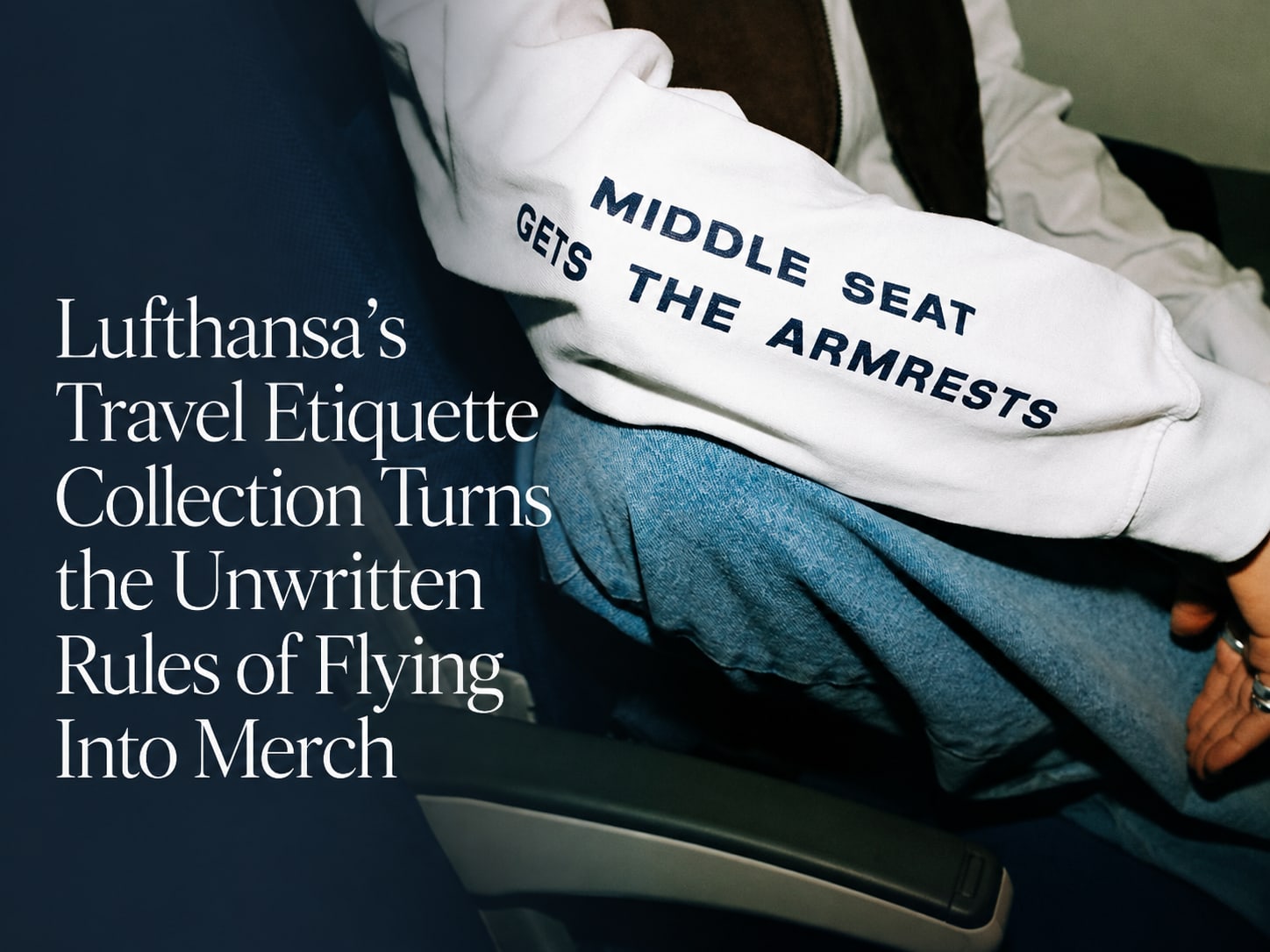
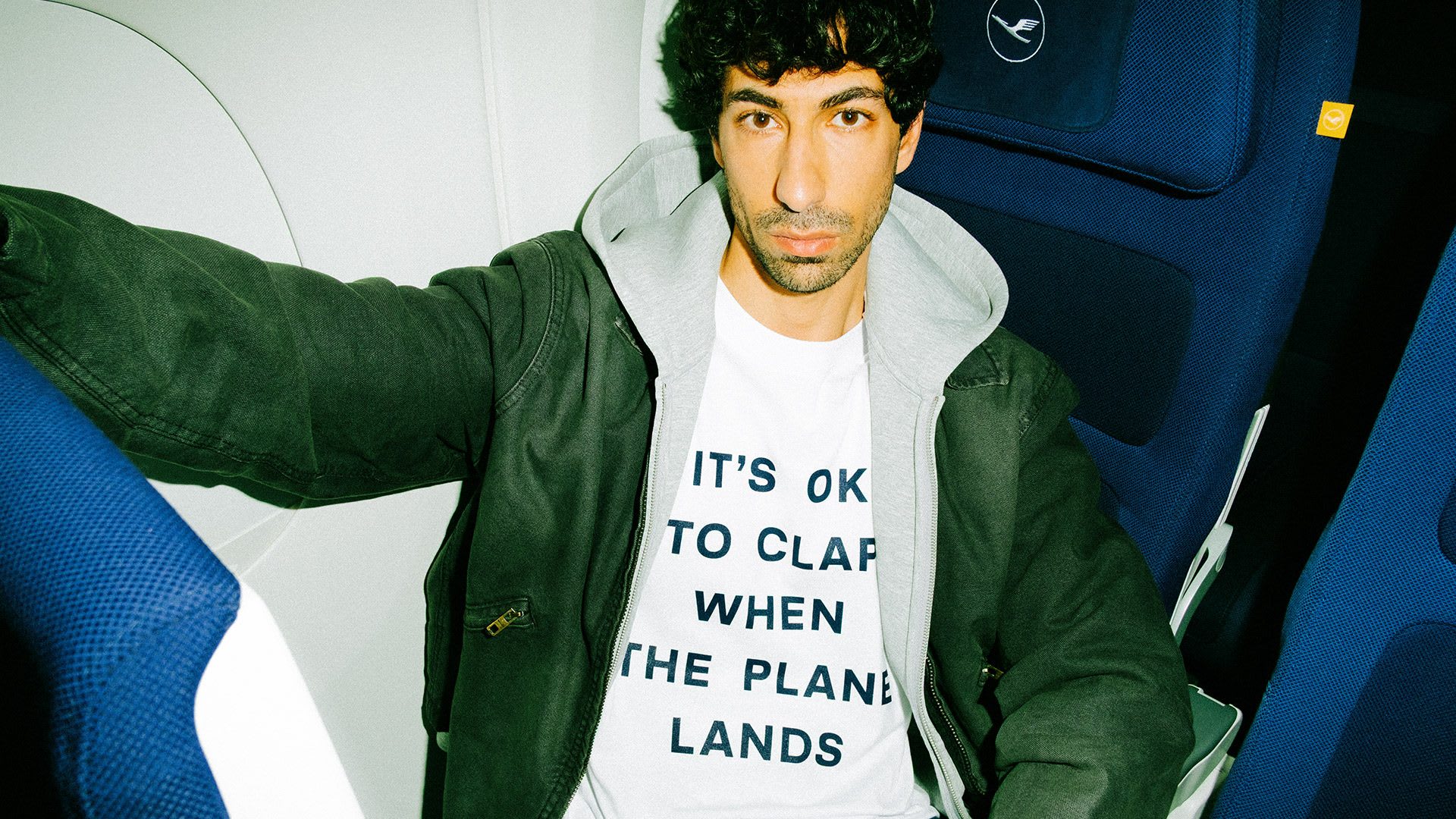
Here's what Lufthansa actually built. Created with longtime creative partner Serviceplan, the Travel Etiquette Collection is a seven-piece capsule, hoodies, T-shirts, caps and travel accessories, each carrying a short, deadpan line about cabin behaviour. A white pullover reads "Middle seat gets the armrests" down the sleeve. A tote bag says "Text your mom after landing." A T-shirt takes on the most contested topic in air travel with "Recline responsibly." Another design wades into the touchdown-applause debate, a fight that has raged in every economy cabin since the dawn of commercial flight.
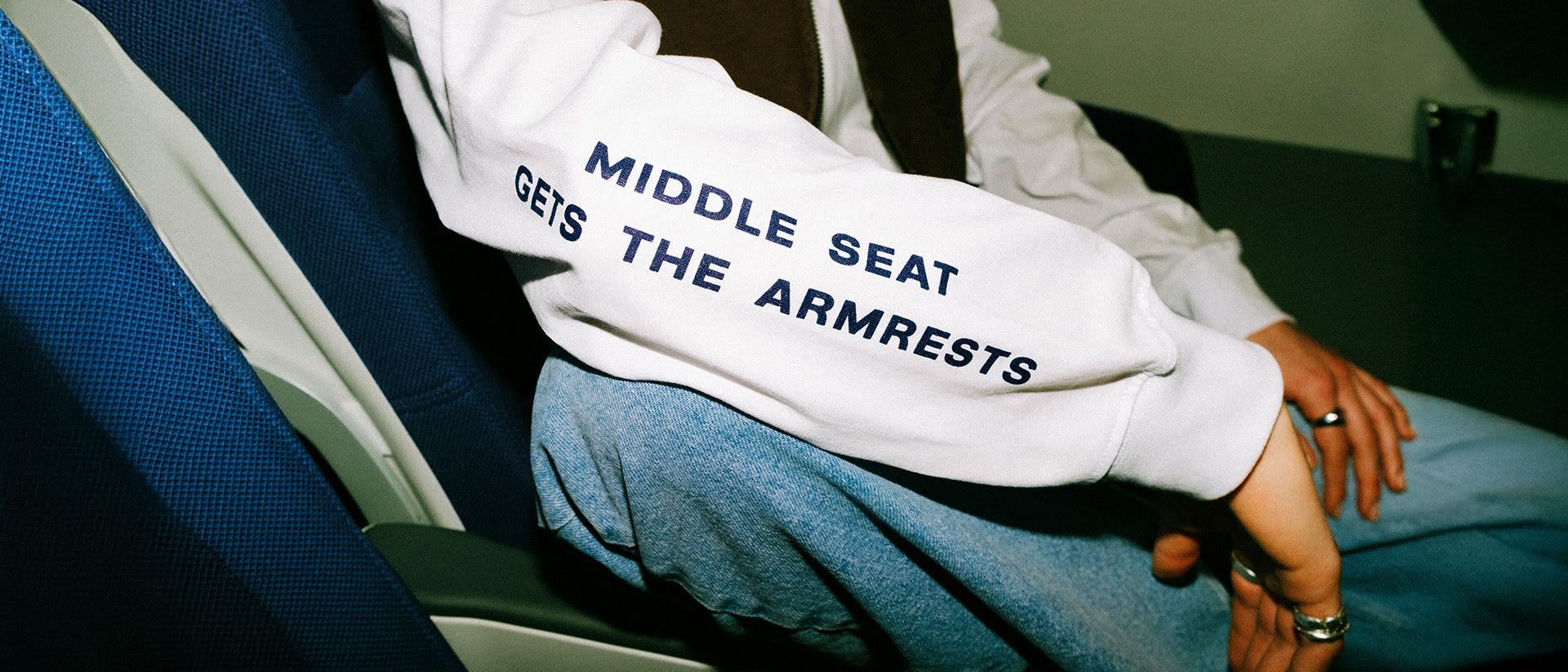
The distribution is the clever part. This isn't in Lufthansa's shops, its website, or airport duty-free. The only way to get a piece is through the airline's social channels and a curated group of international style influencers, with activations running across TikTok, Instagram and Pinterest. You cannot buy your way in. You can only win your way in.
Why "You Can't Buy It" Is the Whole Point
Most brand merch exists to be sold, which immediately makes it feel like merch. The moment something is available in a shop, it's product, and people mentally file it as marketing. Lufthansa skipped that trap entirely by making the collection unownable through normal means.
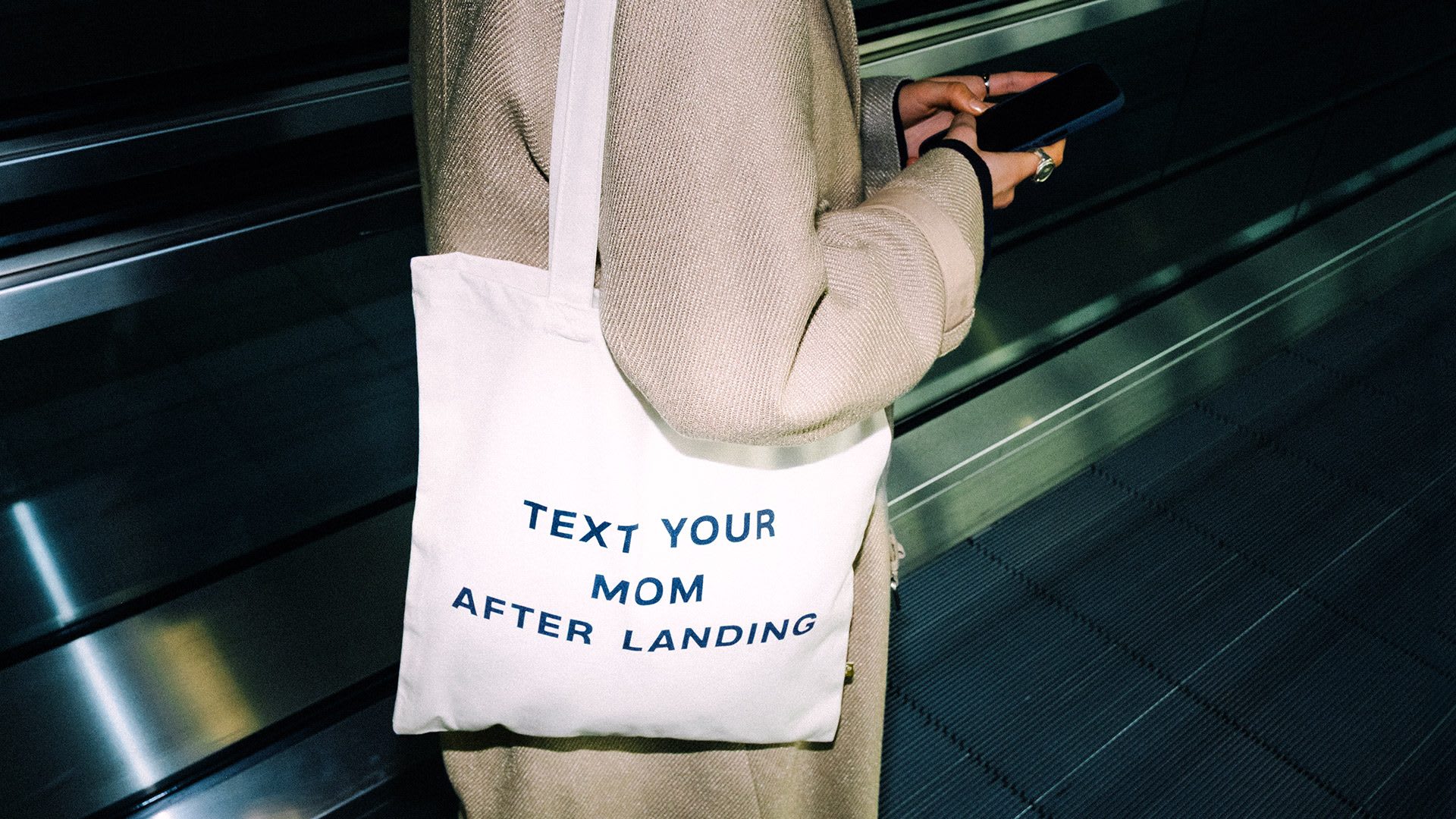
That single decision changes what the object is. It's no longer stock. It's a prize, which means wanting it requires participation rather than payment, and participation is where the actual marketing value lives. A limited-edition item, distributed only through play, generates far more social conversation per unit than the same item sitting on a shelf, because the story isn't "I bought a hoodie," it's "I won a hoodie by doing the funny airline thing," which is a story people tell.
The Real Insight: Shared Irritation Is Free Content
The deeper reason this works has nothing to do with fashion and everything to do with a very specific kind of shared experience.
Almost no other consumer category has as much universal, low-stakes, endlessly relatable friction as a shared metal tube at 35,000 feet. Everyone who has ever flown has silently negotiated an armrest with a stranger. Everyone has side-eyed the person reclining into their tray table. Everyone has debated, internally or out loud, whether clapping on landing is charming or deeply uncool. These aren't niche opinions. They're close to universal, and they're funny precisely because they're so small and so intensely felt.
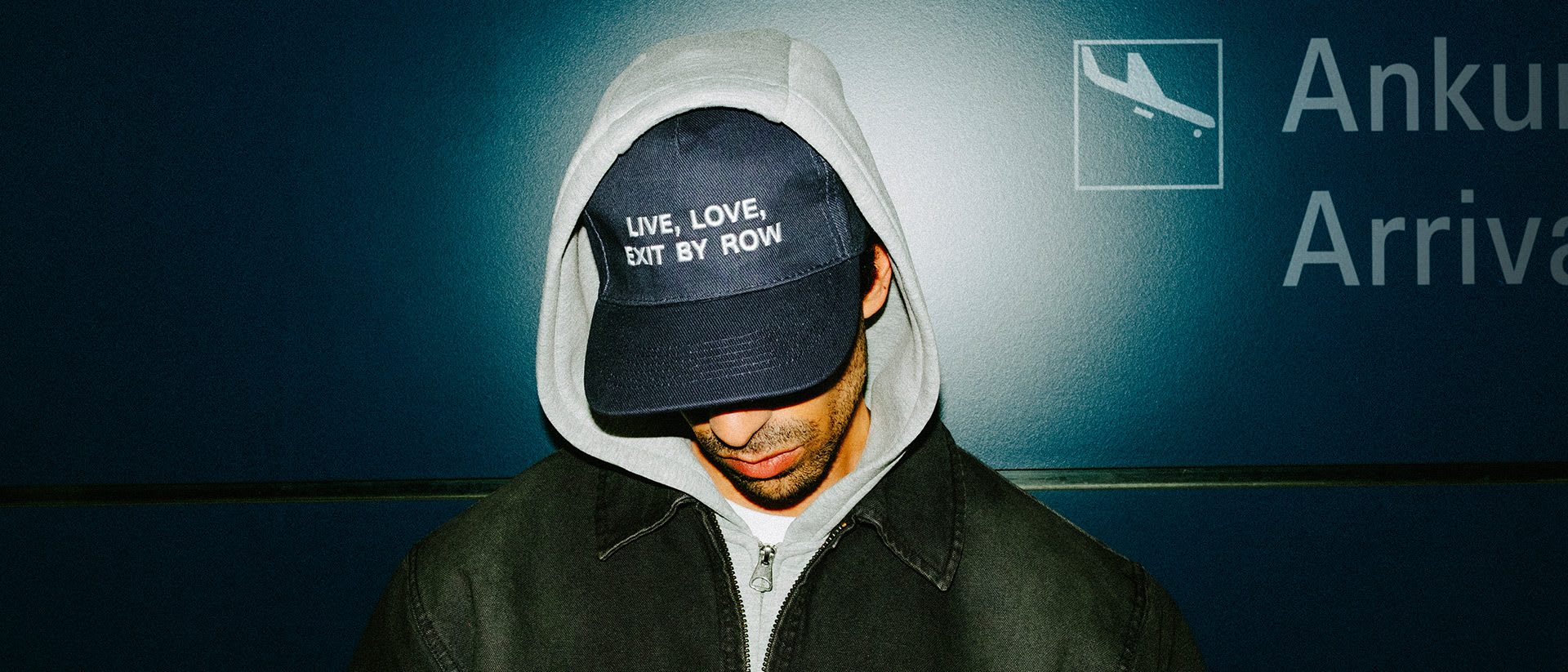
Lufthansa didn't invent any of this. It simply noticed that millions of passengers were already having this exact argument in their heads on every flight, and it printed the punchline. That's the craft move worth studying: the brand didn't manufacture a message, it transcribed one that already existed in the culture, word for word, and put its name quietly next to it.
As Famous Campaigns put it, the idea uses clothing as a conversation starter around "the tiny negotiations that take place between strangers sharing a confined space," rather than prescribing how anyone should behave. It's an observation, not a rulebook, which is exactly why it reads as funny instead of preachy.
Where It Sits in the Category
This isn't the first time an airline has reached for fashion, and knowing the company it's keeping sharpens what makes it work. KLM launched limited-edition "Jet Legs" tracksuit trousers after research showed comfort was a top passenger priority, turning a travel staple into a fashion statement. Singapore Airlines partnered with CHARLES & KEITH on bags made from materials recovered from retired aircraft, giving old planes a tangible second life. Both are strong, but both are about the airline's product or sustainability story.
Lufthansa's collection is different in kind. It isn't about the airline at all. It's about the passengers, and the specific, shared, slightly absurd social contract they enter into every time they board. That's a subtler and arguably harder brief to execute well, because the brand has to disappear almost entirely into the observation for it to land as authentic rather than opportunistic.
Why It Works
Because it turns a universal irritation into shared identity, without asking anyone to buy anything or think better of Lufthansa specifically.
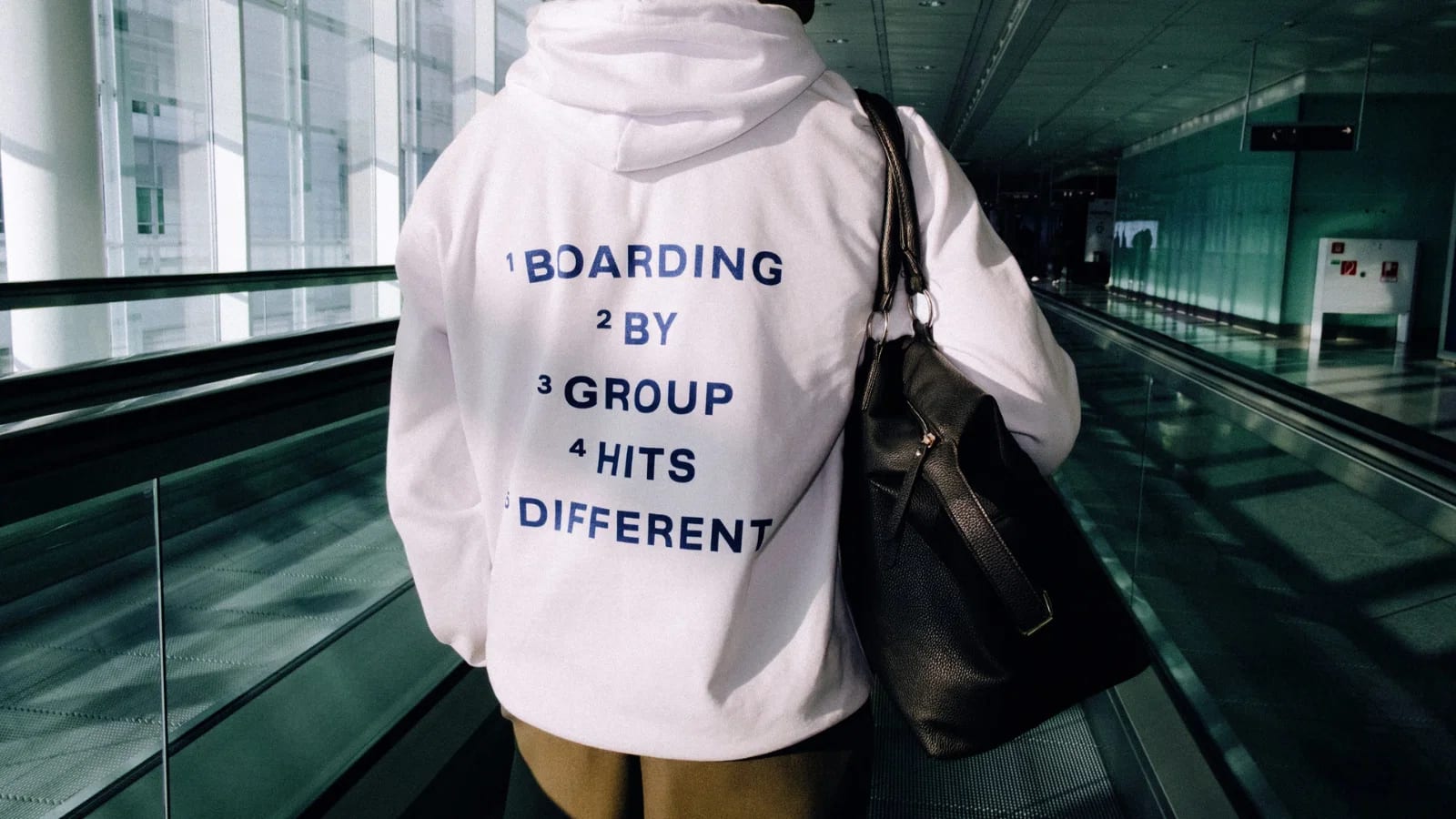
There's no upsell, no discount code, no obvious commercial ask anywhere in the idea. What there is instead is recognition, the specific pleasure of seeing your own private, petty flying grievance printed in public, official-looking type, as if a major airline just admitted, on the record, that yes, the middle seat does get the armrests, and yes, we all know it, and yes, it's fine to be a little annoyed about it. That recognition is what people share, tag friends in, and remember, and none of it required Lufthansa to say a single word about routes, prices or loyalty points.
Tips to Steal
Find the argument everyone's already having. The best brand voice doesn't invent an opinion, it repeats one your audience already holds and gives them permission to say it out loud.
Make it a prize, not a product. Removing the option to simply buy something converts an object into a story people have to earn and then tell.
Observe, don't instruct. "Recline responsibly" lands as funny. A brand lecturing passengers on manners would land as annoying. The line between the two is thin and worth guarding.
Let the brand disappear into the insight. The strongest version of this kind of work barely mentions the company. The audience should be laughing at the situation, not the logo.
Category-adjacent isn't competition, it's context. KLM and Singapore Airlines both did airline merch well, for different reasons. Know your version of the idea before you execute it.
Lufthansa didn't sell a T-shirt this month. It sold recognition, the small, satisfying feeling of watching a major airline say the exact thing you've thought in seat 34C a hundred times.
That's a cheaper campaign than most, and a harder one to fake.
The best merch doesn't say something new. It says the thing everyone already thinks, first.
Frequently Asked Questions
What is Lufthansa's Travel Etiquette Collection?+
A seven-piece limited-edition merchandise capsule created with agency Serviceplan, featuring T-shirts, hoodies, caps and accessories printed with tongue-in-cheek lines about unwritten flying etiquette, such as "Middle seat gets the armrests" and "Recline responsibly."
Can you buy the Lufthansa Travel Etiquette Collection?+
No. It isn't sold through Lufthansa's retail stores, website or airport duty-free. It's distributed exclusively through social media activations on TikTok, Instagram and Pinterest, and via selected style influencers, so it can only be won, not purchased.
Why did Lufthansa make the merch impossible to buy?+
Making it unownable through normal retail turns the items into a prize rather than a product, which drives participation and conversation instead of a simple purchase, and gives people a story to tell rather than just an item to own.
Who created the campaign?+
Lufthansa worked with Serviceplan, the German creative agency it has a long-standing relationship with, having previously collaborated on Lufthansa's 100th anniversary campaign revisiting its historical advertising archive.
Have other airlines done similar merchandise campaigns?+
Yes. KLM launched "Jet Legs" comfort-focused tracksuit trousers, and Singapore Airlines partnered with CHARLES & KEITH on bags made from recovered aircraft materials. Lufthansa's collection differs by focusing entirely on shared passenger behaviour rather than the airline's own product or sustainability story.
Written by

I’m Ramaa, a writer and creator at Scribble. I’ve written two books, and writing is something I always find my way back to, whether that’s articles, scripts, captions, or overly long notes app rambles I swear will “be useful later.” I enjoy thinking about why people create, how ideas spread online, and what makes content feel genuinely human. When I’m not writing, I look after regulatory compliance and legal admin at Scribble, and I’m a graduate of the School of Policy, New Delhi. Outside of work, I’m a musician and an avid reader.