Every major sponsor at this year's tournament was fighting for the exact same prize: your phone camera. Here's who won, and why almost nobody ran a traditional ad to do it.
TL;DR
The 2026 US Open wrapped with a familiar scoreline on the court and a much more interesting one off it. Nearly every major sponsor, Dove, Amex, Chase, IHG, Grey Goose, skipped the traditional ad campaign entirely and built something fans could physically walk into, touch, wear, or drink instead. The standout, by a wide margin, is Grey Goose, whose Honey Deuce cocktail alone generated $12.8 million in sales in a single year and has become, as one industry voice put it, "as recognizable as the tennis itself." Here's the shift from endorsement to experience, and why a $19 drink with a melon ball on top might be the smartest piece of marketing at the entire tournament.
The Shift
Here's what actually changed. For years, sponsorship at a major sporting event meant a logo on a banner and an athlete in a commercial. That's still part of the mix, but brands now want something a banner can't give them: measurable fan interaction, first-party consumer data, organic social content, and product trials that turn a spectator into an actual customer. The US Open, with its three-week runtime and a fan base that skews affluent and highly online, has become close to the perfect lab for that kind of marketing.
The result is a tournament where the sponsor activations are arguably as competitive with each other as the players are on court.
The Examples
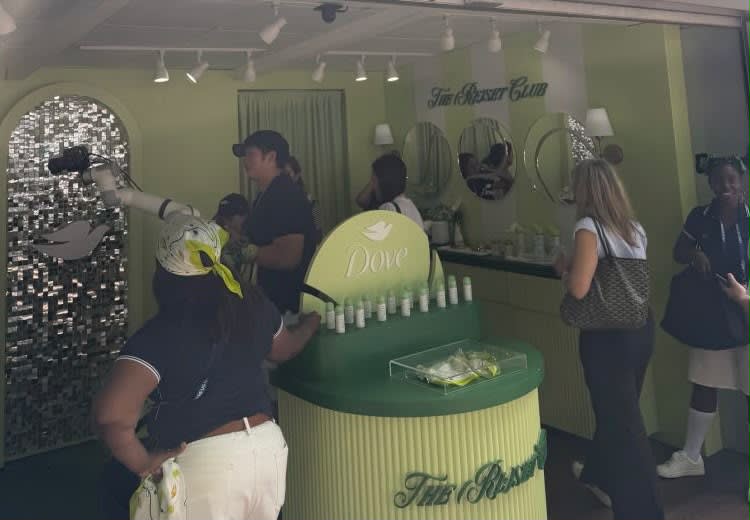
Dove built a room, not an ad. As the tournament's official "underarm sponsor," Dove launched "Don't Sweat It, Make a Racket," anchored by the Re[set] Club, an on-site refresh station where fans could cool down and touch up mid-match. It layered in a style series shot by real photographers and a fan-interview social show hosted by comedian Carly Aquilino, content built to travel far beyond the tournament grounds.
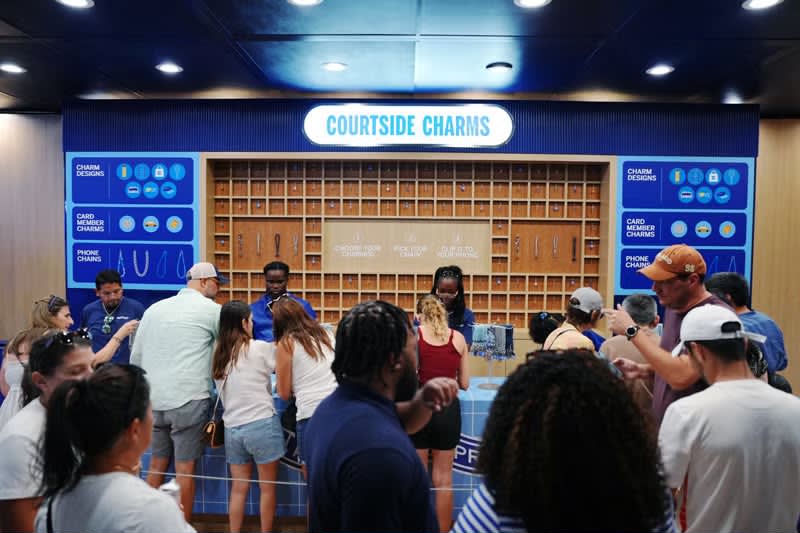
Amex turned sponsorship into a maker's fair. At its Fan Experience, cardholders and general fans could design their own tennis ball, build a phone charm at a dedicated charm bar, and play an interactive rhythm game with up to seven people at once. None of it required watching a single ad. All of it produced something a fan could carry home or post.
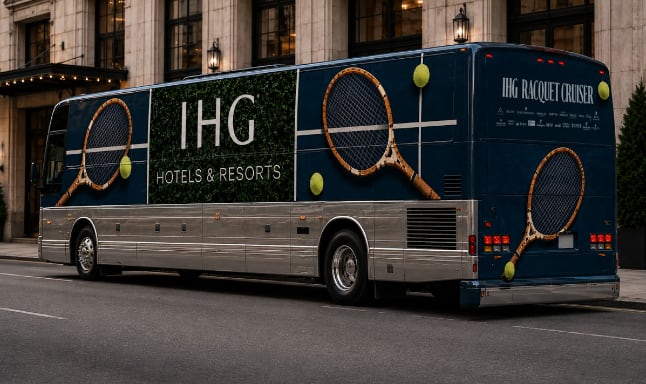
IHG solved a problem nobody else bothered to notice. Night session matches end late, and getting home from Flushing Meadows isn't always simple. IHG's Racquet Cruiser, a branded shuttle bus with food, match replays and charging, turned an annoying logistics gap into a piece of hospitality marketing.
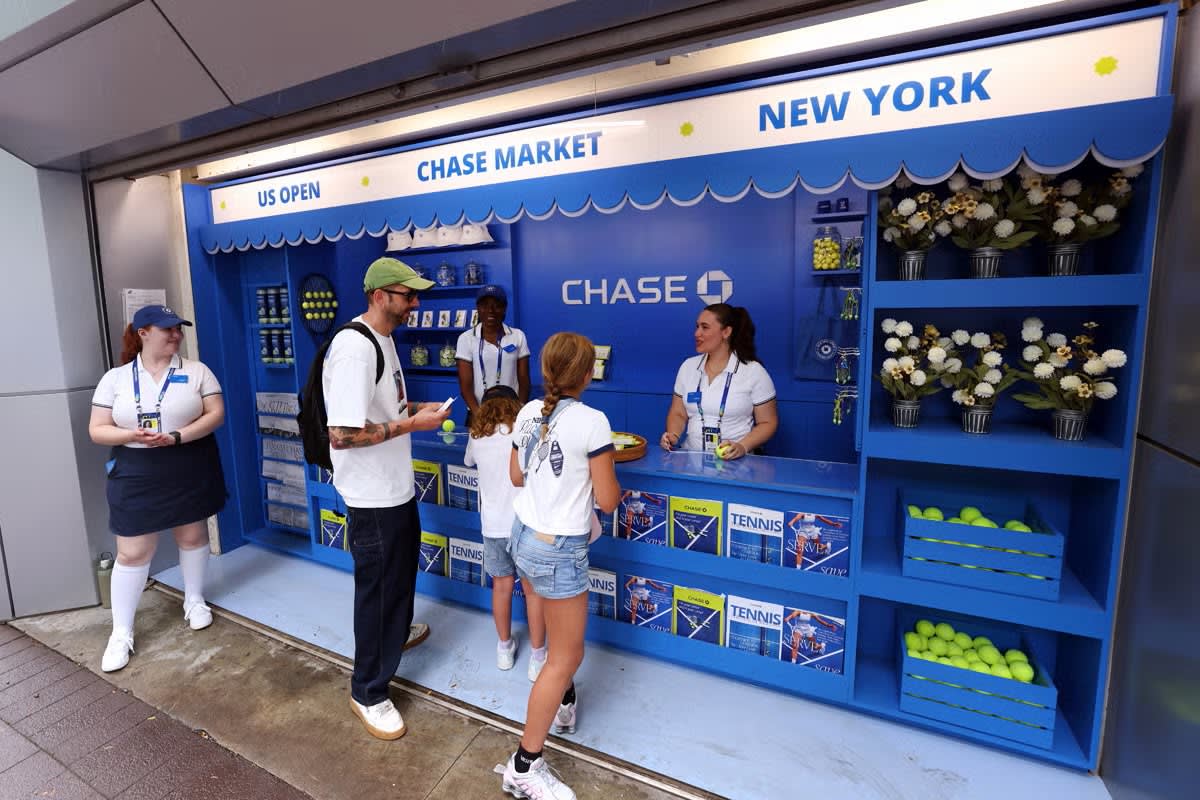
Chase went after a specific, younger audience on purpose. Rather than a generic activation, Chase partnered with Dairy Boy, a fashion label with a strong social following built by founder Paige Lorenze, giving cardholders early access to a pop-up and a branded tennis ball with merchandise purchases. It's a smaller, sharper play than the others, aimed squarely at converting tennis fashion's online moment into Chase's own customer base.
The Standout: Grey Goose
If every other brand on this list is doing smart, contemporary experiential marketing, Grey Goose is playing a different game entirely, one built on two decades of compounding brand equity.
Grey Goose has been the official vodka of the US Open for 20 years, and its Honey Deuce cocktail, vodka, lemonade, raspberry liqueur, topped with tennis-inspired honeydew melon balls, has quietly become one of the tournament's defining rituals. The numbers back that up in a way few sponsor activations can claim: over 556,000 Honey Deuces sold in a single year, a 23.5% increase over the year before, and $12.8 million in sales from the drink alone. Branded cocktail bars now run in four separate locations throughout the venue, alongside additional carts across the grounds.
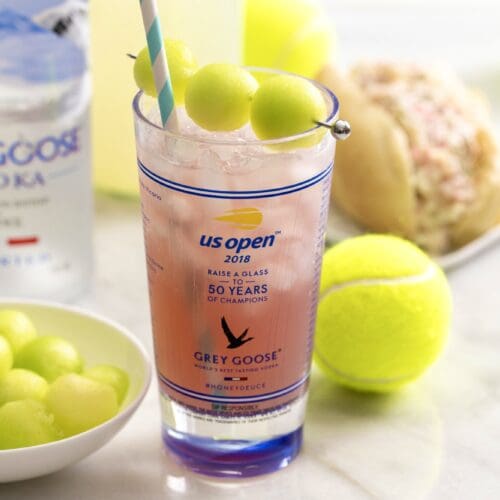
For 2026, Grey Goose extended the ritual beyond the stadium entirely. It brought back The Last Serve Bar, a pop-up in Vanderbilt Hall at Grand Central Terminal, serving complimentary miniature Honey Deuces to commuters and tennis fans alike on the tournament's final nights, explicitly designed, in the brand's own words, to help New Yorkers "make time wait" a little longer. It also signed New York Knicks champion Josh Hart to front a new 36-second campaign built entirely around the drink's honeydew "balls," a cheeky, on-brand nod to Hart's on-court reputation.
Why Grey Goose's Version Works Best
Because it isn't really a campaign, it's a ritual the brand has spent 20 years letting fans build for it. A one-off activation, however clever, has to earn attention from scratch every single year. A cocktail that's already synonymous with the event doesn't have to convince anyone it belongs there, it just has to keep showing up, expand thoughtfully, and let its own sales numbers become the marketing. Extending it into Grand Central this year is the smart next step: it takes a stadium-bound ritual and gives it a life in the city itself, reaching people who never set foot in Flushing Meadows.
Why This Matters Beyond Tennis
The US Open isn't unique here, it's just an unusually clean example of a pattern happening across major sporting events generally. Brands are integrating athletes, chasing content creators, and building physical, interactive spaces because a captive, three-week, highly social audience is worth more as a participant than as a viewer. The tournament itself has become what one industry voice called a "three-week consumer carnival," and every brand on the grounds is, in some sense, competing for the same currency the players are: being the thing people remember and talk about once the event ends.
Tips to Steal
Give fans something to do, not just something to watch. A banner gets glanced at. An activation gets photographed, worn, and posted.
Solve an actual inconvenience if you can find one. IHG's late-night shuttle works because it fixes a real problem, not because it's flashy.
Let a ritual compound over time. Grey Goose's cocktail wasn't built in a single campaign cycle. Its strength is 20 years of consistency, which no one-off activation can shortcut.
Match the activation to the exact audience you want. Chase's Dairy Boy partnership isn't trying to reach everyone. It's built for one specific, valuable customer segment.
Extend the moment beyond the venue. Grey Goose's Grand Central pop-up reaches people who never bought a ticket. The best activations don't stay contained to the gates.
Most of the brands at this year's US Open were competing to be memorable for three weeks.
Grey Goose has spent twenty years making sure it's the thing you remember without even trying.
The best sponsorship isn't the one shouting the loudest on-site. It's the one that becomes part of the event itself.
Frequently Asked Questions
What was the biggest brand activation trend at the 2026 US Open?+
Sponsors largely moved away from traditional advertising and toward immersive, interactive experiences, refresh stations, customization bars, branded transportation, designed to generate fan participation, social content, and first-party data rather than passive ad views.
How much did the Grey Goose Honey Deuce cocktail earn?+
The Honey Deuce generated $12.8 million in sales in a single year, with over 556,000 cocktails sold, a 23.5% increase year over year, making it one of the most commercially successful single-product activations at any major sporting event.
What is The Last Serve Bar?+
A Grey Goose pop-up bar located in Vanderbilt Hall at Grand Central Terminal, extending the US Open's Honey Deuce ritual beyond the tournament grounds by offering complimentary miniature cocktails to commuters and fans during the tournament's final days.
Which other brands had notable activations?+
Dove built an on-site refresh station and content series, Amex offered customizable tennis balls and phone charms, IHG ran a branded late-night shuttle service, and Chase partnered with fashion label Dairy Boy to reach a younger audience.
Why are brands investing so heavily in experiential marketing at sporting events?+
Because a captive, socially active audience over a multi-week event is more valuable as an active participant, generating content, data, and word-of-mouth, than as a passive viewer of a traditional advertisement.
Written by
I’m Ramaa, a writer and creator at Scribble. I’ve written two books, and writing is something I always find my way back to, whether that’s articles, scripts, captions, or overly long notes app rambles I swear will “be useful later.” I enjoy thinking about why people create, how ideas spread online, and what makes content feel genuinely human. When I’m not writing, I look after regulatory compliance and legal admin at Scribble, and I’m a graduate of the School of Policy, New Delhi. Outside of work, I’m a musician and an avid reader.