TL;DR
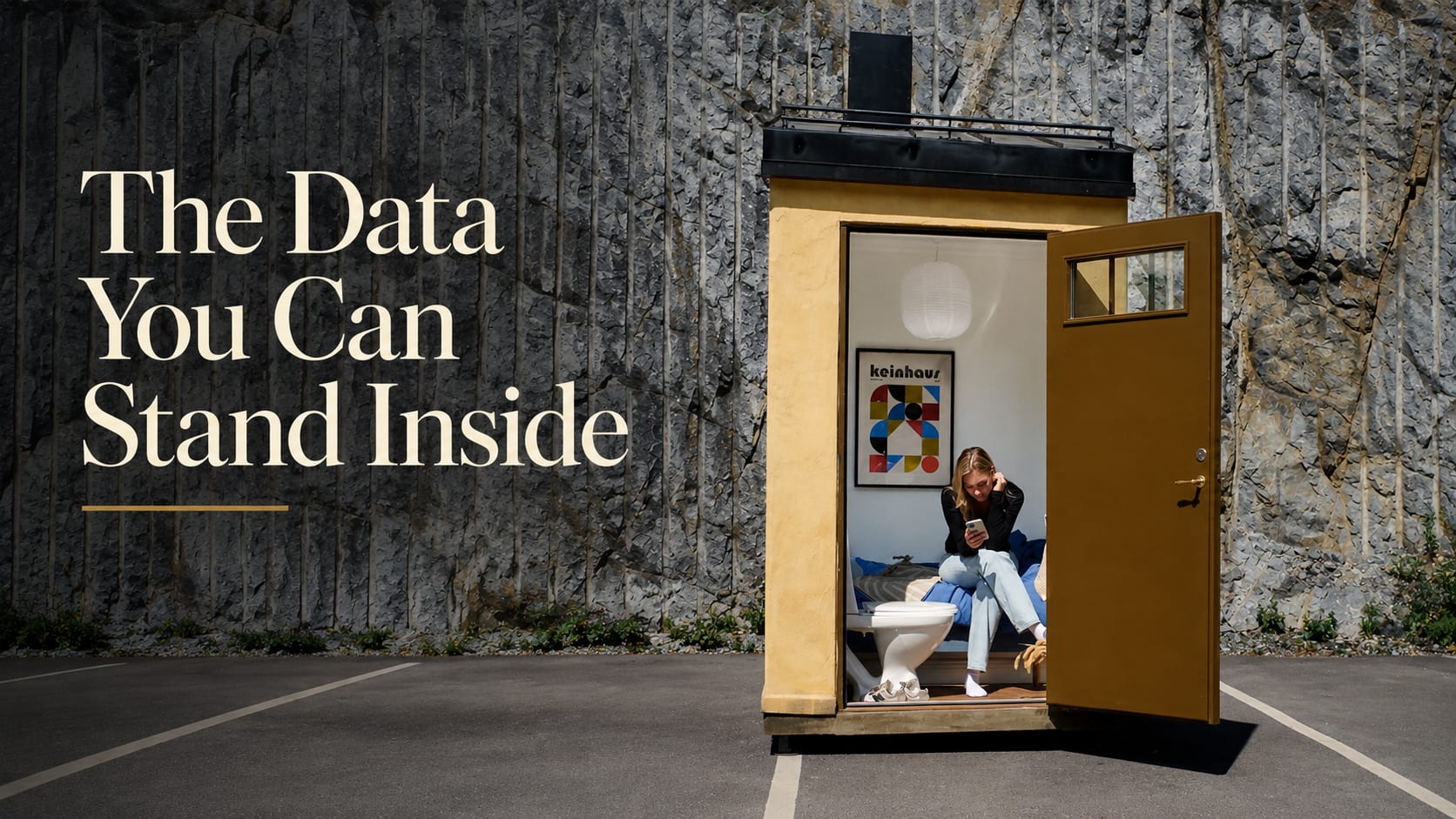
Swedish housing developer Riksbyggen and BBDO Nordics took one brutal statistic, that an average 25-year-old in Stockholm can afford just 1.9 square metres of property, and instead of publishing it, they built it. Three full-scale "homes" of 1.9, 3.1 and 4.5 square metres, made to look like real Swedish houses, just impossibly, absurdly small. You can walk up and try to step inside. You can't. That failure to fit is the entire campaign. It turned a number nobody feels into a space you physically can't occupy, and it worked: 10 million-plus TikTok views, 75 pieces of press, a visit from Sweden's Housing Minister, and a real place in the national political debate. Here's why building the data beat reporting it.
The Campaign
Here's what they did. Riksbyggen created a new metric it calls the Square Metre Index, which converts income, savings, mortgage conditions and local property prices into one painfully simple number: how many square metres of a home can an average 25-year-old actually afford to buy?
The answers are grim. In Stockholm, 1.9 square metres. In Gothenburg, 3.1. In Umeå, 4.5. And across the 209 municipalities the index covers, 111 come in under ten square metres.
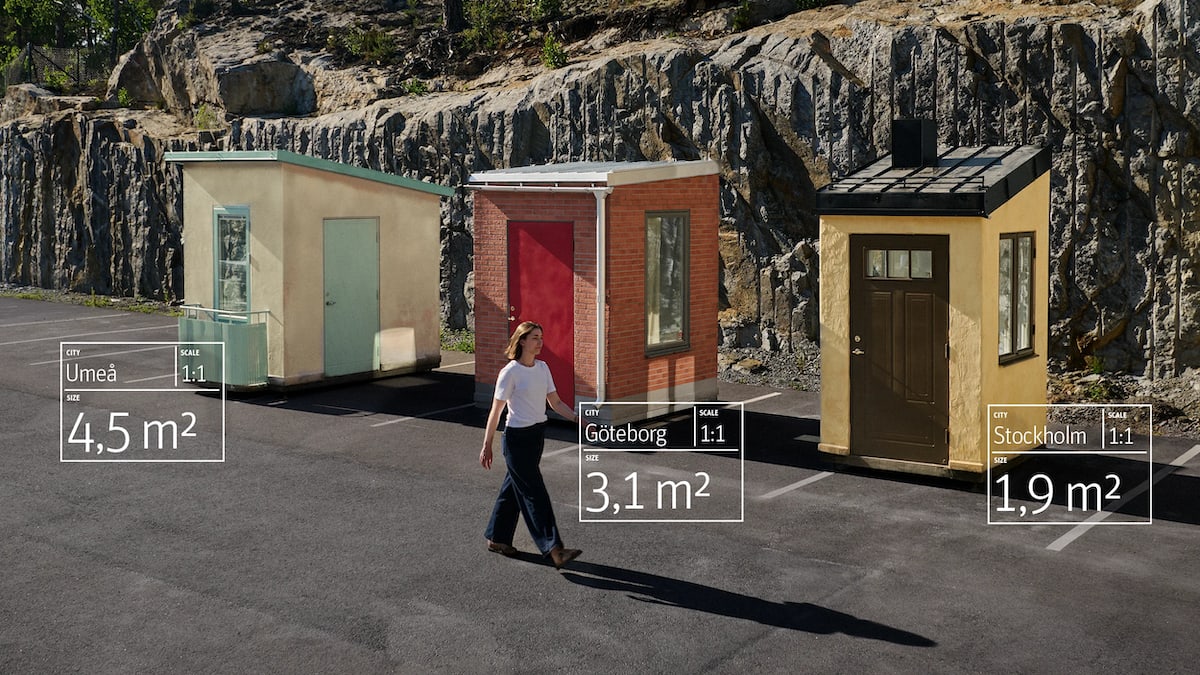
Then, instead of leaving that in a press release, BBDO Nordics built the numbers at full scale. Three tiny homes, each designed to look like a genuine Swedish house from a specific architectural era, turn-of-the-century, functionalist, and contemporary, so they read as real homes rather than art objects. The only thing wrong with them is the size. As the campaign's art director, Anton Bolin, put it: standing in front of a 1.9-square-metre house requires no explanation.
The Emotions
Most cause campaigns try to make you feel sad. This one makes you feel something much more useful: too big.
When you stand in front of a house smaller than a parking space and realise it represents everything a young person can afford, the reaction isn't pity, it's a jolt of physical wrongness. Your own body becomes the measuring stick. You are literally too large for the future being offered to you. That's a feeling no chart can produce, because a chart lets you stay comfortably outside the data. This puts you inside it, or rather, refuses to let you in.
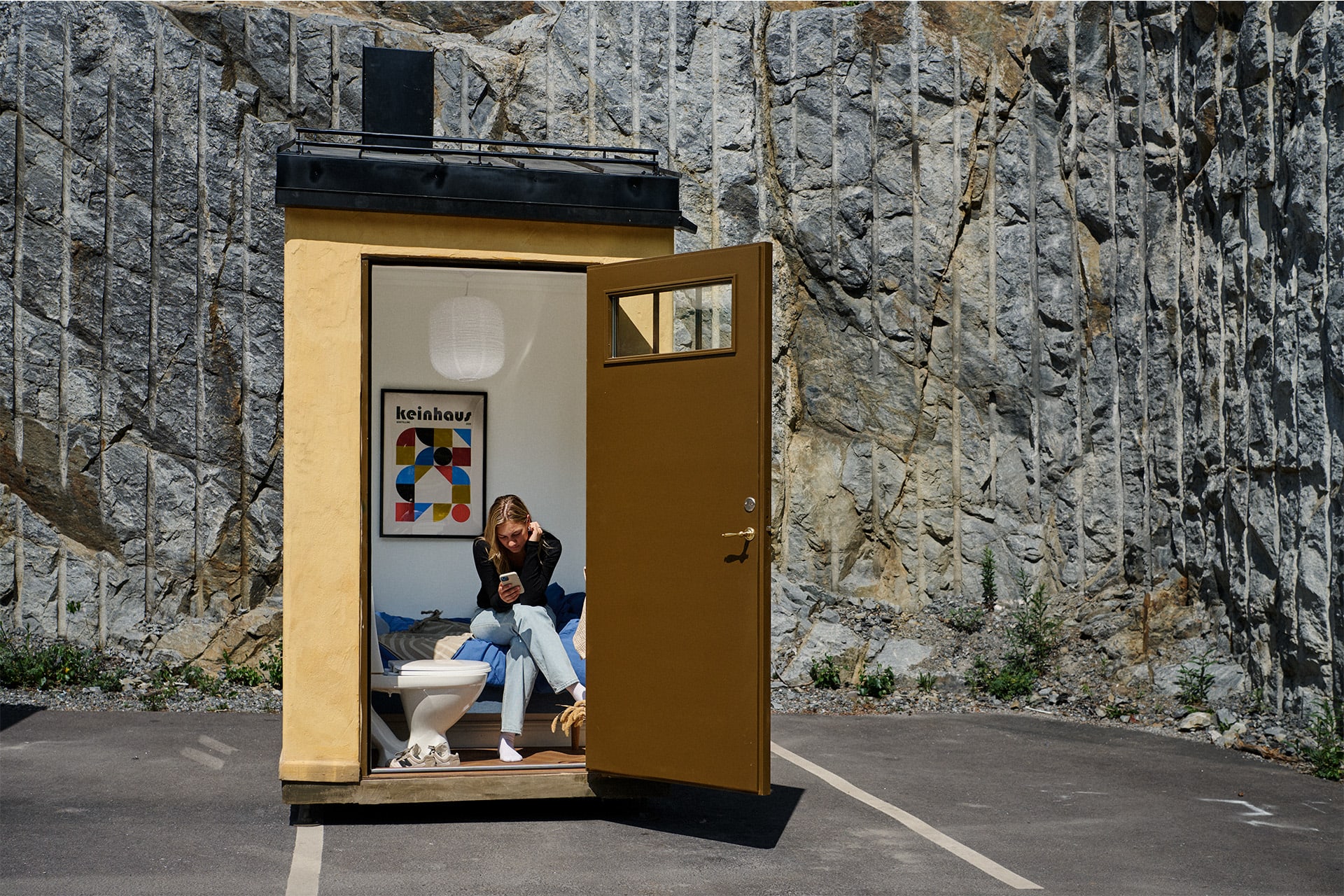
And because the homes look real, the absurdity lands harder. It isn't a symbolic box. It's a proper little house, with the proportions of a home you might actually want, shrunk to the point of cruelty. The gap between "this looks like a home" and "no human could live here" is where the whole message lives.
The Mechanics: How You Build a Statistic
The genius move is the translation, from number, to space, to body.
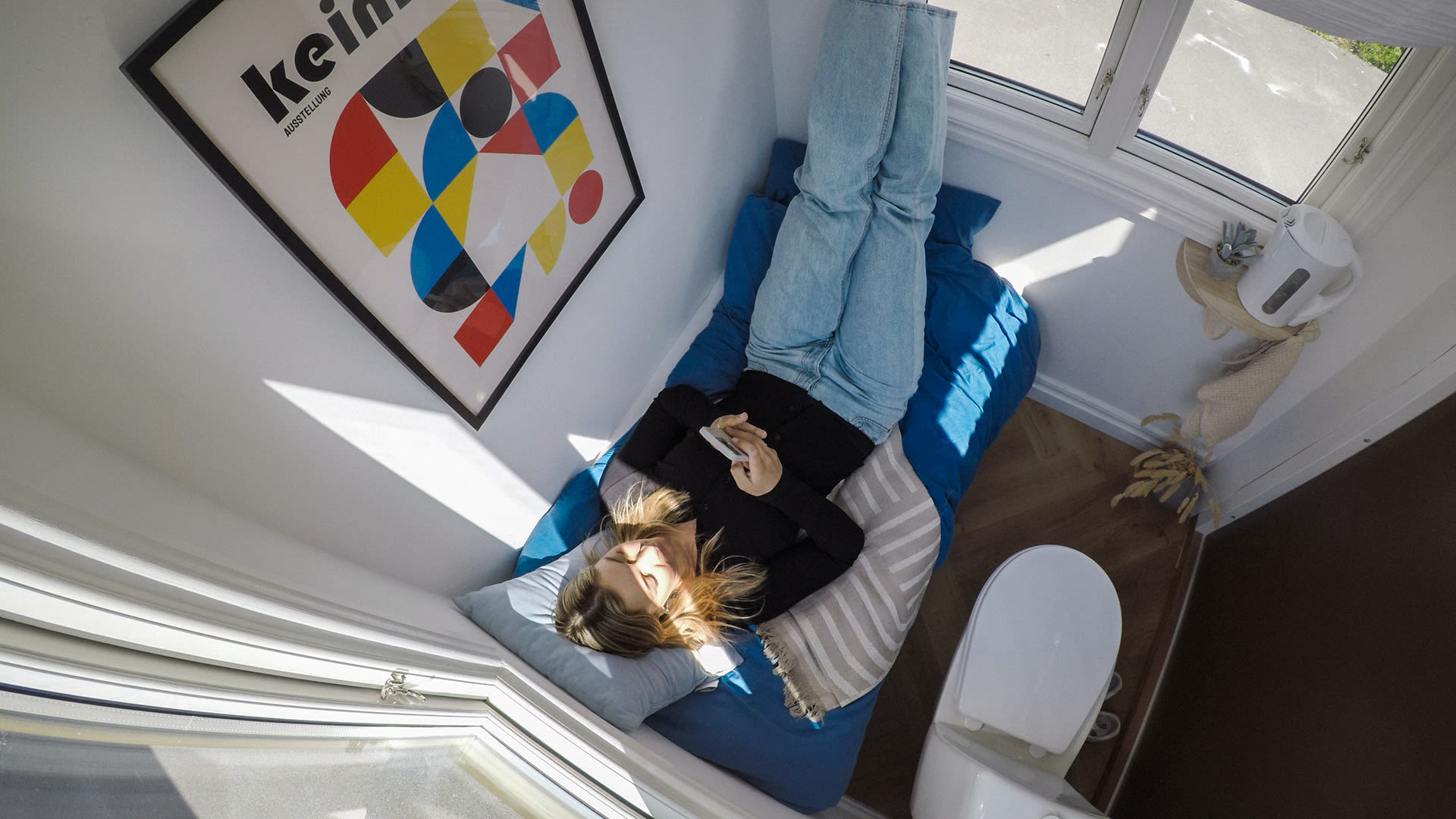
A statistic like "1.9 square metres" is designed to be understood and forgotten. You nod, you feel vaguely bad, you scroll on. It stays abstract because it stays on a screen. What Riksbyggen did was give the number a physical footprint and then put your body next to it. Suddenly the abstraction has a scale you can feel, because you are the scale. The campaign works precisely because it removes the comfortable distance between the audience and the data.
This is the same principle behind the best out-of-home work right now: don't make people look at your message, make them stand inside it. A billboard you glance at is forgettable. A house you can't fit into is not. And crucially, it's built to travel, the moment is inherently photographable and filmable, which is why it racked up over 10 million TikTok views. The installation is the seed. The phones did the distribution.
Why It Worked
Three reasons, and they stack.
First, it's undeniable. You cannot argue with a house you're too big to enter. There's no spin, no counter-statistic, no "well actually." The discomfort is self-evident, which is exactly what Bolin meant by "requires no explanation."
Second, it's constructive, not just critical. This is what saves it from being misery-marketing. Riksbyggen paired the shock with three concrete political reforms it's proposing to help young people buy a first home, so the campaign has somewhere to send the outrage it generates. Anger without a next step evaporates. Anger with a proposal becomes a lobbying tool, which is how you get a Housing Minister to show up.
Third, it makes the brand the good guy for a real reason. Riksbyggen is a housing developer. By naming the crisis loudly and proposing fixes, it aligns its commercial interest (more people able to buy homes) with a genuine public good, so the campaign never feels like a company borrowing a cause it has no business touching. It's the rare cause campaign the brand is actually entitled to run.
Tips to Steal
Build the data, don't report it. If a statistic is shocking, give it a physical scale people can stand next to. The body feels what the chart can't.
Use discomfort as the message. The most powerful reaction here isn't sympathy, it's the visceral wrongness of not fitting. Design the feeling, not just the fact.
Make it look real, then break it. The homes work because they're believable homes at an impossible size. The gap between familiar and wrong is where the point lands.
Always give the outrage somewhere to go. Pair the shock with a concrete ask or solution, or the emotion just dissipates. Riksbyggen had three reforms ready.
Only claim a cause you've earned. A housing developer talking about housing affordability is credible. Borrow a cause you have no stake in and it reads as opportunism.
Riksbyggen could have published a report that said young Swedes can afford 1.9 square metres, and it would have been true, and it would have changed nothing.
Instead it built the 1.9 square metres, and let people feel their own bodies not fit.
A number tells you the crisis exists. A house you can't stand in makes it yours.
Frequently Asked Questions
What is Riksbyggen's smallest homes campaign?+
Riksbyggen, a major Swedish housing developer, and agency BBDO Nordics built three full-scale homes sized to what an average 25-year-old can afford in different cities: 1.9 square metres in Stockholm, 3.1 in Gothenburg and 4.5 in Umeå. People can physically try to step inside them.
What is the Square Metre Index?+
A metric created by Riksbyggen that turns income, savings, mortgage conditions and local property prices into a single figure: how many square metres of property a young person can actually afford to buy in a given area.
Why build the homes instead of just publishing the numbers?+
Because a statistic stays abstract on a screen. Building it at full scale lets people physically experience the crisis, using their own body as the measure, which is far more memorable and shareable than a report.
Did the campaign actually have an impact?+
Yes. It generated more than 10 million TikTok views and 75 pieces of media coverage, entered national political debate, and drew a visit from Sweden's Minister for Housing. Riksbyggen also proposed three political reforms alongside it, and the homes will tour the country.
What can marketers learn from it?+
Turn shocking data into a physical experience, use discomfort as the message, make installations believable then break them with impossible scale, and always pair outrage with a concrete solution so the emotion has somewhere to go.
Written by

I’m Ramaa, a writer and creator at Scribble. I’ve written two books, and writing is something I always find my way back to, whether that’s articles, scripts, captions, or overly long notes app rambles I swear will “be useful later.” I enjoy thinking about why people create, how ideas spread online, and what makes content feel genuinely human. When I’m not writing, I look after regulatory compliance and legal admin at Scribble, and I’m a graduate of the School of Policy, New Delhi. Outside of work, I’m a musician and an avid reader.