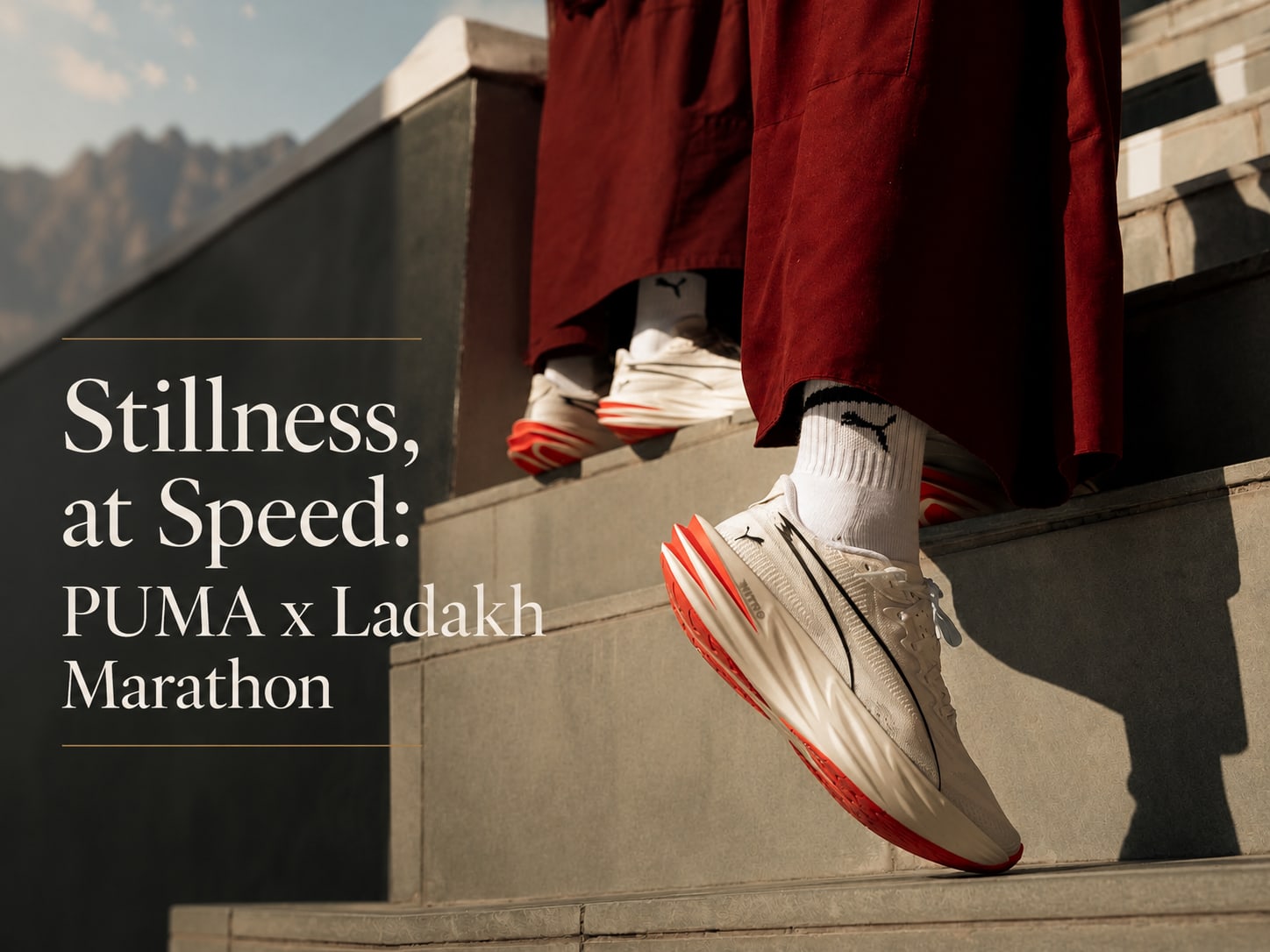
PUMA put running shoes on Buddhist monks at one of Ladakh's oldest monasteries, and didn't ask them to run. That restraint is the whole campaign.
TL;DR
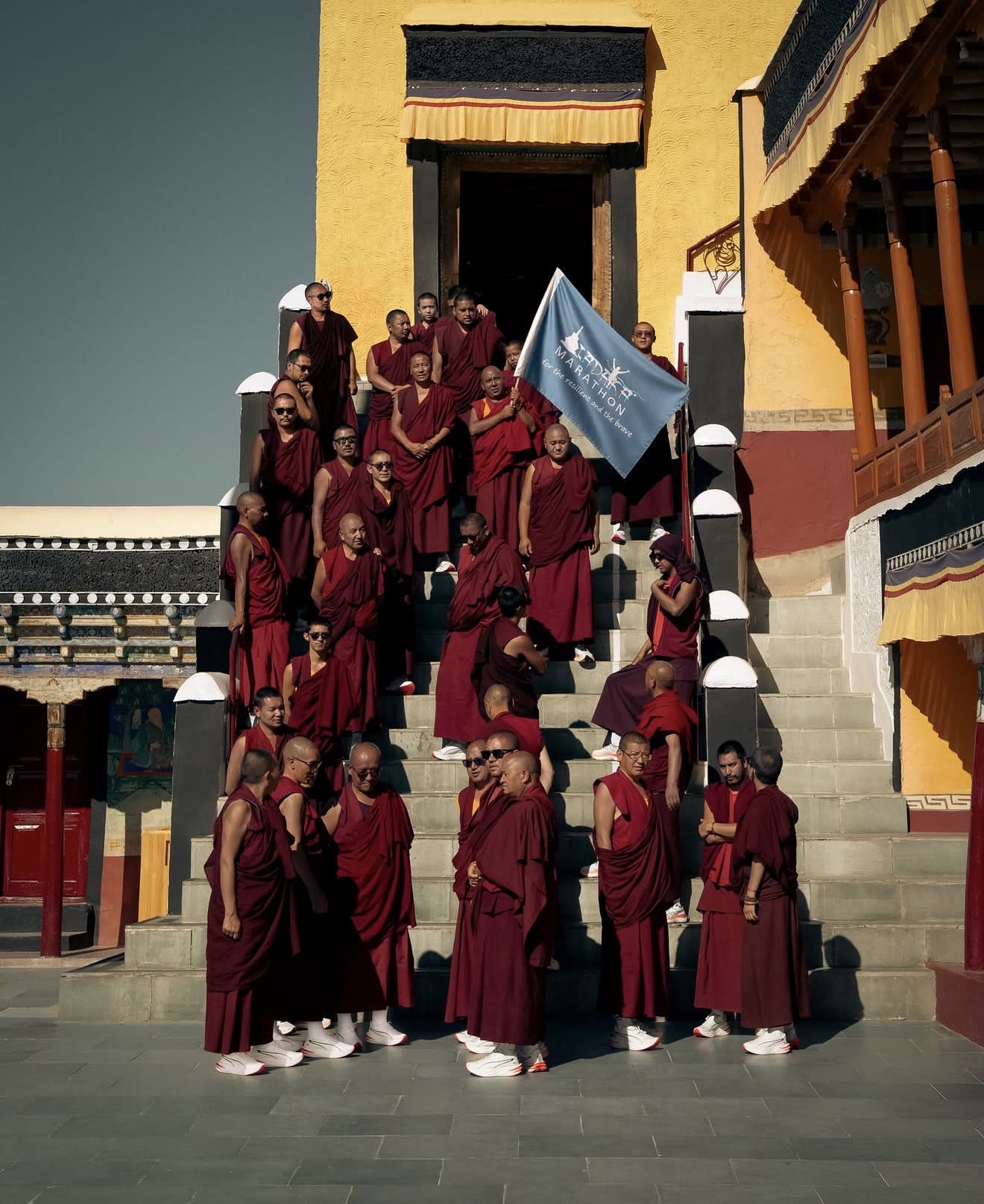
Ahead of the Ladakh Marathon (September 10 to 13), PUMA India photographed Buddhist monks from Leh at Thiksey Monastery, wearing the Deviate Nitro Pure running shoe beneath their traditional maroon robes. The campaign is called Meditation in Motion, and the images show monks simply walking down monastery steps and along a sunlit wall, doing nothing more dramatic than their ordinary day. The line underneath it makes the whole idea click: "Meditation and running look like opposites. Yet both demand focus, discipline and resolve." No sprint, no finish line, no dramatic pace. Just stillness, filmed in motion. Here's why the restraint is the smartest choice in the whole campaign.
The Campaign
Here's what PUMA actually did. Timed to the Ladakh Marathon, the highest marathon in the world, held between 11,500 and 17,618 feet, PUMA brought its Deviate Nitro Pure running shoe to Thiksey Monastery, one of the largest and most significant Buddhist monasteries in Ladakh, and photographed monks in their everyday maroon robes wearing the shoes.
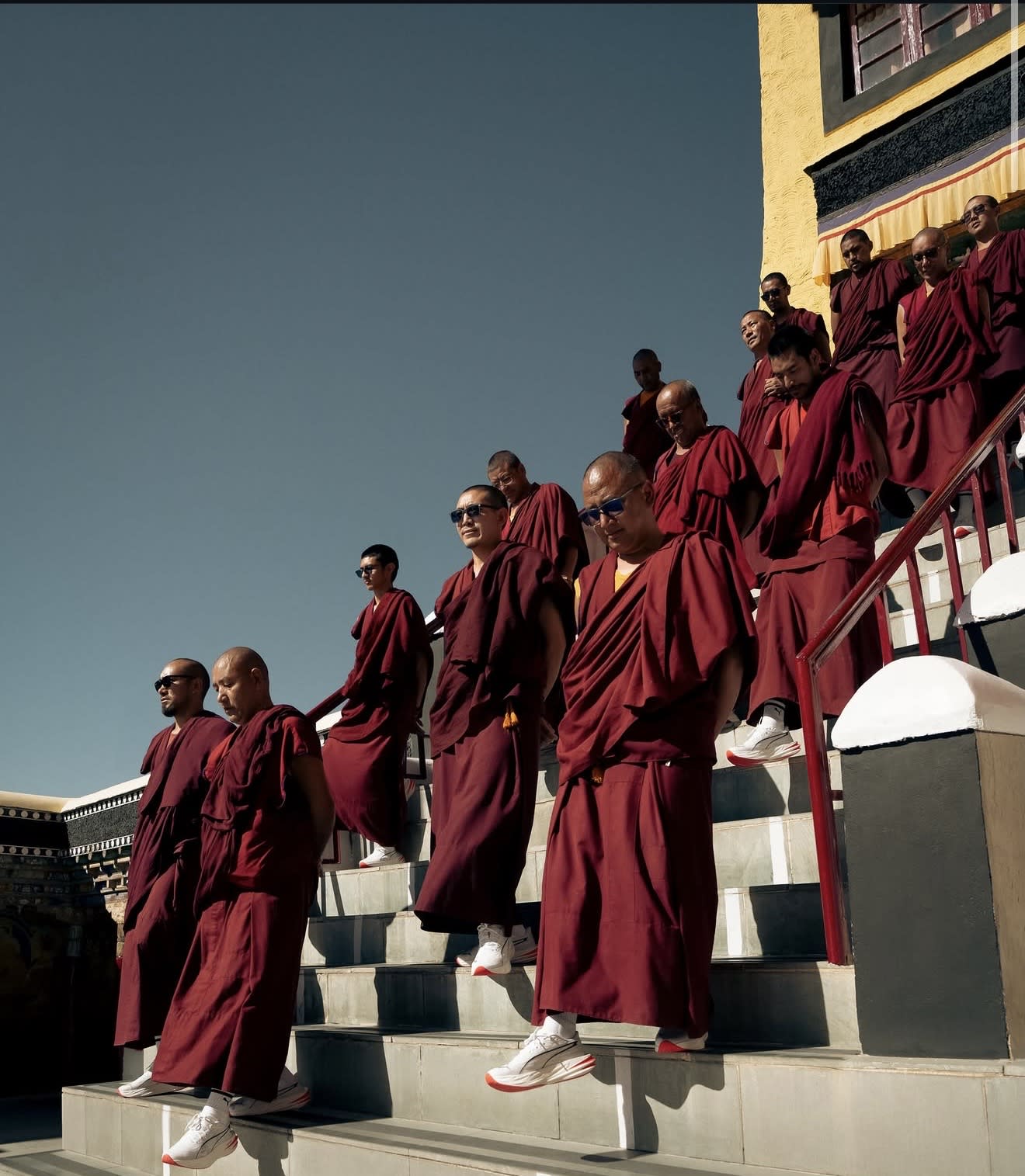
The images are deliberately undramatic. Monks descending monastery steps in a line. Monks walking along a sun-bleached wall beneath prayer flags. Nobody is running. Nobody is racing. They are simply moving through their normal day, the same steps and courtyards they'd walk regardless of whether a sports brand ever showed up, just now in a shoe engineered for a marathon.
PUMA's own caption states the idea plainly: "Meditation and running look like opposites. Yet both demand focus, discipline and resolve. The Ladakh Marathon brought us to Thiksey Monastery, where that shared devotion came to life as the monks stepped into the Deviate PURE NITRO, a shoe built for ease and control, worn by those who master both daily." And the closing line widens the frame: "Meditation in Motion is a celebration of Ladakh, its people and the spirit that runs through it."
The Restraint That Makes It Work
Here's the choice that separates this from a hundred other sports-meets-spirituality campaigns: PUMA didn't ask the monks to run.
It would have been the obvious move. Robed monks sprinting down a mountain road is a striking image, and plenty of brands would have reached for exactly that, action, motion, a race number pinned to a robe. PUMA did the opposite. It photographed monks walking, at their own pace, through spaces they already know by heart. The stillness in the images isn't a missing ingredient. It's the argument.
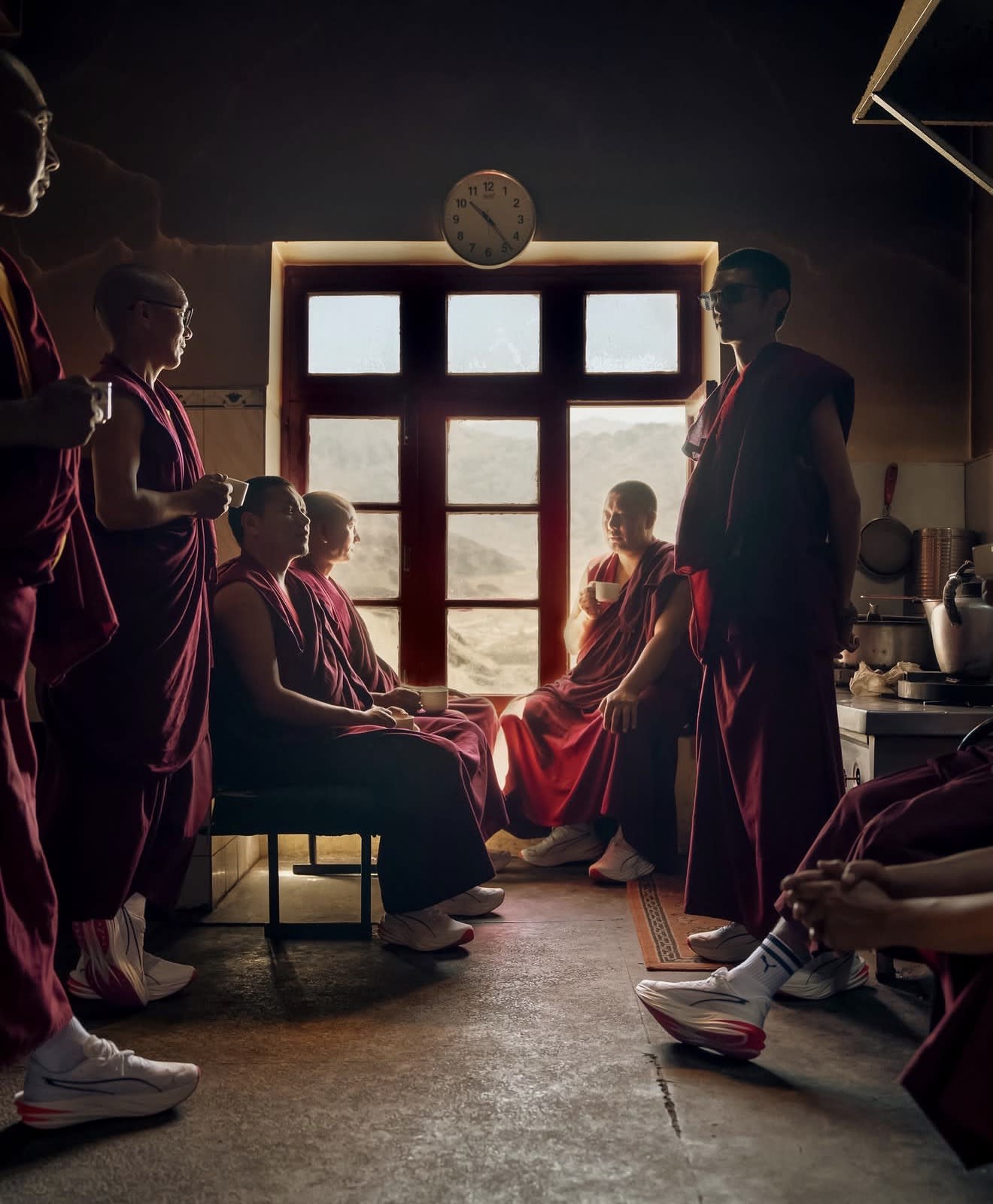
Because the entire thesis of the campaign is that meditation and running are not opposites but the same discipline wearing different clothes, focus, rhythm, presence, the refusal to let the mind wander from the task in front of you. If PUMA had shown the monks running, it would have illustrated only half of that idea, motion. By showing them simply walking, unhurried, in a space built for contemplation, the campaign lets stillness carry equal weight to speed. The shoes are built for a marathon. The men wearing them are demonstrating the other half of the equation.
Why Thiksey Monastery Specifically
The location is doing real work here, not just providing scenery. Thiksey is one of the largest and most visually striking gompas in Ladakh, a working monastery with an active daily rhythm of prayer, ritual and routine, not a backdrop rented for an afternoon. Photographing monks in their own environment, going about an ordinary day, gives the campaign a credibility that a studio shoot or a staged race moment never could. These aren't models playing monks. The devotion PUMA is pointing to is the same devotion that exists there every day, whether or not a camera shows up.
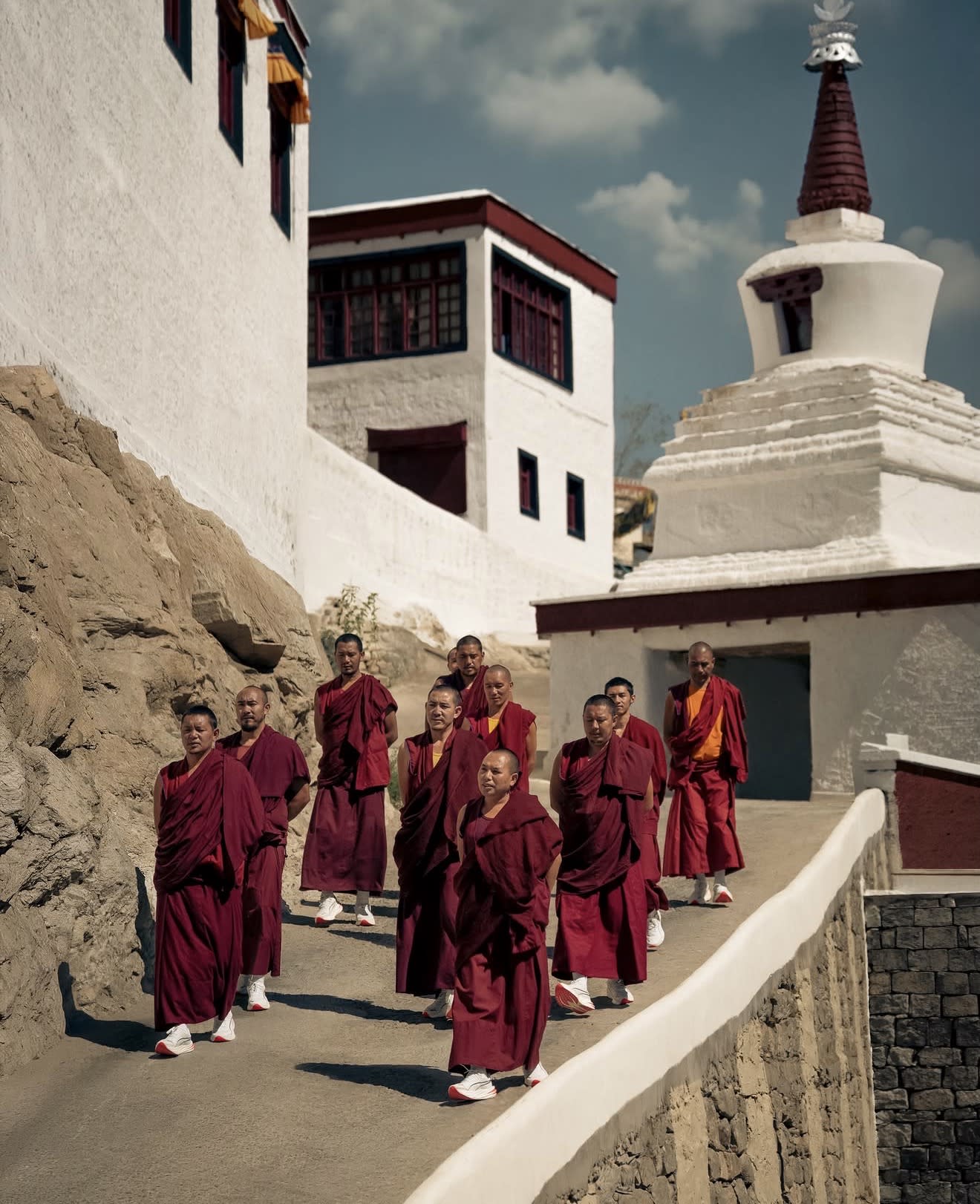
That grounding matters because the campaign's whole claim rests on authenticity. "Discipline and resolve" is easy to assert and hard to earn. Filming it inside a functioning monastery, on an ordinary day, in ordinary robes, is how PUMA earns the claim rather than just stating it.
Why It Works
Because it resists the urge to explain itself. There's no monk crossing a finish line, no slow-motion sprint, no swelling music cue telling you how to feel. Just people walking, at altitude, in a place built for stillness, wearing a running shoe. The idea, that running and meditation share the same internal discipline, sits quietly underneath the image and lets you arrive at it yourself.
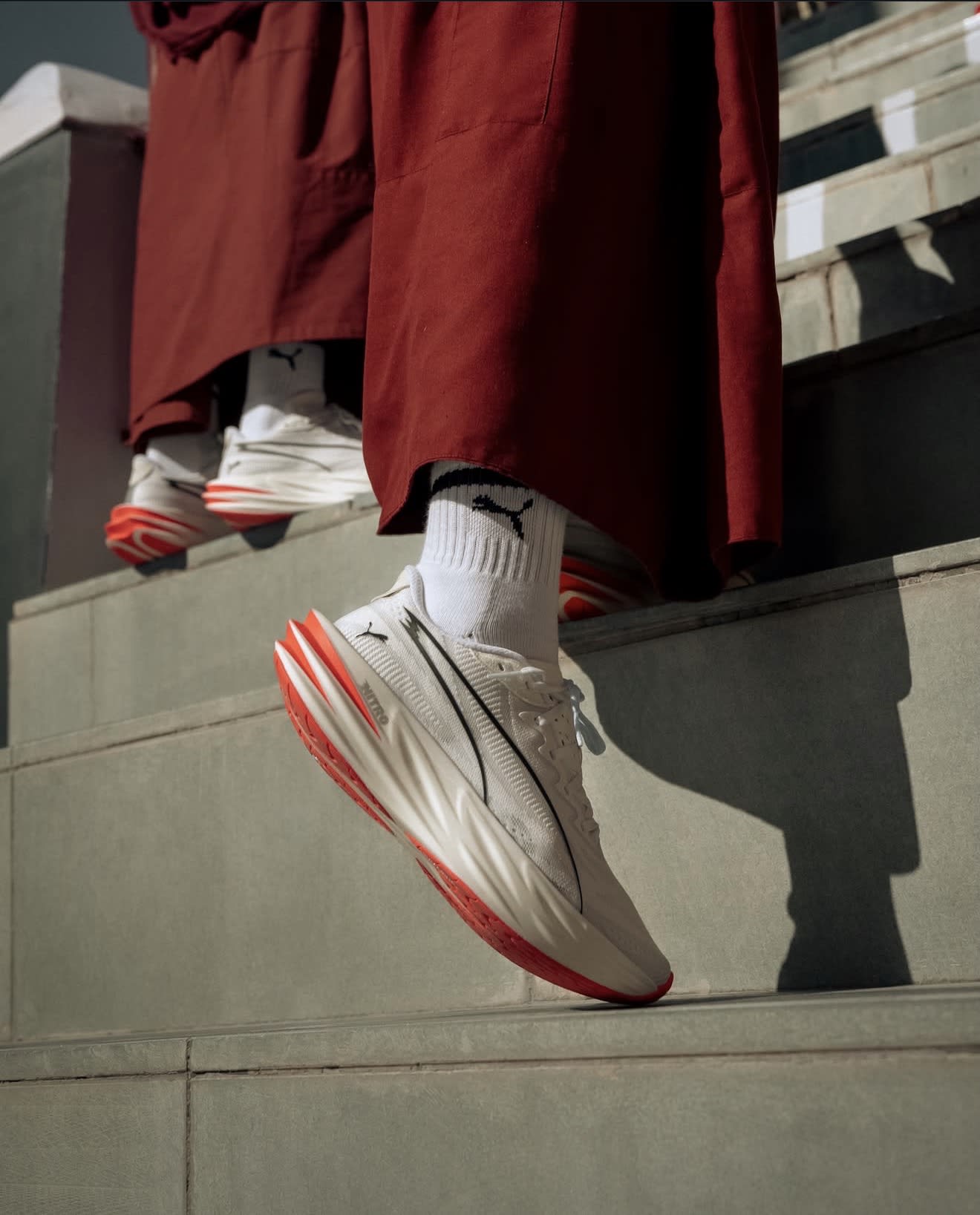
It also does something genuinely rare in athletic marketing: it treats meditation and running as equals rather than treating meditation as a metaphor borrowed to make running sound deep. The framing isn't "running is like meditation, cool concept." It's "these are the same practice," demonstrated by literally the same people embodying both at once, mid-step, unhurried, in robes and racing shoes together.
Tips to Steal
Resist the obvious action shot. The dramatic version of an idea isn't always the strongest one. Sometimes restraint communicates more than motion does.
Film the real thing, don't stage a version of it. A working monastery on an ordinary day carries a credibility no studio set can manufacture. Authenticity is often just refusing to fake the location.
Let the visual argument replace the explanation. The campaign never says "watch how calm they are while running." It simply shows two seemingly opposite disciplines occupying the same frame and trusts you to connect them.
Treat your metaphor as literal, not decorative. Instead of comparing running to meditation, PUMA put both practices on the same people, in the same moment, and let the comparison become fact rather than a tagline.
Choose the setting the idea actually depends on. This concept only works at a real monastery, with real monks, at real altitude. A generic backdrop would have made the same claim and earned none of the trust.
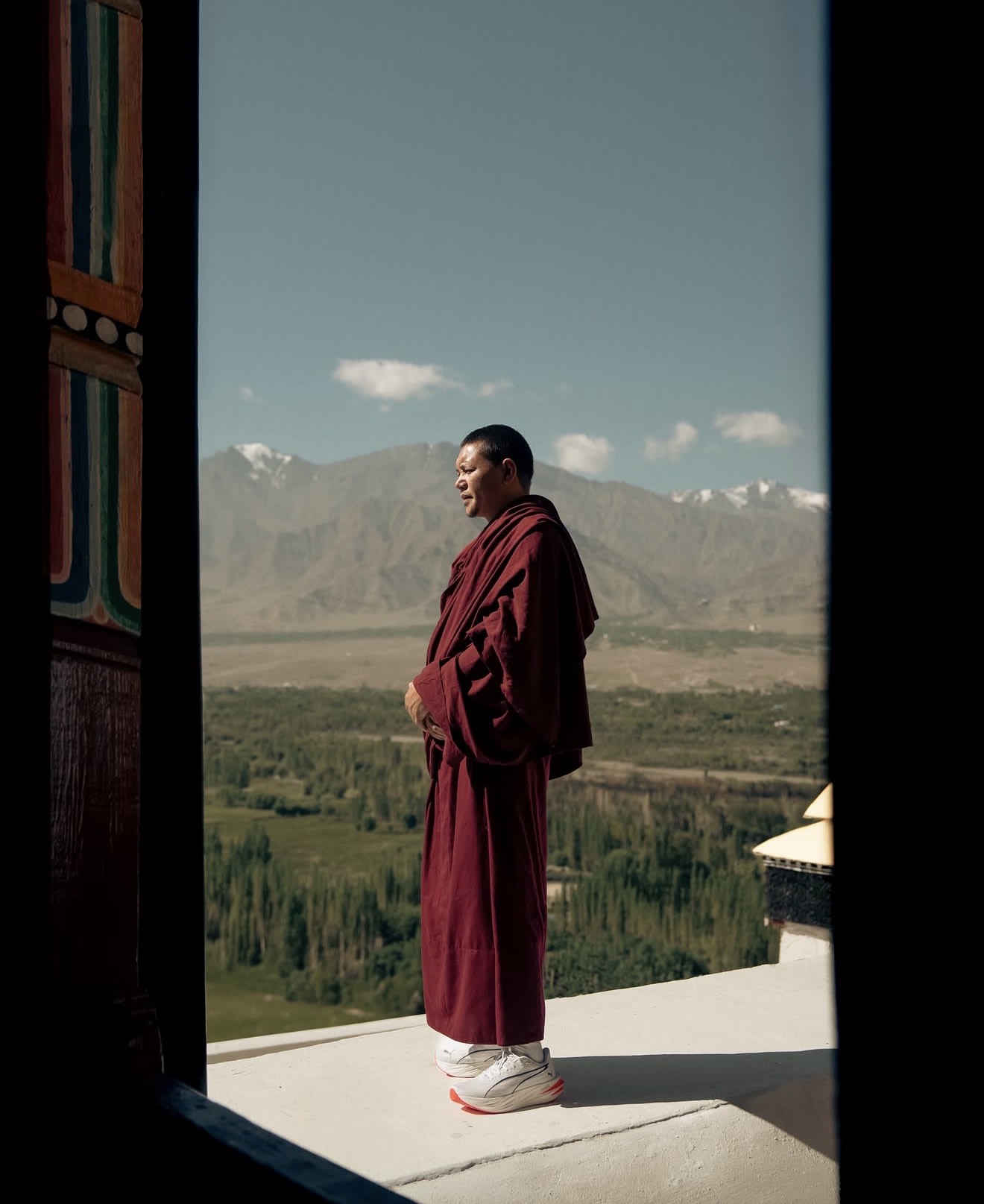
Most marathon marketing chases the finish line, the sprint, the sweat, the number on your chest.
PUMA's version doesn't have a single runner in it, and it might be the most convincing running campaign of the year.
Sometimes the fastest way to prove something is to stand completely still and let people walk toward the idea themselves.
Frequently Asked Questions
What is PUMA's "Meditation in Motion" campaign?+
A campaign by PUMA India, created ahead of the 2026 Ladakh Marathon, featuring Buddhist monks from Leh photographed at Thiksey Monastery wearing the Deviate Nitro Pure running shoe with their traditional maroon robes. It connects the discipline of meditation with the discipline of running.
Are the monks actually running in the campaign?+
No. The images show the monks walking through their ordinary monastery routine, descending steps and walking along monastery walls, rather than running. This restraint is central to the campaign's idea that stillness and motion demand the same discipline.
Why did PUMA choose Thiksey Monastery?+
Thiksey is one of Ladakh's largest and most significant working monasteries. Filming there, on an ordinary day, gives the campaign an authenticity a staged location couldn't offer, since the devotion being depicted is real and ongoing, not performed for the camera.
What shoe is featured in the campaign?+
The PUMA Deviate Nitro Pure, a performance running shoe, described in PUMA's own campaign copy as "built for ease and control."
When is the Ladakh Marathon?+
The 2026 edition runs from September 10 to 13, and is widely regarded as the highest marathon in the world, held between roughly 11,500 and 17,618 feet above sea level.
Written by

I’m Ramaa, a writer and creator at Scribble. I’ve written two books, and writing is something I always find my way back to, whether that’s articles, scripts, captions, or overly long notes app rambles I swear will “be useful later.” I enjoy thinking about why people create, how ideas spread online, and what makes content feel genuinely human. When I’m not writing, I look after regulatory compliance and legal admin at Scribble, and I’m a graduate of the School of Policy, New Delhi. Outside of work, I’m a musician and an avid reader.