TL;DR
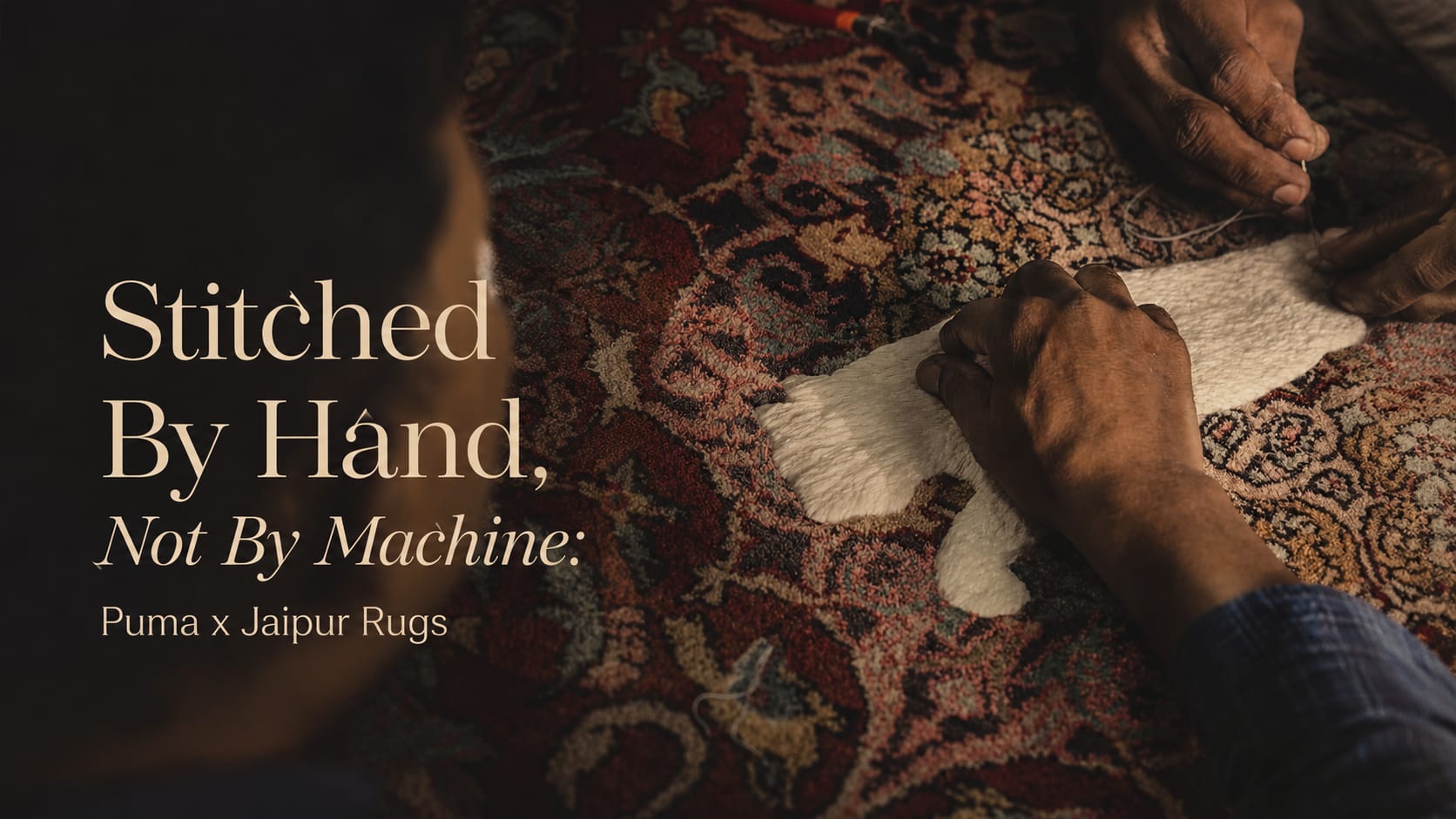
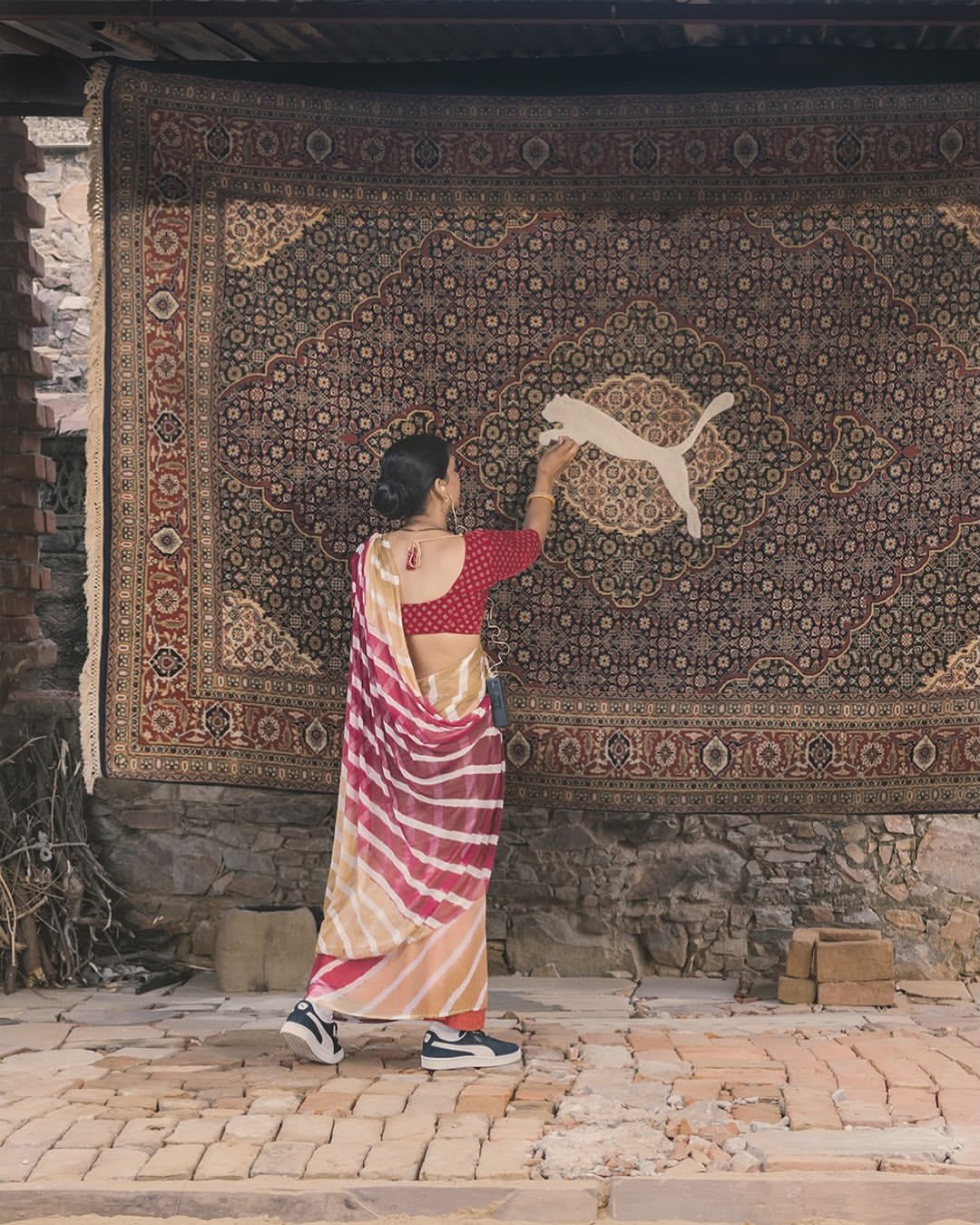
PUMA and Jaipur Rugs just launched The Legacy Lives On, a Suede collection dyed in the exact colours of a Rajasthani rug, maroon, dusty rose, ochre, sand. The tagline says the whole thing in one line: "The Suede was born on the street, and Jaipur Rugs was born in the villages of Rajasthan." But the image that actually gets you isn't the shoe. It's the video of a real artisan, hands moving fast, hand-stitching the PUMA logo into the centre of a rug, the same way they've hand-knotted patterns for generations. A machine could do that logo in half a second. A person is doing it with their hands, on purpose, and that's not a design choice. That's the entire point.
The Collaboration
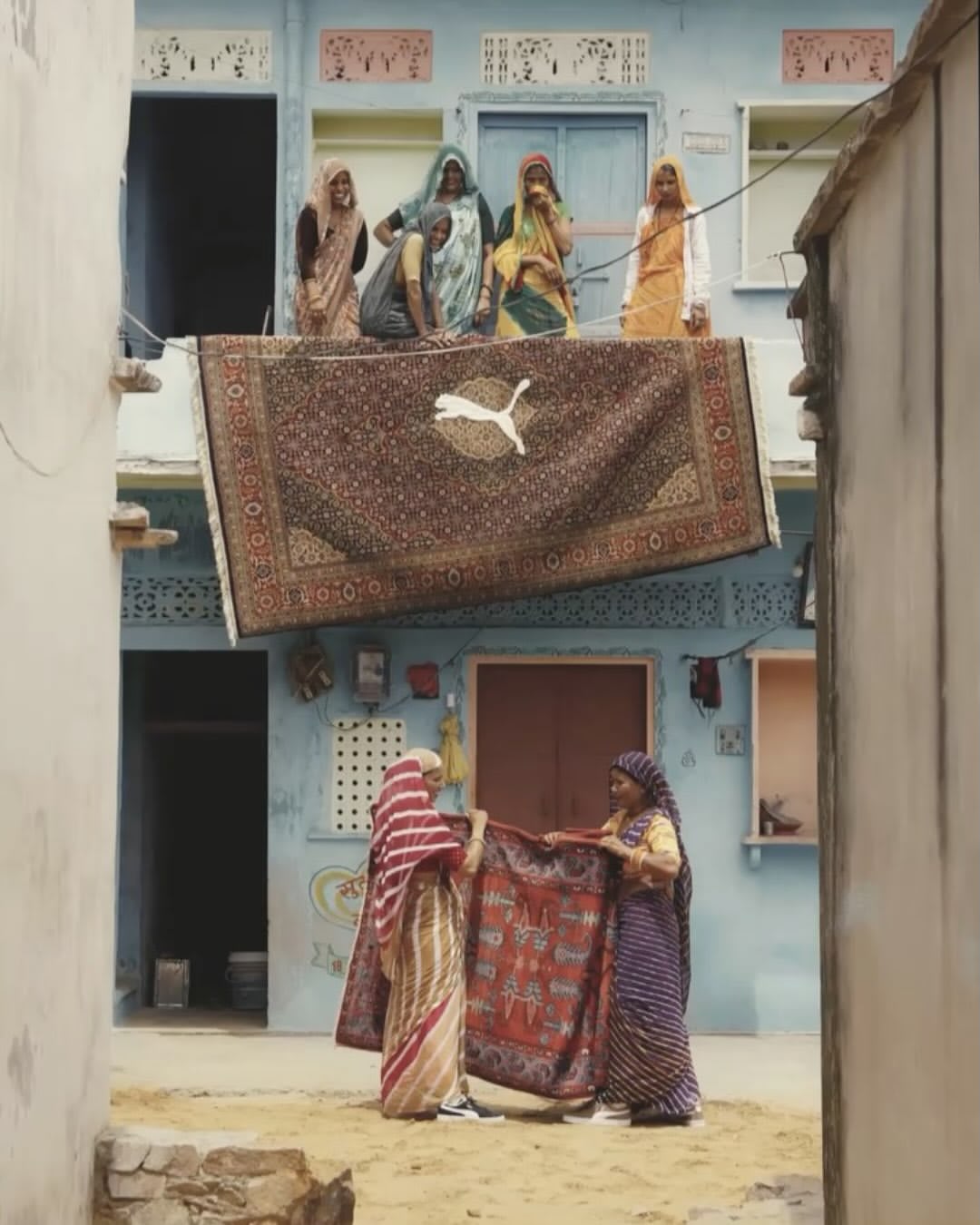
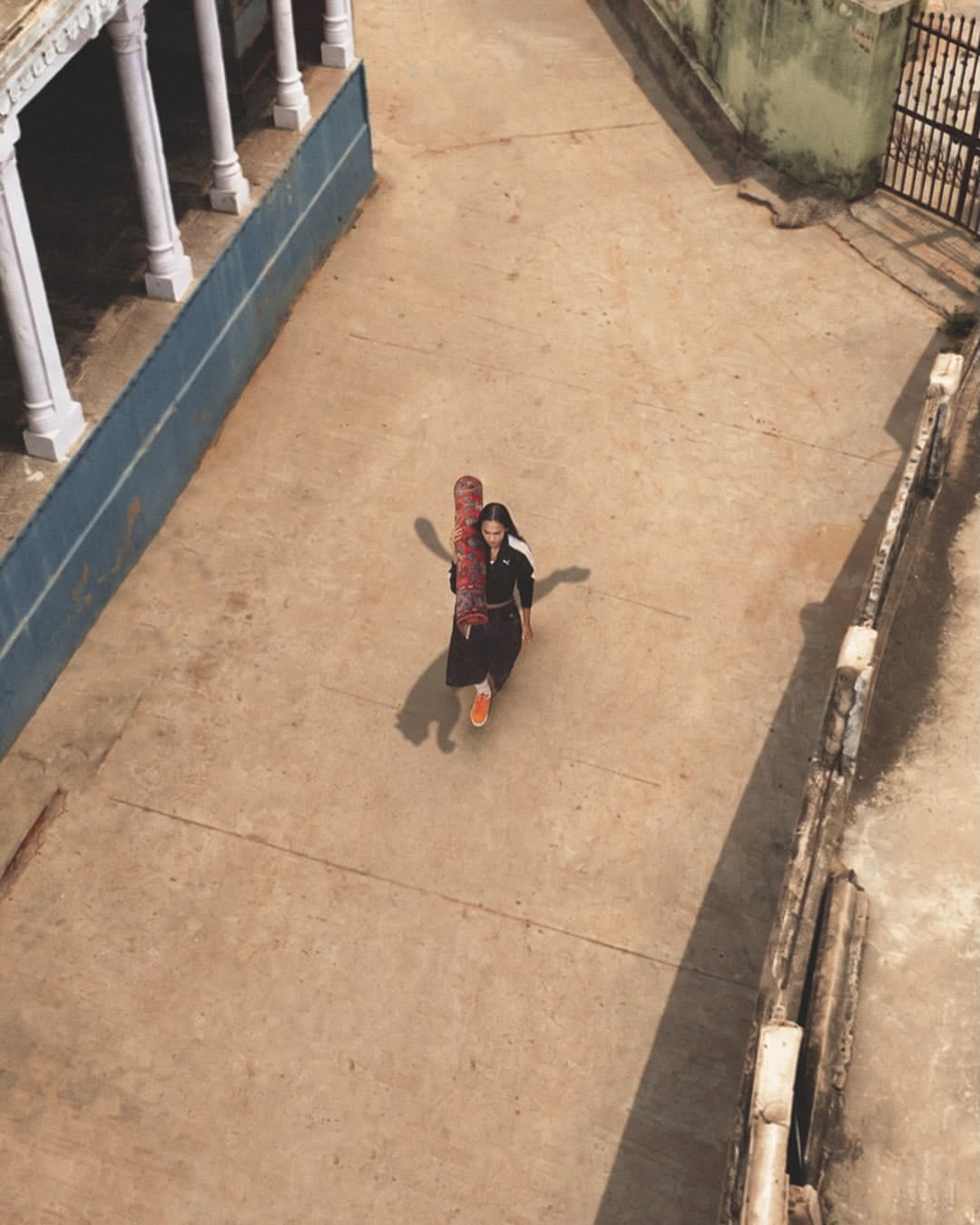
Here's what's actually dropping. PUMA's Suede, the classic 1968 sneaker that basically invented the "street shoe," is getting a version dyed entirely in Jaipur Rugs' colour language, maroon, dusty rose, ochre, sand, pulled straight from the rugs instead of PUMA's usual bright palette. The campaign visuals lean hard on texture: shoes photographed against real handwoven rugs, close-ups on thread and knot detail you'd usually only see on the rug itself.
And the tagline does something most brand collabs never bother to do, it actually earns its poetry: "The Suede was born on the street, and Jaipur Rugs was born in the villages of Rajasthan." Two completely different worlds, a global streetwear icon and a centuries-old craft tradition, both starting from the ground up, both eventually becoming something the world wanted a piece of.
The Detail That Actually Hits: A Person Stitched the Logo
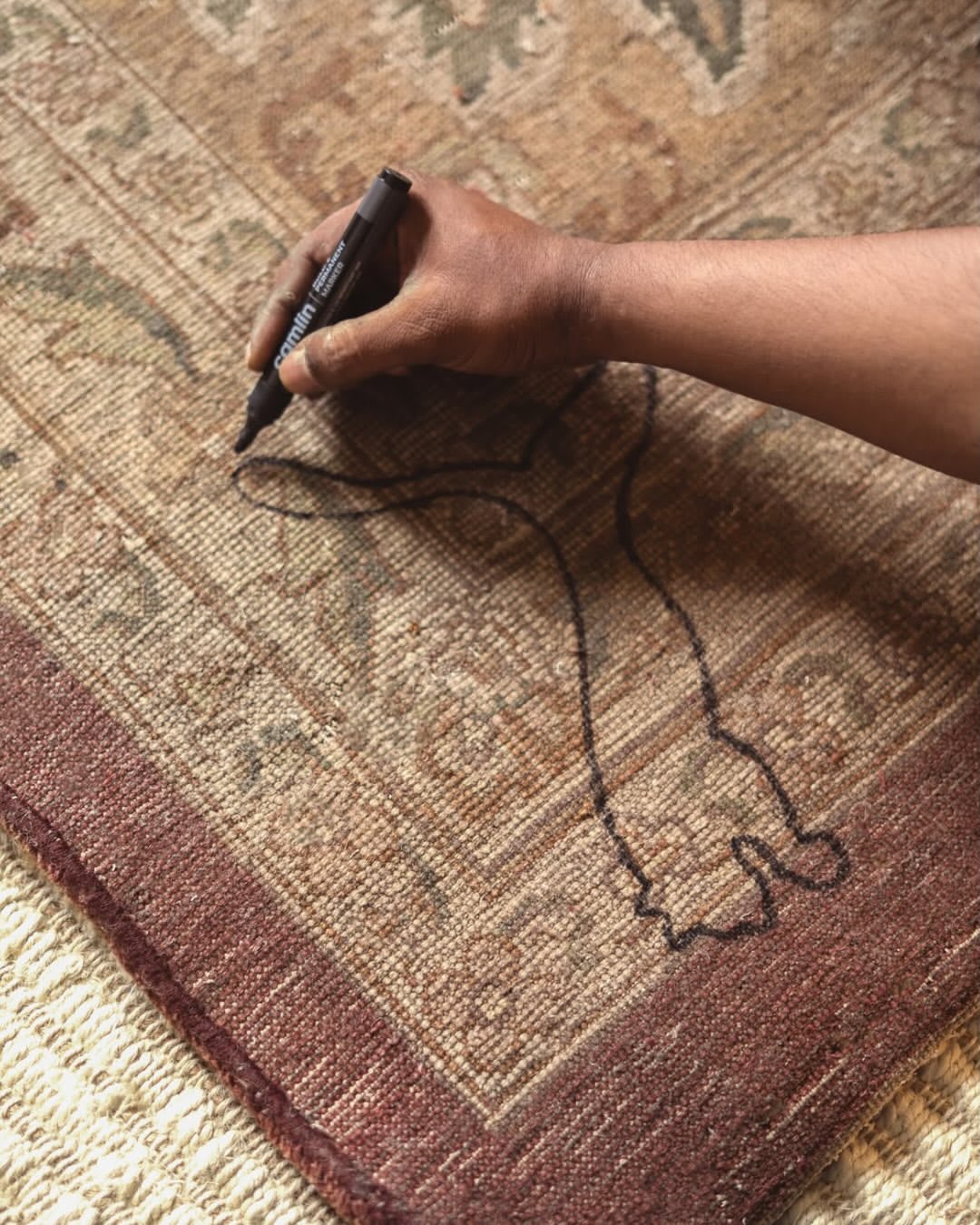
Here's the moment that makes this more than a nice colour palette. On Jaipur Rugs' own Instagram, there's footage of artisans hand-stitching the PUMA logo into the centre of a rug, by hand, the exact same way they've knotted traditional patterns their entire working lives.
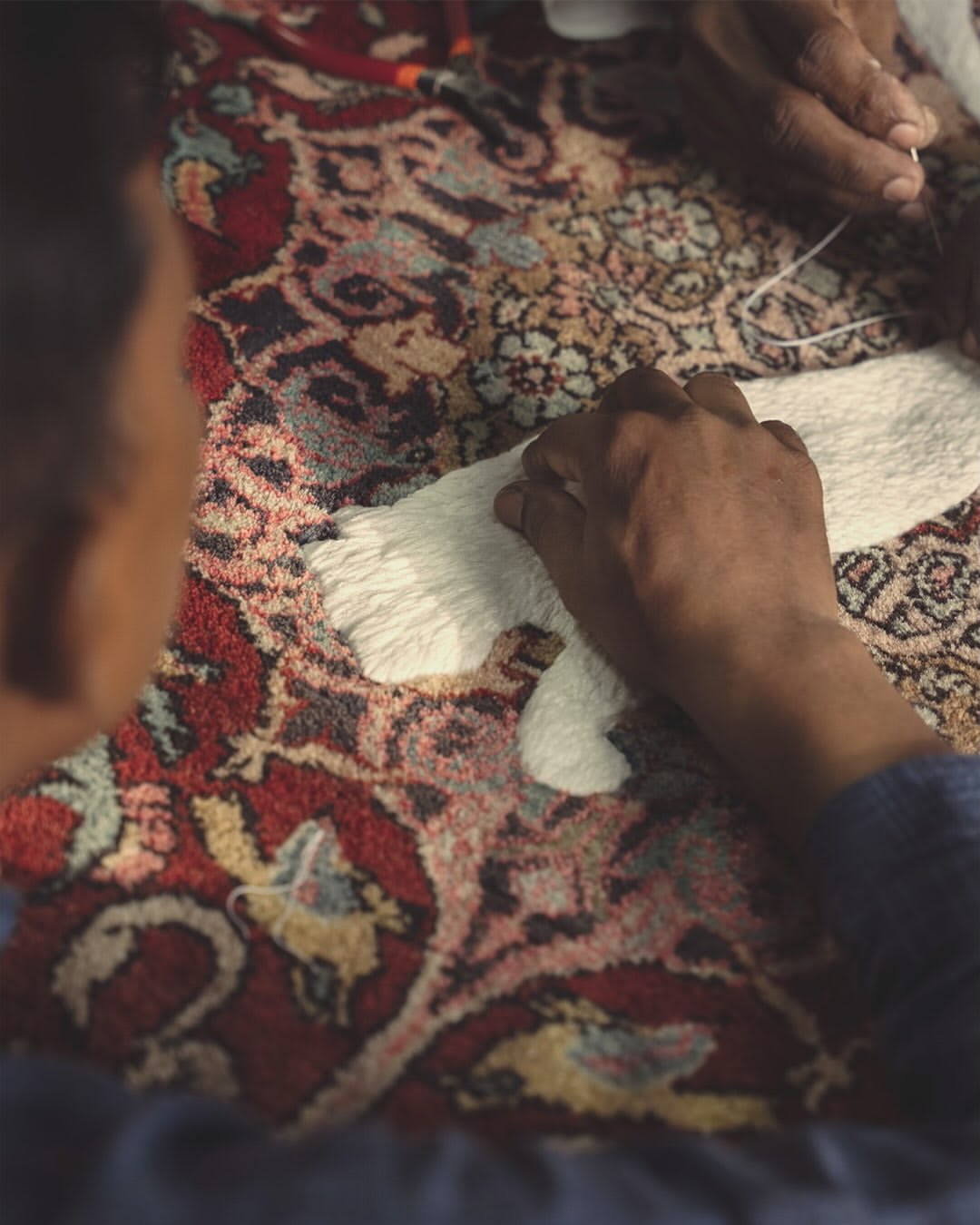
Sit with that for a second. A global sneaker logo, the kind of asset a brand normally reproduces identically by machine, millions of times, with zero human variation, is instead being placed into fabric one knot at a time, by someone's actual hands. It takes time. It takes skill nobody can fake. And it means that literally no two of those rugs, or the products photographed on them, are exactly alike, because human hands aren't machines. That's not a bonus feature. In a world where anyone can generate a "handmade" aesthetic with a filter, watching someone actually do it, slowly, with real thread and real callouses, hits completely differently.
The Story Underneath: Nine Artisans to Forty Thousand
The reason this collaboration doesn't feel like a brand cynically borrowing "craft" for aesthetics is the story sitting behind Jaipur Rugs itself, and it's a genuinely good one.
Nand Kishore Chaudhary started the company in 1978 with a loan from his father, two looms, and nine artisans in a small town called Churu. That's it. That's the whole beginning. No factory, no investors, just nine people and two looms. Today, Jaipur Rugs works with roughly 40,000 artisans across 600 villages in India, and sells handmade rugs in more than 40 countries. The overwhelming majority of those artisans are women, many working from their own homes, building an independent income around their own lives rather than a factory shift.
So when the tagline says Jaipur Rugs "was born in the villages of Rajasthan," it's not a poetic flourish written by an ad agency. It's literally, plainly true, and it's the kind of humble-beginnings story that usually gets invented for brands, except this one actually happened.
Why It Works
Because it doesn't ask you to imagine anything. It shows you a real hand doing real, slow, skilled work, and lets that image do what a thousand words about "heritage" and "craftsmanship" never quite manage to do on their own.
Most collaborations borrow "authenticity" as a vibe, a font, a colour, a word like "heritage" printed somewhere on a tag. This one borrows an actual, visible, unfakeable human action. You can't automate a knot. You can't fake the time it took. And in a moment where feeds are increasingly full of things nobody made with their hands, watching someone genuinely make something is quietly one of the most arresting things you can put in front of an audience.
It's also just a good match on paper. Both PUMA's Suede and Jaipur Rugs started as something scrappy and street-level, one on a sidewalk, one in a small town with two looms, and both grew into something the whole world wanted, without losing the fact that a real person made the thing.
Tips to Steal
Show the hand, not just the heritage word. "Handcrafted" on a label is invisible. Footage of an actual hand doing actual, slow, skilled work is unforgettable, and nearly impossible to fake convincingly.
Only borrow a story you can prove. Jaipur Rugs' founding story works because it's real and checkable, nine artisans, a father's loan, two looms. A borrowed or invented version of this always leaks.
Let the craft slow you down on purpose. In a feed built for speed, footage of something that visibly took time and skill stands out precisely because it refuses to be instant.
Find the parallel origin story. "We both started from nothing" only works when both halves are actually true. Don't force a heritage story onto a brand that doesn't have one.
Let the human detail carry the campaign, not the product shot. The shoe is not what people will remember. The hands will be.
You will forget the exact shade of maroon on that Suede within a week.
You will not forget the sight of a person's hands, moving fast and sure, stitching a global logo into a rug one knot at a time, the same way their hands have made things for years.
That's not a marketing trick. That's just what it looks like when something is actually made, not manufactured.
Frequently Asked Questions
What is PUMA x Jaipur Rugs?+
A collaboration called "The Legacy Lives On," featuring PUMA's classic Suede sneaker dyed in colours drawn from Jaipur Rugs' craft, maroon, dusty rose, ochre and sand. Release date and pricing haven't been announced yet.
Who is Jaipur Rugs?+
An Indian rug company founded in 1978 by Nand Kishore Chaudhary with a loan from his father, two looms, and nine artisans. It now works with around 40,000 artisans across 600 villages in India and sells handmade rugs in more than 40 countries.
What makes this collaboration different from a typical brand partnership?+
Jaipur Rugs shared footage of artisans hand-stitching the PUMA logo into rugs by hand, the same traditional technique used for its regular patterns, rather than reproducing the logo mechanically. It ties the collaboration to a real, visible craft process rather than just a colour scheme.
Has PUMA done collaborations like this before?+
Yes, including partnerships with Rihanna's Fenty label, A$AP Rocky, and a JJJJound redux of the Suede and Speedcat. Most of PUMA's past collaborations have centred on celebrity and streetwear culture rather than a craft tradition.
When does the PUMA x Jaipur Rugs collection release?+
As of the announcement, the release date and pricing have not yet been confirmed.
Written by

I’m Ramaa, a writer and creator at Scribble. I’ve written two books, and writing is something I always find my way back to, whether that’s articles, scripts, captions, or overly long notes app rambles I swear will “be useful later.” I enjoy thinking about why people create, how ideas spread online, and what makes content feel genuinely human. When I’m not writing, I look after regulatory compliance and legal admin at Scribble, and I’m a graduate of the School of Policy, New Delhi. Outside of work, I’m a musician and an avid reader.