SuperHealth said hospitals shouldn't be scary places, then hosted a music night inside one to prove it. The internet wasn't ready. Here's why the diagnosis was right and the timing wasn't.
TL;DR
SuperHealth, the MS Dhoni-backed hospital chain built by ex-Apollo and Ola Electric executive Varun Dubey, hosted a musical event inside its Bengaluru hospital on a Saturday night, arguing that hospitals don't need to be scary places. The backlash was swift and loud, "tone deaf" became the headline word, even though the event was, by Dubey's own account, curated, patient-invited, and run in the basement and mezzanine after OPD hours. The underlying idea, that Indian hospitals are designed around fear rather than dignity, is genuinely correct and overdue for someone to say loudly. But the execution asked the public to accept an emotional leap it wasn't ready to make in one step. This is a breakdown of both halves: why the vision is right, and why the room wasn't.
The Event
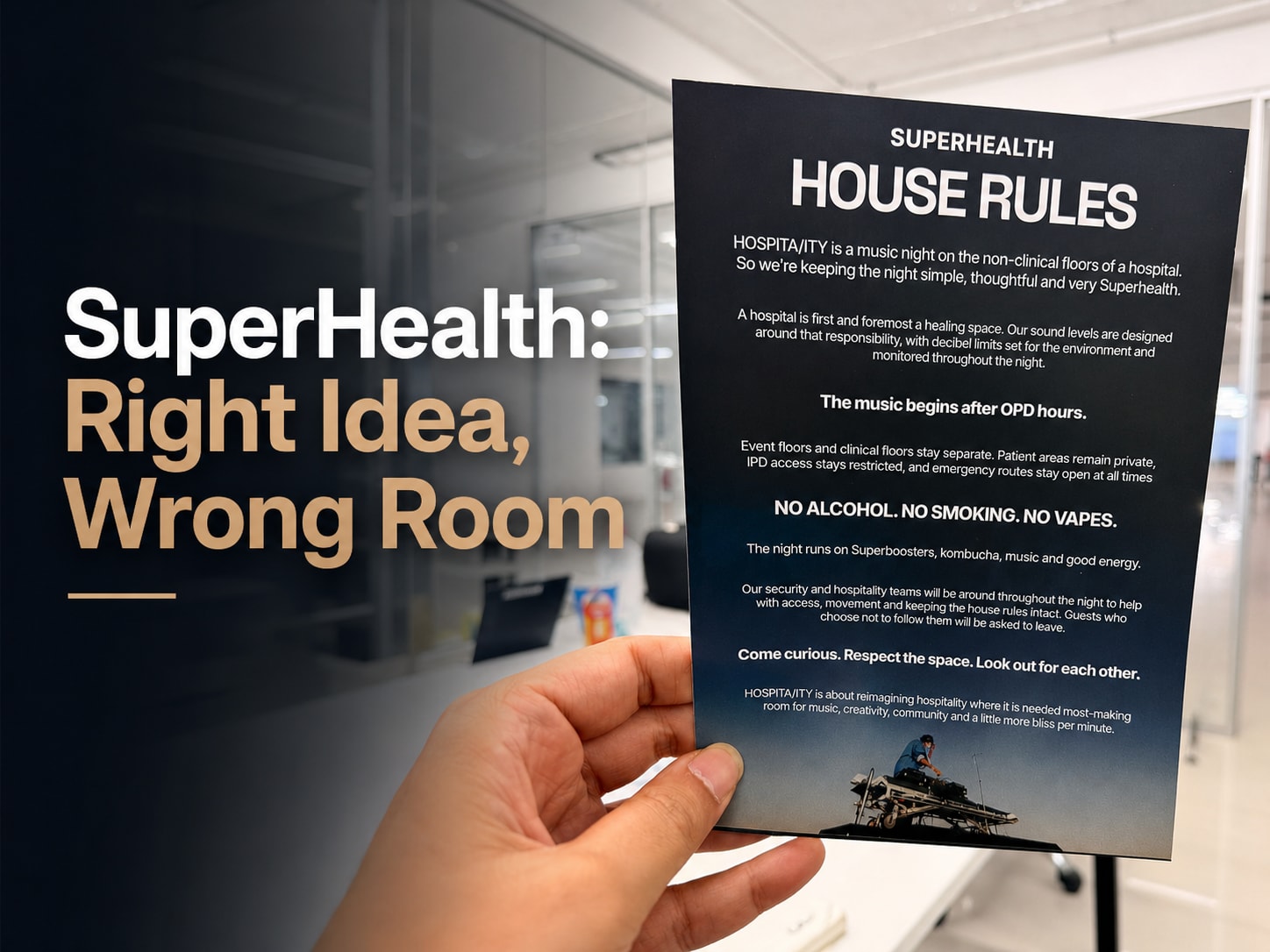
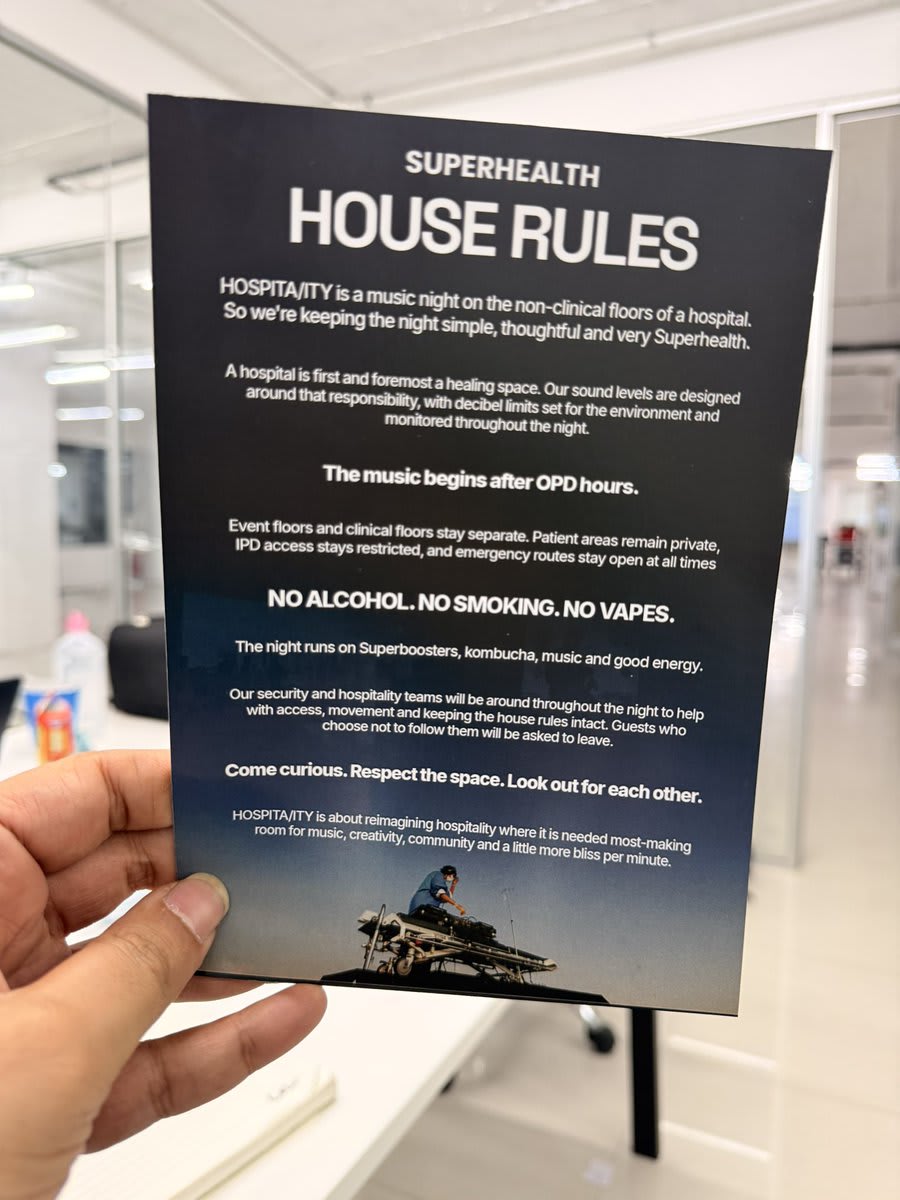
Here's what actually happened. SuperHealth hosted a music night inside its Bengaluru hospital on a Saturday, closing OPDs at 8pm as usual, then opening the event at 10pm with registration in the OPD lobby, and activity spread across the basement, mezzanine and other floors. According to Dubey, the guest list was curated, every patient and attendant was invited, and several joined, some out of boredom, some wanting a distraction, and some because, in his words, a hospital can feel like a very lonely place on a Saturday night.
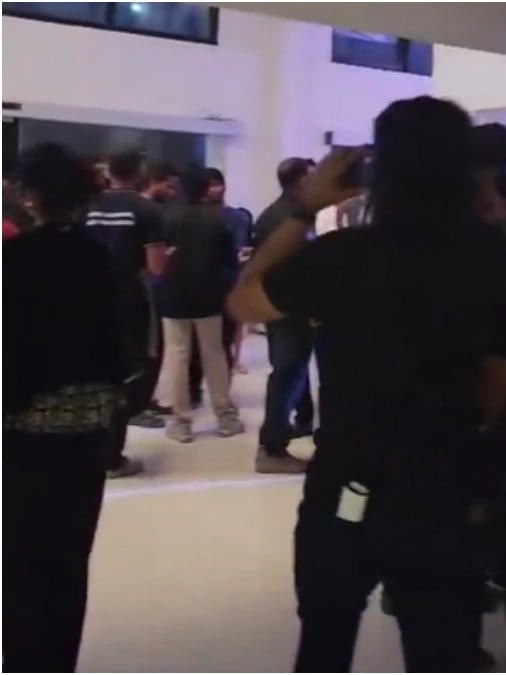
Reaction online was fast and largely hostile. The framing that stuck: a hospital hosting a party, near people in pain, recovering from surgery, or sitting with someone critically ill, felt jarring at best and disrespectful at worst. Dubey didn't retreat. He defended it publicly, arguing that "hospitals that don't scare people" is the entire idea SuperHealth is built around, and that hospitals simply don't need to be the frightening places they've always been.
The Vision, and Why It's Actually Right
Strip away the party for a second and look at the underlying claim, because it deserves to be taken seriously on its own.
Indian hospitals, as a category, are designed around clinical efficiency and liability, not around how a frightened human being experiences the space. The lighting is harsh. The silence is heavy in exactly the wrong way, not calming, but ominous. The waiting is endless and unexplained. Nobody chooses to be there, and almost everyone who walks in is already afraid, of pain, of a diagnosis, of losing someone. A building can absolutely make that fear worse or gentler, and for decades, the Indian hospital's design has defaulted to worse.
So "hospitals shouldn't be scary" isn't a gimmick dressed up as a mission statement. It's a real, under-discussed problem in healthcare design, and someone with the platform and capital to challenge it is worth listening to. SuperHealth's broader positioning, zero wait times, transparent pricing, patient-first design, has already been built around exactly this instinct. The music night wasn't a random stunt bolted onto an unrelated brand. It came from a coherent, genuinely good idea.
The Execution, and Why It Landed Wrong
Here's the problem: a correct diagnosis doesn't automatically justify any prescription, and this one asked for a bigger leap of trust than the moment could bear.
A hospital carries a psychological weight that a bar or a mall doesn't, because for many of the people physically present, it is the site of the worst night of their life. Even with a curated guest list, closed OPDs, and every patient technically invited, the building itself doesn't stop being a hospital at 10pm. Someone two floors up is still in pain. Someone in a waiting room is still hearing news they didn't want. "We invited everyone nearby" answers the question of consent for the party's own guests, but it doesn't answer the discomfort of people who didn't sign up to have their hardest night become the backdrop for anyone else's distraction, however good the intention.
This is the gap between a private, thoughtful gesture and a public, photographable event. A quiet acoustic set for consenting long-term patients on a ward, arranged with care, is a different emotional object than "we hosted a musical event at the hospital," a phrase engineered to travel, get covered, and be defended in public. The moment it became a story, it stopped being patient care and became a stunt, whether or not that was the intention, and stunts get judged by optics, not internal logic.
Why the Timing Matters as Much as the Idea
The uncomfortable truth for SuperHealth is that being right too early looks identical to being wrong.
Culture changes how much discomfort a hospital is allowed to hold before an idea like this reads as care instead of spectacle. Right now, most people's mental model of "hospital" is still solemn, sterile, careful. A brand can absolutely push against that, but pushing against a deeply held cultural expectation usually requires smaller, quieter, harder-to-photograph steps first, better lighting, softer materials, a genuinely calmer waiting experience, before it earns the trust to attempt something as loud and visible as a music night. SuperHealth skipped the trust-building steps and went straight to the boldest possible expression of the idea, which meant the public reacted to the size of the leap, not the merit of the direction.
What Marketers Should Actually Take From This
A true insight doesn't excuse a premature execution. Being right about the problem buys you credibility, not blank-cheque permission for how loudly you solve it.
Consent from participants isn't the same as comfort for bystanders. In a shared, emotionally loaded space, the people who didn't opt in matter to the reaction just as much as the ones who did.
Build public trust in smaller units before spending it on a spectacle. The boldest expression of a good idea should usually come after several quieter, harder-to-misread ones, not before them.
Ask whether the moment is a story or a stunt. If the internal memo and the external headline describe the same event completely differently, that gap is where the backlash lives.
Don't confuse defending the idea with defending the decision. Dubey is right that hospitals shouldn't be scary. That doesn't mean this specific event was the right way to prove it, and conflating the two in a public defense reads as deflection rather than accountability.
SuperHealth didn't get the diagnosis wrong. Indian hospitals really are built to frighten, and somebody needed to say so.
It got the dosage wrong. You don't fix years of institutional fear with one loud Saturday night.
A good idea delivered too early doesn't fail because it was wrong. It fails because nobody asked it to arrive yet.
Frequently Asked Questions
What happened at the SuperHealth hospital music night?+
SuperHealth, a Bengaluru-based hospital chain backed by MS Dhoni, hosted a musical event inside one of its hospitals on a Saturday night after OPD hours. Founder Varun Dubey said the guest list was curated and every patient and attendant was invited, with the event held in the basement, mezzanine and other floors.
Why did people call it tone-deaf?+
Critics argued that hosting a party-like event inside a functioning hospital, near patients in pain, recovering from surgery, or with critically ill family members, was inappropriate regardless of curation or consent from attendees, since other people nearby hadn't opted into the noise or atmosphere.
How did SuperHealth's CEO respond to the backlash?+
Varun Dubey defended the event publicly, saying "hospitals shouldn't be scary places" is the core idea behind everything SuperHealth does, and stood by the decision rather than apologizing for it.
Is the idea that "hospitals shouldn't be scary" a valid one?+
Yes, it reflects a real and under-addressed problem in healthcare design. Most hospitals are built around clinical efficiency rather than emotional experience, and rethinking that is a legitimate and useful goal, even if this specific execution was contested.
What's the actual lesson from the backlash?+
That a correct underlying insight doesn't automatically justify any execution of it. Bold ideas that challenge deep cultural expectations usually need to be introduced gradually to earn public trust, rather than delivered all at once as a headline-generating event.
Written by

I’m Ramaa, a writer and creator at Scribble. I’ve written two books, and writing is something I always find my way back to, whether that’s articles, scripts, captions, or overly long notes app rambles I swear will “be useful later.” I enjoy thinking about why people create, how ideas spread online, and what makes content feel genuinely human. When I’m not writing, I look after regulatory compliance and legal admin at Scribble, and I’m a graduate of the School of Policy, New Delhi. Outside of work, I’m a musician and an avid reader.