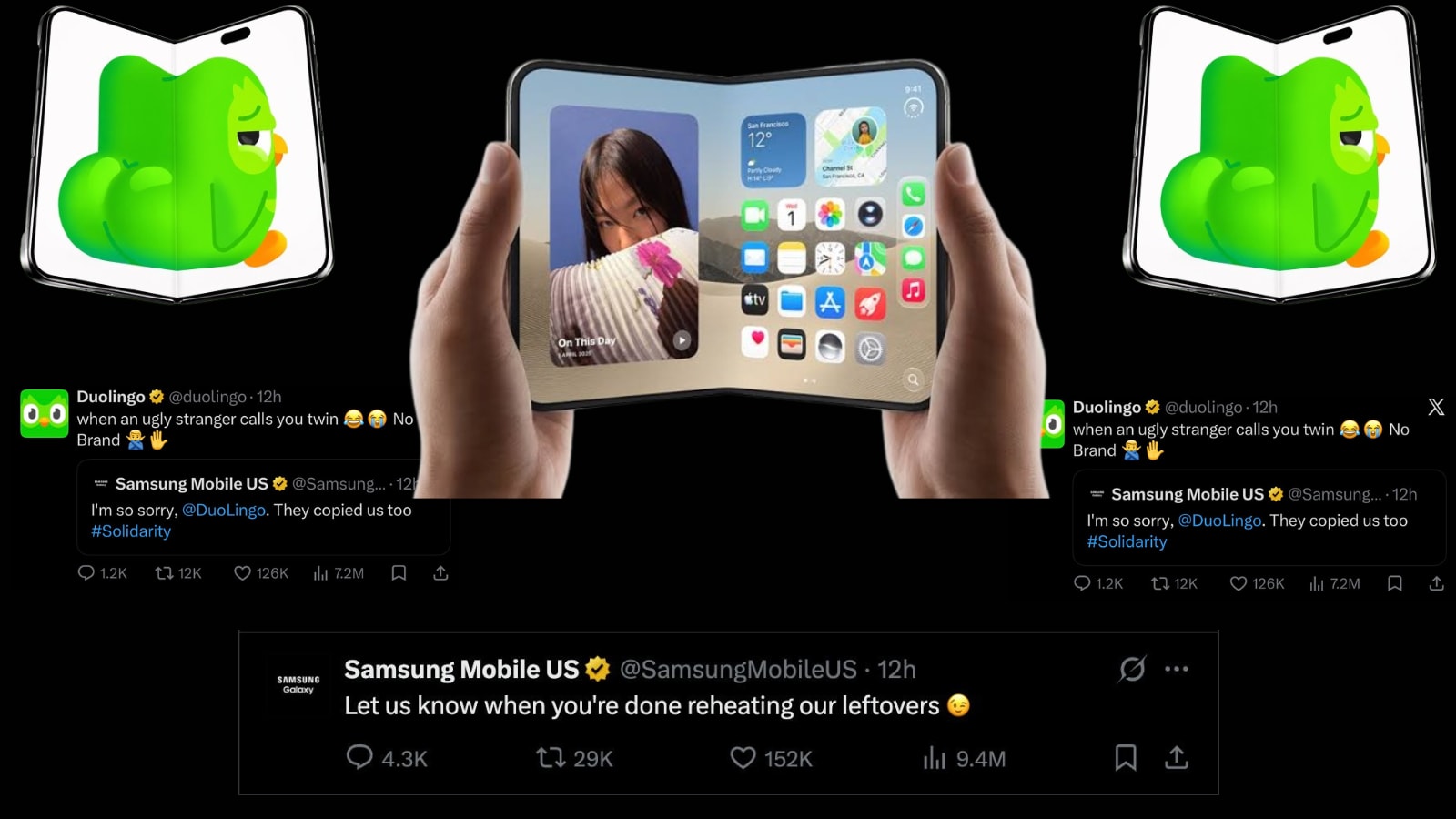
Apple picked a name for its first foldable. It happened to be the same name as a green owl that teaches you Spanish. Samsung had a joke ready before Apple even finished its keynote.
TL;DR
On September 9, 2026, Apple unveiled the iPhone Duo, its first foldable phone, arriving seven years after Samsung created the category. Samsung didn't wait for the dust to settle. Hours before Apple's keynote, it dropped a commercial called "Welcome to Foldable," pointedly needling the iPhone Duo for likely being heavier and thicker than the Galaxy Z Fold8, alongside a separate line: "imitation is the sincerest form of flattery... it's entirely new, and at the same time, remarkably familiar." Then things got genuinely funny for a reason nobody could have planned. Apple's chosen name, Duo, is also the name of Duolingo's owl mascot. Samsung noticed, joked about it publicly, and pulled Duolingo directly into the bit. What followed was a short, warm, very online exchange between two brands that have nothing to do with each other, riffing on a coincidence at a third company's expense, on the day of its biggest launch of the year.
The Setup
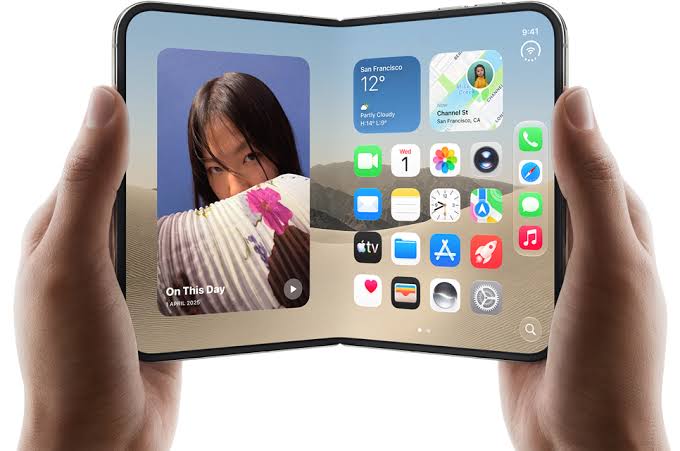
Here's the sequence, in order. Apple's iPhone Duo arrived after years of foldable speculation and direct comparison to Samsung's seven generations of Galaxy Fold devices. The tech press had spent the better part of the year debating whether Apple could "solve" foldables where Samsung's hardware had matured but adoption had stayed niche.
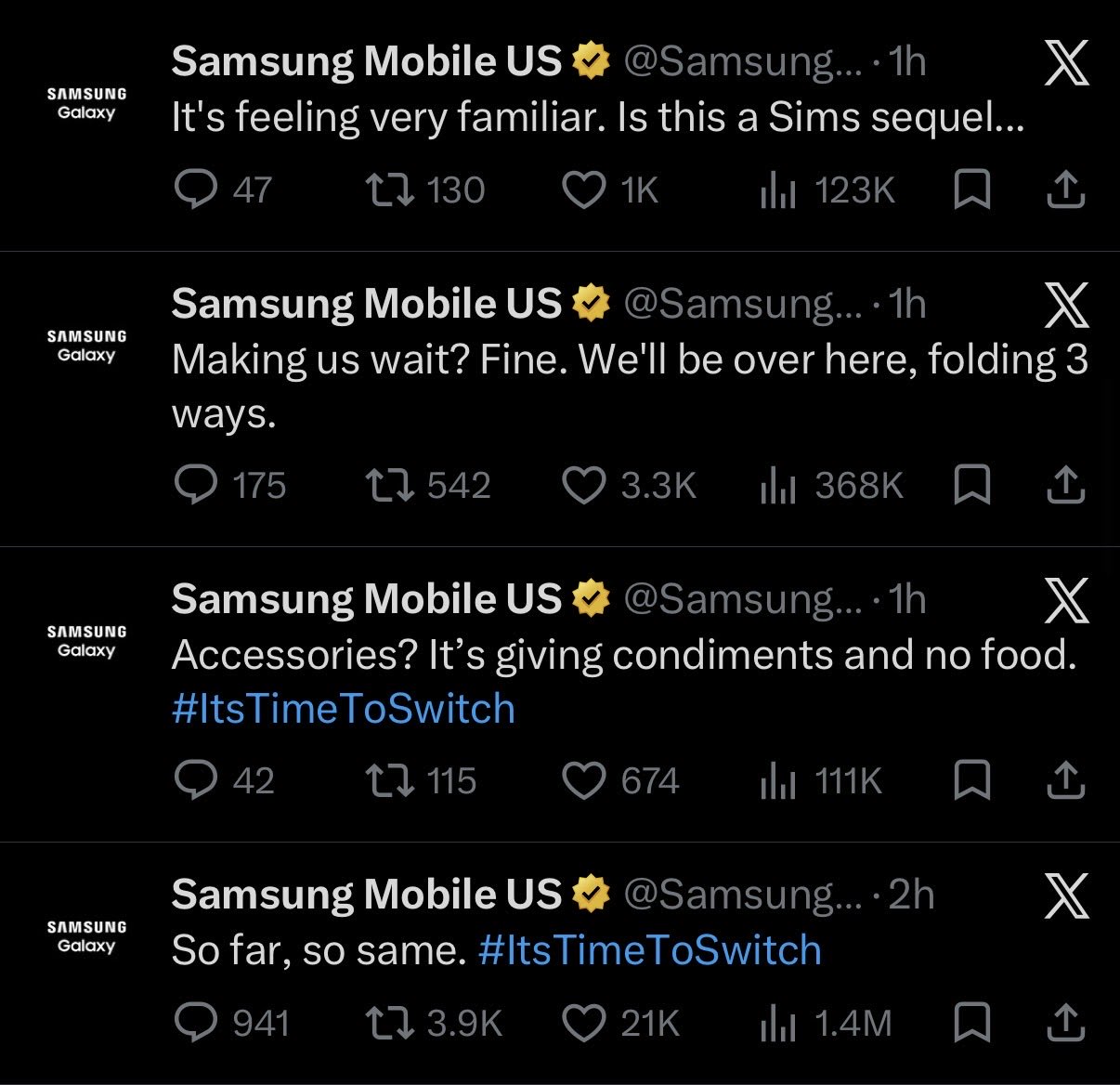
Samsung wasn't going to let that debate happen without its voice in the room. Its "Welcome to Foldable" ad landed just hours before Apple's official unveiling, timed precisely to sit inside the same news cycle. The message was specific and technical: the Galaxy Z Fold8 is 4.5 millimetres thick unfolded and weighs 201 grams, lighter than Apple's own iPhone 17 Pro, and Samsung's own R&D team told Wired directly that they expect the iPhone Duo to be noticeably heavier. Samsung Canada ran a companion line on Instagram: "imitation is the sincerest form of flattery," paired with "it's entirely new, and at the same time, remarkably familiar," a dig delivered with a wink rather than a sneer.
The Collision Nobody Planned
Here's the part that turned a normal competitor-trolling moment into something genuinely shareable. Apple's chosen name for its foldable, Duo, is also the name of Duolingo's mascot, the green owl that has, for years, built its entire brand personality around notification guilt and unhinged social media humour.
Samsung noticed the overlap and made a joke of it, quote-tweeting a moment aimed at Duolingo directly: "I'm so sorry, @DuoLingo. They copied us too. #Solidarity." Duolingo, whose entire social presence is built on exactly this kind of instant, chaotic responsiveness, didn't let the pitch sit. It replied: "when an ugly stranger calls you twin. No Brand." Samsung played along, mock-offended: "Ugly?? Watch your language." And Duolingo closed the loop with the kind of line only a brand with nothing to lose can write: "sorry twin heat of the moment twin please don't break my app on your phones twin."
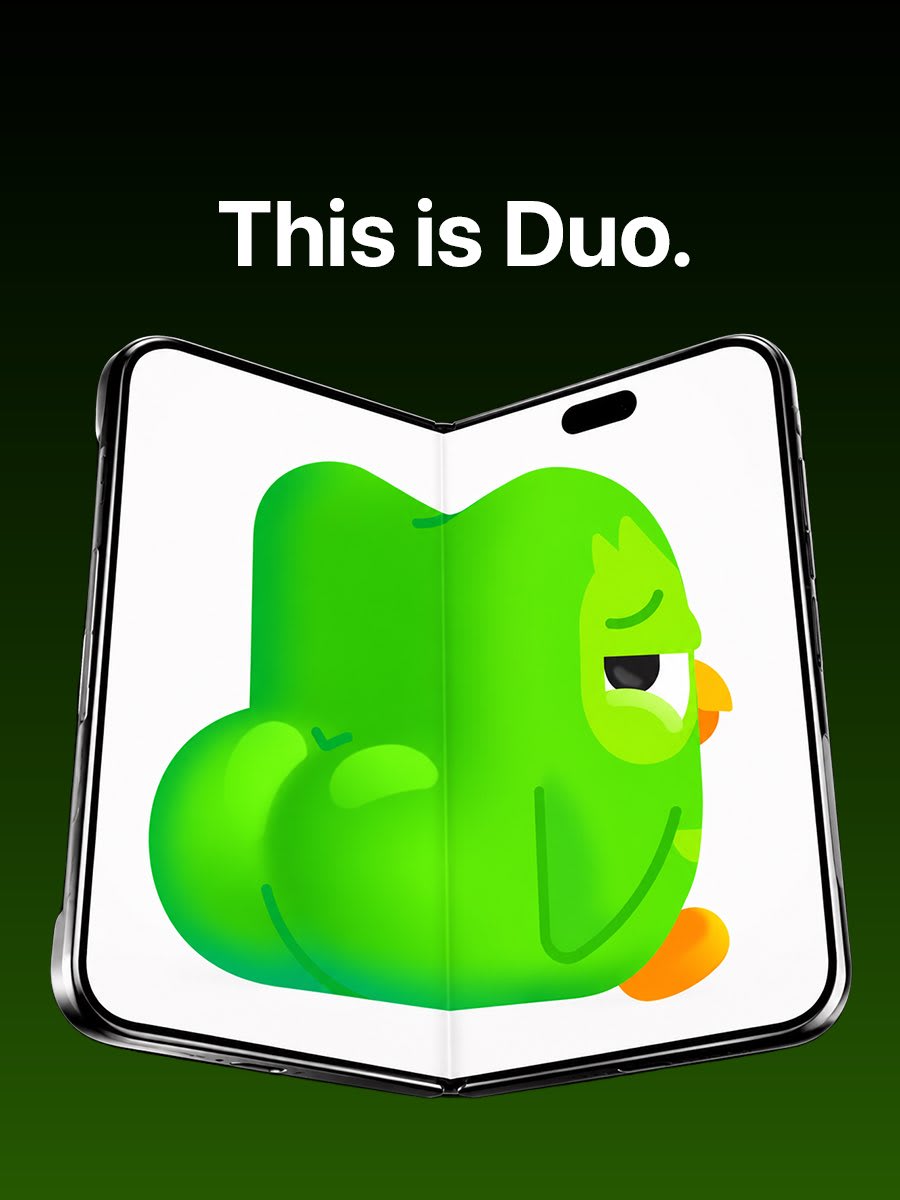
Duolingo then ran its own post entirely on the joke, an image of its owl folding in half like a Z Fold, captioned "let's hope I don't get cracked." None of this was coordinated. None of it needed to be. A naming coincidence handed two completely unrelated brands a reason to be in the same conversation as Apple's biggest launch of the year, without either of them paying for the privilege.
Why This Works
Three separate mechanics are doing work here, and they're worth pulling apart.

Samsung's ad is precision trolling, not vague shade. Rather than a generic "we were first" jab, it named an exact spec, weight, and let a specific, checkable claim do the arguing. Specific claims are harder to laugh off and easier to quote.
The timing is the whole strategy. Releasing the ad hours before Apple's keynote, not the next day, ensures Samsung's framing is sitting in the same feed as Apple's own announcement, competing for the identical attention window instead of arriving late to a conversation that's moved on.
Duolingo's response works because it costs nothing and asks for nothing. It isn't defending a product or pushing a sale. It's a brand with a well-established voice noticing it's suddenly, accidentally relevant to the biggest tech story of the day, and spending thirty seconds of a social manager's time to be funny about it. That's close to free reach, borrowed entirely from someone else's launch.
The Honest Read
Worth being clear-eyed about what this actually is. It's not hostility. Samsung and Duolingo aren't attacking Apple's iPhone Duo out of anger, they're doing what brands with sharp social voices do reflexively now: notice an opening, and take it before it closes. Apple didn't lose anything measurable here. But it did lose the news cycle for a few hours to two companies that spent nothing on media and everything on timing.
Tips to Steal
Specific claims beat vague shade. A number, a spec, a checkable fact travels further and lands harder than a generic dig.
Timing is the actual strategy, not an afterthought. The value of a reactive post decays fast. Hours before a competitor's keynote works. The next day doesn't.
A naming coincidence is free real estate. If your brand shares a word, a name, or a visual with something suddenly in the news, that's an opening, not a nuisance.
The funniest response costs the least. Duolingo didn't build a campaign. It wrote four tweets and posted one image. Reactive humor is one of the cheapest forms of reach available to a brand with a strong enough voice to pull it off.
Don't confuse banter with rivalry. Samsung and Duolingo have no actual conflict. The exchange worked because everyone involved understood it was a bit, not a fight.
Apple spent months preparing to launch its first foldable phone.
For a few hours on launch day, the funniest part of the story belonged to a language app and a phone company trading jokes about an owl.
When you hand the internet a coincidence, you don't get to decide who picks it up.
Frequently Asked Questions
What is the iPhone Duo?+
Apple's first foldable iPhone, unveiled September 9, 2026, arriving after years of anticipation and direct comparison to Samsung's Galaxy Z Fold line, which has been on the market since 2019.
Why did Samsung and Duolingo end up in the same conversation?+
Apple's chosen name for its foldable, Duo, is also the name of Duolingo's owl mascot. Samsung publicly joked about the coincidence, tagging Duolingo directly, which led to a short, playful exchange between the two brands on social media.
What did Samsung's ad actually claim?+
Samsung's "Welcome to Foldable" commercial and accompanying comments claimed the Galaxy Z Fold8, at 4.5mm thick and 201 grams, is lighter than Apple's iPhone 17 Pro and likely lighter than the iPhone Duo, positioning Apple's foldable as arriving late and heavier.
Was this a real conflict between the brands?+
No. The exchange between Samsung and Duolingo was lighthearted banter rather than genuine hostility, both brands playing along with a coincidence for engagement rather than expressing any real grievance.
Why is this considered good marketing?+
Because it combines precise, specific competitive claims with well-timed release scheduling, and shows how an unrelated brand can piggyback on a competitor's major news cycle for free reach simply by noticing and reacting quickly.
Written by

I’m Ramaa, a writer and creator at Scribble. I’ve written two books, and writing is something I always find my way back to, whether that’s articles, scripts, captions, or overly long notes app rambles I swear will “be useful later.” I enjoy thinking about why people create, how ideas spread online, and what makes content feel genuinely human. When I’m not writing, I look after regulatory compliance and legal admin at Scribble, and I’m a graduate of the School of Policy, New Delhi. Outside of work, I’m a musician and an avid reader.