TL;DR
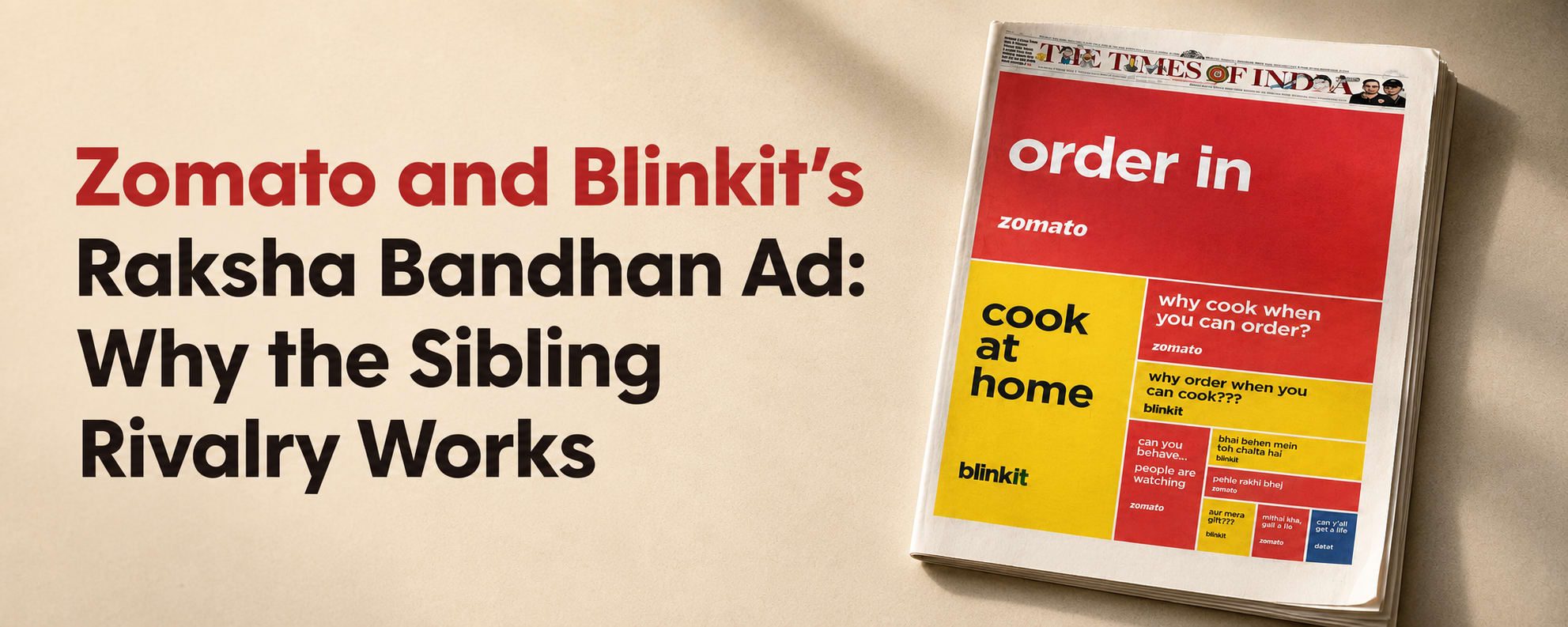
Zomato and Blinkit ran a newspaper ad exchange that reads exactly like two siblings bickering at the dinner table. It opens with Zomato asking "why cook when you can order?" Blinkit claps back "why order when you can cook???" Zomato tells it to behave because people are watching. Blinkit shrugs, "bhai behen mein toh chalta hai." Then it escalates into actual Raksha Bandhan negotiations, rakhi demands, gift demands, a "mithai kha, sarr nahi," and District finally snapping "can y'all get a life." It's a small idea, sharply written, and released at exactly the right moment. Here's why the writing works and why the Rakhi timing is doing so much of the heavy lifting.
The Ad
Here's the exchange, beat by beat, because the escalation is the whole joke.
Zomato opens with the eternal question every hungry person asks themselves: "Why cook when you can order?" Blinkit isn't having it: "Why order when you can cook???" Zomato tries to shut it down like an embarrassed older sibling in public: "Can you behave... people are watching." Blinkit shrugs it off with the most Indian-household line possible: "Bhai behen mein toh chalta hai," siblings are allowed to fight.
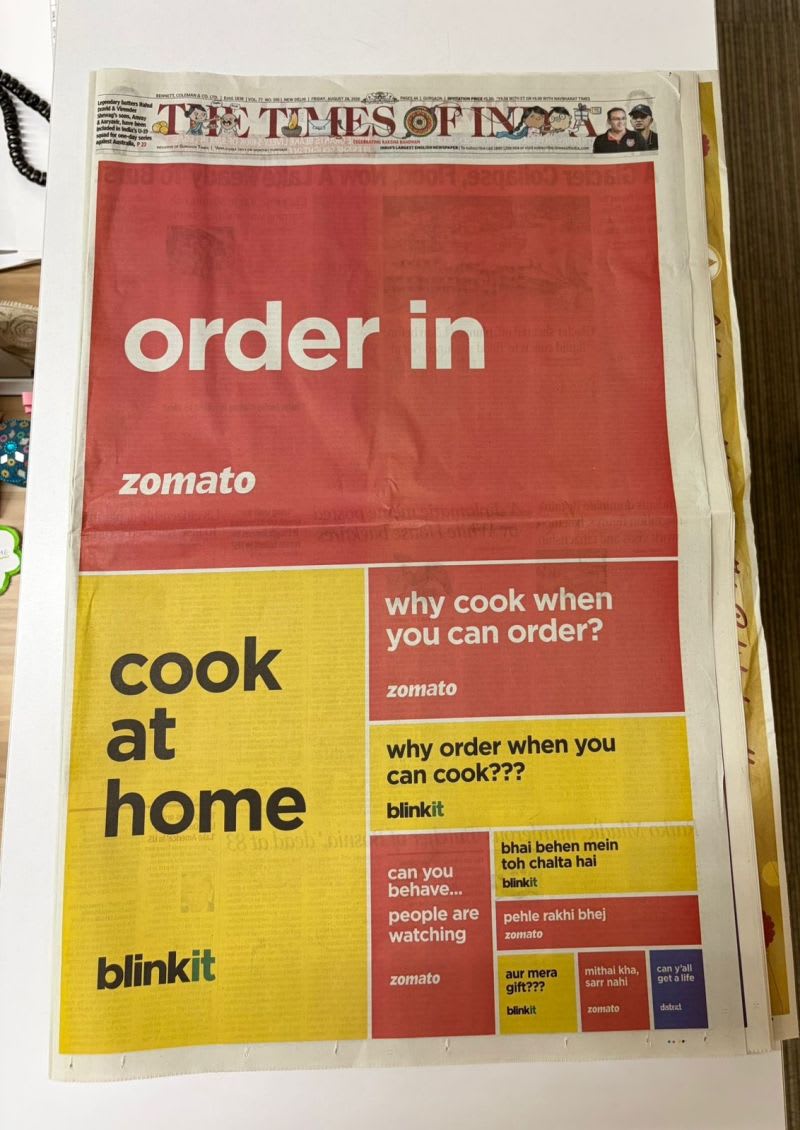
Then it goes full family drama. Zomato demands "pehle rakhi bhej." Blinkit fires back "aur mera gift???" Zomato tells it to eat sweets instead of getting on its nerves: "mithai kha, sarr nahi." And Blinkit lands the closing line that anyone with siblings has said at least once in their life: "can y'all get a life."
By the end, neither brand remembers what the fight was even about. Which is, genuinely, exactly how sibling arguments go.
Why the Writing Is This Good
Strip away the festival tie-in for a second and just look at the copy, because the craft here deserves credit on its own.
The exchange escalates in exactly the right order. It starts on-brand, a genuine cooking-versus-ordering debate that both companies could plausibly have. Then it deliberately breaks that frame, "can you behave, people are watching" has nothing to do with food at all, it's pure sibling energy, and that swerve is where the ad stops being a pitch and starts being a bit. From there it climbs through real, specific, recognisable beats: the public scolding, the shrug, the rakhi demand, the gift complaint, the "eat sweets and be quiet," ending on the most universally relatable sibling line there is. Every step raises the stakes slightly and stays completely in character. Nobody breaks the voice to explain the joke. The copy trusts the reader to follow the escalation on their own, which is exactly what makes it feel written by people who understand comic timing, not just people who understand food delivery.
Why Raksha Bandhan Makes It Land Harder
Here's the part that turns clever copy into something that actually spreads: the timing isn't decoration, it's the engine.
Raksha Bandhan comes with a script every Indian audience already knows by heart, the specific, familiar transaction where affection and mild extortion coexist perfectly. You tie the rakhi, you're owed a gift, there's a bit of teasing, there's a bit of guilt, and everyone plays their part on cue. Because that script already lives in everyone's head, Zomato and Blinkit didn't have to build sibling chemistry from scratch or explain why these two brands would even bicker like this. They just slotted straight into a dynamic the audience was already primed to recognise and laugh at, on the exact day it's culturally alive. Run the same jokes in March and half the punches don't land, because the "pehle rakhi bhej, aur mera gift" beat needs the festival sitting right there in everyone's mind to hit instantly.
That's the real skill on display: not inventing a new joke format, but finding the one moment on the calendar where an existing, beloved script is already switched on in everyone's head, and writing directly into it.
Why It Works as a Whole
Because it does two things at once that most brand content struggles to do even separately: it's genuinely, laugh-out-loud funny, and it's perfectly, deliberately timed. A lot of festive marketing gets one of those right and misses the other, a funny idea released with no cultural anchor, or a well-timed idea that isn't actually funny. This nails both, sharp, escalating writing landing on the one day of the year it hits hardest.
It also turned the least interactive advertising format there is, a printed newspaper ad, into something people wanted to screenshot and share, purely on the strength of the writing and the timing. No visual gimmick, no big production, just dialogue that understands comic rhythm and a calendar date that made every line click.
Tips to Steal
Escalate deliberately, and land a punchline. The joke works because it climbs, cooking to ordering to behaving to rakhi to gifts to "get a life." A single exchange wouldn't have landed nearly as well as the build.
Borrow a script the audience already knows. Sibling banter around Raksha Bandhan is a pre-loaded emotional shortcut. You don't have to teach the dynamic, you just have to write into a moment where it's already switched on.
Time the release to the exact day the script is alive. A great joke tied to the wrong date loses most of its power. The same joke on the right day needs almost no setup.
Trust the reader to follow the tone shift. The best line in this whole exchange, "can you behave, people are watching," works because nobody explains it. The swerve from food-pitch to sibling-drama is left for the reader to catch.
A boring format can still carry great writing. This ran in newspapers, the least dynamic medium going. The copy did all the work the format couldn't.
Zomato and Blinkit didn't need a big production this Raksha Bandhan.
They needed six lines of dialogue and one perfectly chosen day on the calendar.
The best festive marketing doesn't invent a new joke. It finds the one day the audience is already primed to laugh, and writes directly into it.
Frequently Asked Questions
What is the Zomato and Blinkit "sibling rivalry" ad?+
A newspaper ad exchange where Zomato and Blinkit trade increasingly personal, sibling-style jabs, starting with "why cook when you can order?" and escalating into a full Raksha Bandhan argument over rakhis and gifts, ending with Blinkit's "can y'all get a life."
Why did Zomato and Blinkit choose a sibling-fight format?+
Because Zomato and Blinkit are both owned by Eternal Ltd, sibling banter is a natural, recognisable way to frame their exchange, and it let the brands lean into a real, mild tension between their pitches, ordering versus cooking, in a way that reads as playful rather than defensive.
Why is the Raksha Bandhan timing important?+
Raksha Bandhan comes with a widely recognised script, rakhi-tying, gift demands, sibling teasing, that the ad borrows directly. Releasing it on that exact occasion means the audience already has the emotional context loaded, so the jokes land instantly instead of needing explanation.
Why is this considered good copywriting?+
The exchange escalates in a deliberate order, moving from an on-brand debate into pure sibling drama, and stays fully in character throughout without ever explaining the joke. That escalation and restraint is what makes it read as genuinely funny rather than a forced bit.
Why is this considered good marketing overall?+
Because it combines two things that are individually hard to pull off, genuinely funny writing and precisely timed cultural relevance, in a low-production, easily overlooked format, a newspaper ad, and made people want to share it anyway.
Written by

I’m Ramaa, a writer and creator at Scribble. I’ve written two books, and writing is something I always find my way back to, whether that’s articles, scripts, captions, or overly long notes app rambles I swear will “be useful later.” I enjoy thinking about why people create, how ideas spread online, and what makes content feel genuinely human. When I’m not writing, I look after regulatory compliance and legal admin at Scribble, and I’m a graduate of the School of Policy, New Delhi. Outside of work, I’m a musician and an avid reader.