One of them just hit number 24 on the App Store. It delivers your texts by pigeon.
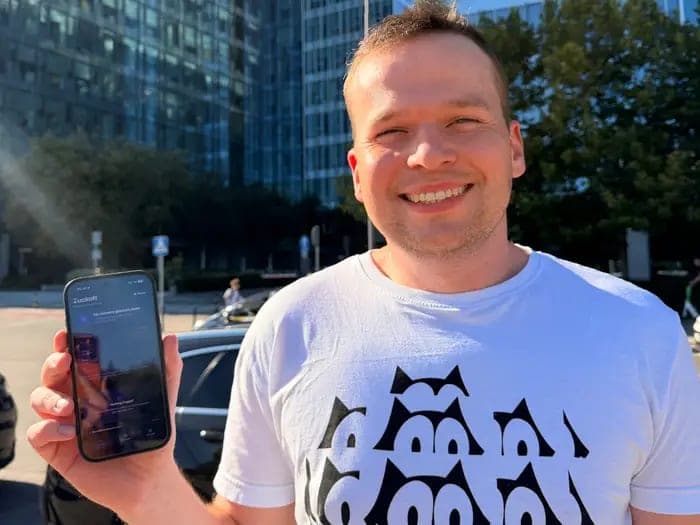
The app is called Carrier Pidge. A developer named Noah Iarrobino built it in three weeks and openly admits it has genuinely no practical use. Your contacts are your flock. Your messages live in an aviary. The pigeon flies at 110 miles per hour with a 25% random variation for wind and tired birds. LA to New York takes 22 hours. You track the journey live on a map. And if the bird dies mid-flight (there is a 0.2% chance of this), your message is just gone.
Carrier Pidge now has over 75,000 users. A competing app called Roost, which lets you send messages via pigeons, snails, penguins, and over a thousand other animals, has hit 650,000 downloads. Same idea. Slower messages. Deliberate friction. People cannot get enough of it.
This Is Not a Quirky App Story
It is a cultural signal, and it did not come from nowhere.
That craving has been building for a while. Slow living went mainstream around 2020. Cottagecore gave it an aesthetic. The pandemic gave it a rationale. And in 2026, it is showing up everywhere in consumer behaviour, not just in apps.
eBay searches for the iPod Classic jumped 25% and the iPod Nano 20% between January and October 2025, despite Apple having discontinued the product line in 2022. People are buying discontinued MP3 players so they can listen to music without being reachable. Vinyl is booming among Gen Z, who see records as a deliberate rejection of disposable streaming culture. Cassettes are back. Polaroid cameras are back. From dumbphones to retro handheld games consoles, low-fi tech is having a significant moment in 2026.
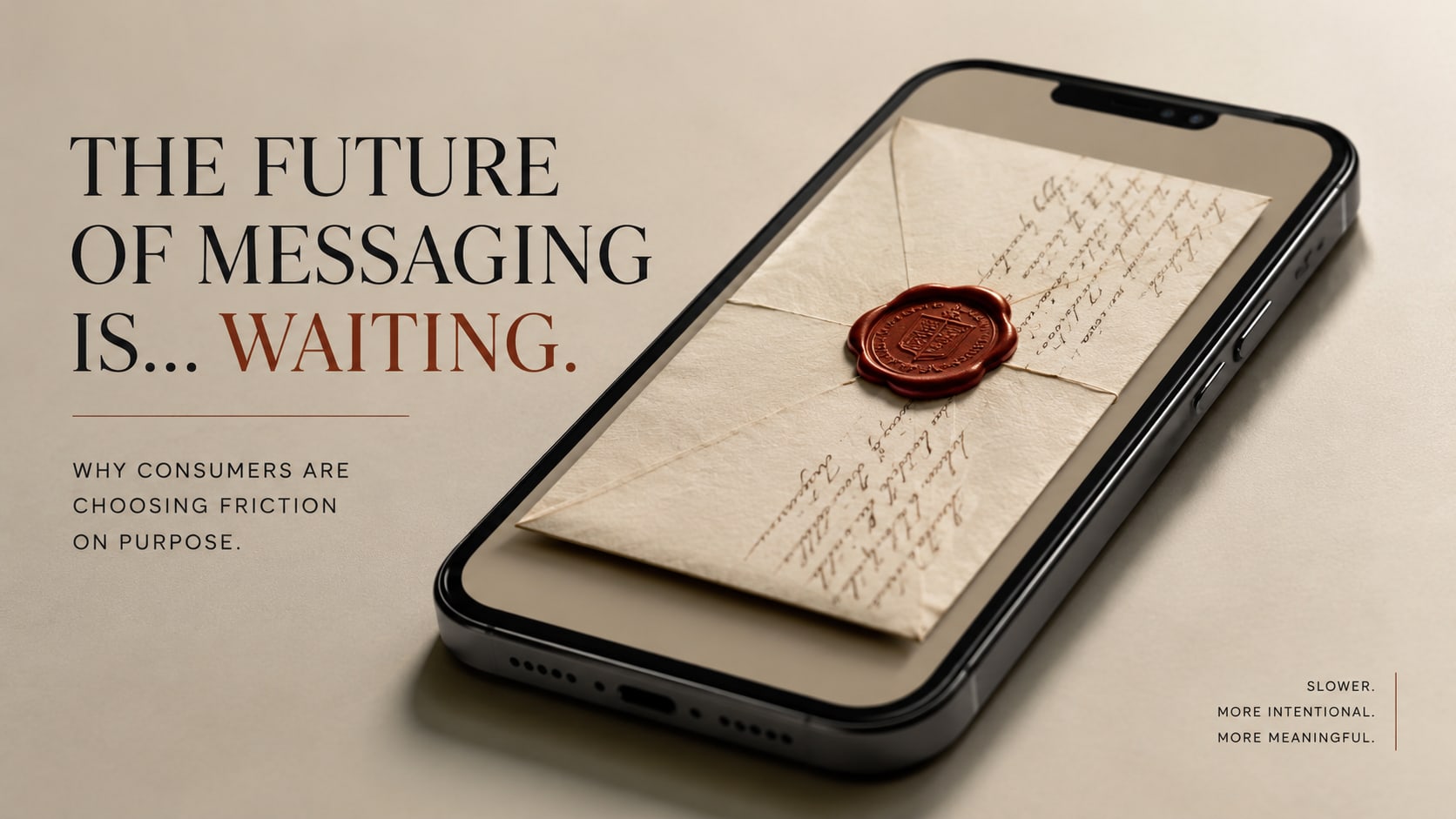
The pattern across all of it is the same: people are actively choosing friction. Choosing to wait. Choosing to not be instantly reachable. And they are doing it on purpose, with full awareness that the faster option exists.
Why Friction Has Become Desirable
Constantly picking up your phone in short bursts can be more mentally taxing than spending a long stretch on it. The constant availability of everything: the notification, the read receipt, the typing indicator, creates a low-grade ambient pressure that never fully switches off.
Instant messaging is frictionless. Frictionless, it turns out, can feel hollow.
Carrier Pidge and Roost are not solving that problem. But they are pointing at it in the most absurd and therefore most visible way possible. A message that might not arrive. A pigeon that might die over Ohio. These are not features. They are jokes about a real frustration, and the joke is landing because the frustration is real.
The Marketing Angle
Carrier Pidge is not selling a communication tool. It is selling a feeling.
Slowness. Anticipation. The idea that a message arriving after 22 hours might actually mean more than one that arrived in two seconds. There is something to that last part — not as a communications philosophy, but as a psychological observation. Scarcity increases perceived value. A message you had to wait for carries weight that an instant message cannot.
This is the same mechanism behind vinyl records, behind handwritten letters, behind the farmer's market versus the supermarket. The friction is not a bug. It is the signal that something required effort, and effort implies intention.
For marketers, the more useful question is what this trend says about where consumer attention is actually going. The brands winning right now are not the ones shouting loudest across the most channels. They are the ones creating experiences that feel considered, specific, and slow enough to be worth paying attention to.
What This Tells You About Where Culture Is Heading
The most advanced technology available right now is being used to simulate a 19th century communication method. And people are downloading it on purpose, paying 99 cents to replace a pigeon that died, and telling their friends about it.
It is ironic, yes. But an actual preference. And preferences at this scale, 650,000 downloads for a slow messaging app, a 25% spike in searches for a discontinued MP3 player, Gen Z buying cassette tapes, are telling you something about the kind of experiences people are actually willing to pay for.
The brands that understand this are not the ones adding more features, more notifications, or more personalisation. They are the ones figuring out how to give people something worth waiting for.
Frequently Asked Questions
What is Carrier Pidge?+
Carrier Pidge is a messaging app that sends texts via virtual pigeons. Messages take time to arrive, and users can track their pigeon's journey while they wait.
Why are people using apps that deliberately make communication slower?+
Apps like Carrier Pidge and Roost turn waiting and friction into part of the experience. They offer an alternative to the constant notifications and instant communication that dominate modern smartphone use.
What is Roost?+
Roost is a messaging app that lets users send messages using animals including pigeons, snails, and penguins. Its intentionally slow and playful approach to messaging has helped it attract hundreds of thousands of downloads.
Why is “slow technology” becoming popular?+
Slow technology gives people a way to reduce the pressure of constant connectivity. Discontinued music players, dumbphones, film cameras, vinyl records, and deliberately slow apps all offer ways to make digital experiences feel more intentional.
Is slow technology the same as digital detoxing?+
Not exactly. Digital detoxing usually means reducing or avoiding technology altogether. Slow technology is about changing how technology is used, adding friction, limiting availability, or making an experience more deliberate.
What can marketers learn from the rise of slow technology?+
Consumers don't always want faster, easier, and more convenient experiences. Sometimes they want experiences that feel distinctive, intentional, and worth their attention. For marketers, the opportunity may be to create experiences people actively choose to spend time with rather than simply trying to remove every bit of friction.
Written by

Hi! I’m Mrinalini. I work on growth at Scribble, where my days mostly revolve around content, planning campaigns, speaking to creators, and occasionally yapping in front of a camera. I studied engineering at Manipal Institute of Technology and briefly worked as a Test Engineer at Siemens before realizing marketing was my calling. Outside of work, you’ll find me eating/thinking about food.