There is something deeply entertaining about watching two brands talk to each other in public, particularly when the conversation was not technically supposed to happen in the first place.
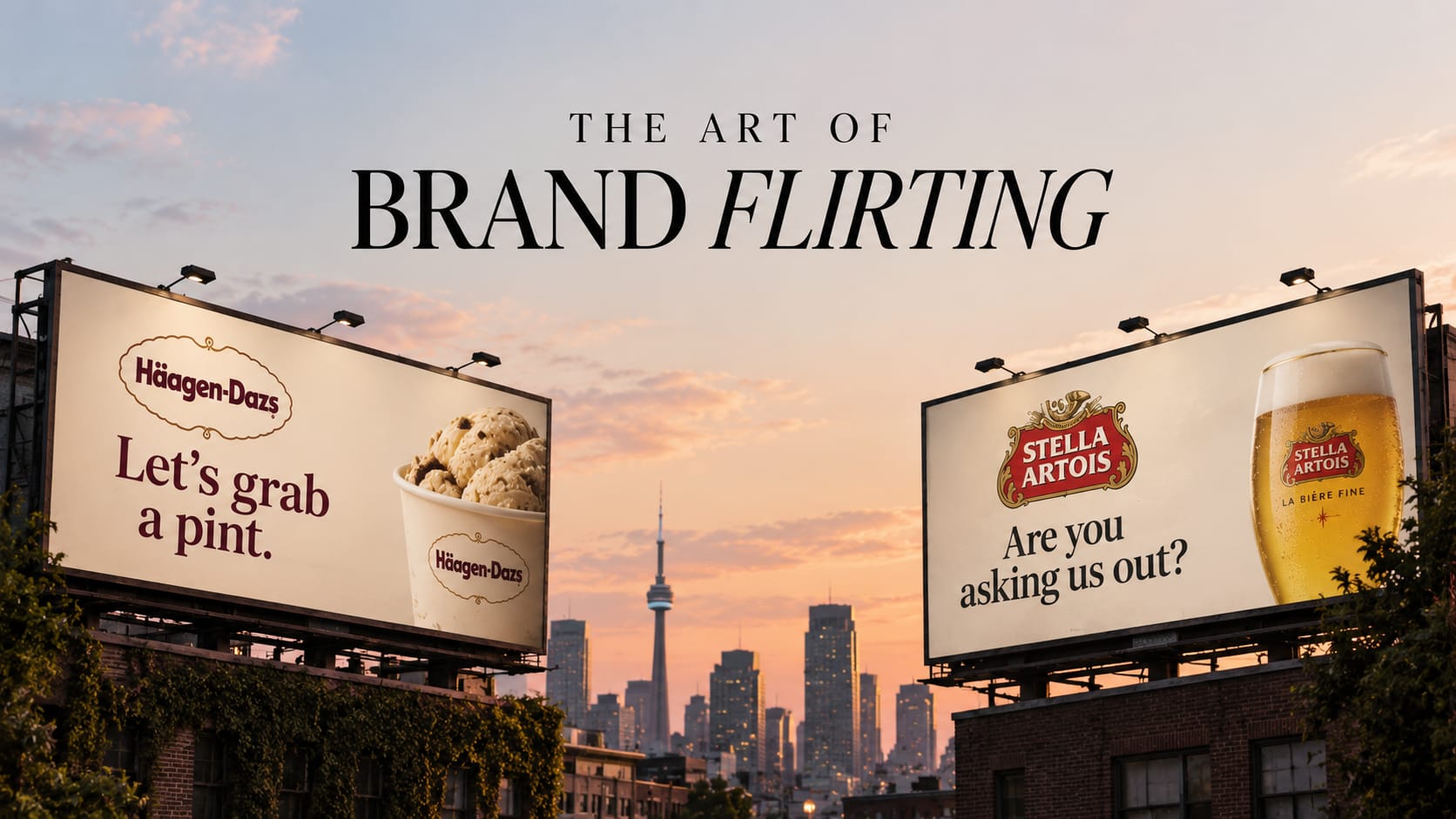
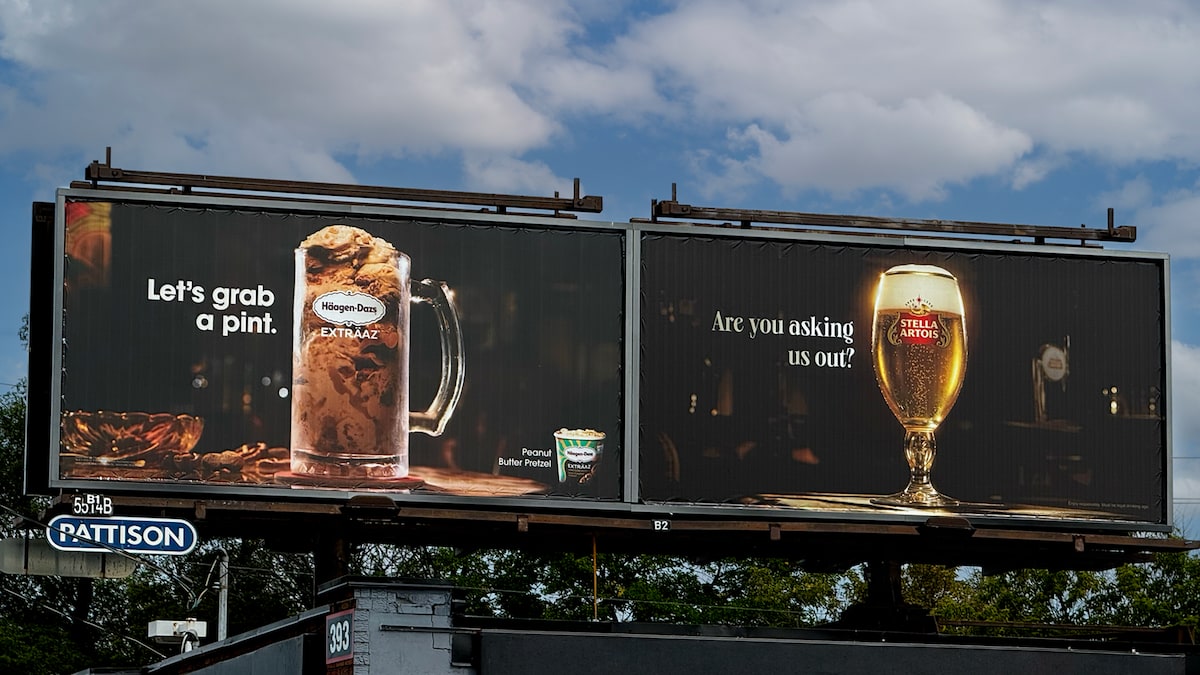
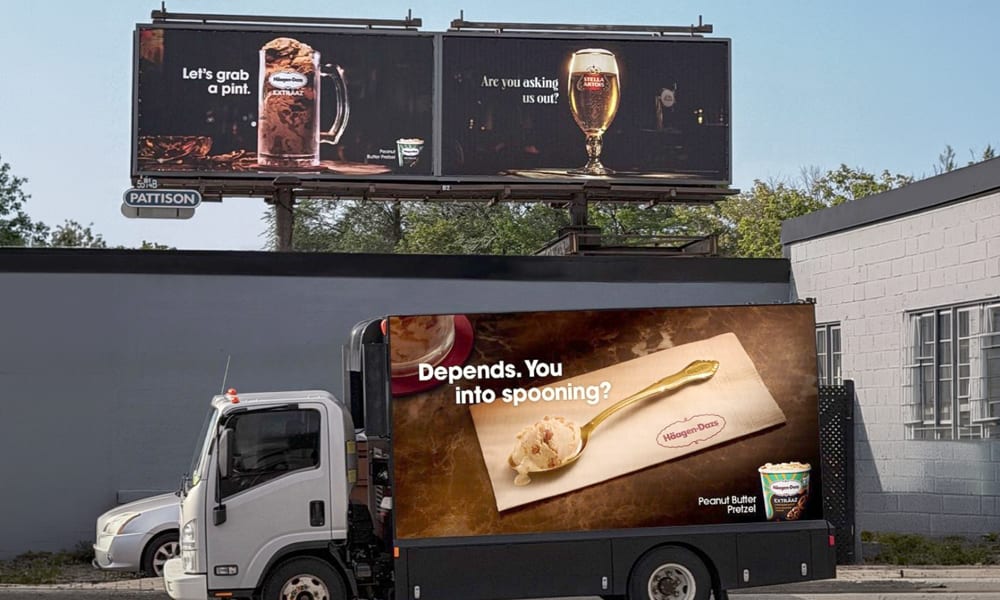
This week, Häagen-Dazs and Stella Artois gave us exactly that in Toronto. Häagen-Dazs put up a billboard that read, “Let’s grab a pint.” Stella Artois, presumably choosing to interpret the invitation in the most interesting way possible, responded with a billboard of its own: “Are you asking us out?”
Häagen-Dazs played along with “Depends. You into spooning?”, to which Stella replied, “Only if you’re into six-packs.” At this point, we were no longer looking at two brands advertising products. We were watching what appeared to be the beginning of a very public relationship.
And honestly, we love to see it.
When Advertising Starts Feeling Like a Conversation
Most advertising is carefully planned, approved, scheduled and eventually placed in front of us with the confidence of something that has survived approximately 47 internal meetings.
Brand banter feels different.
When one brand responds to another, the audience gets to watch the interaction unfold rather than simply receiving a message. There is a setup, a comeback and, ideally, someone who is willing to make the next move. The result feels less like a campaign being delivered to an audience and more like a conversation happening in public, which is probably why people are so much more inclined to share it.
The Häagen-Dazs and Stella exchange works particularly well because neither brand needed to manufacture a rivalry. They simply found a shared joke in the word “pint” and decided to see where it went.
It is a useful reminder that brands do not always need to compete for attention by shouting louder. Occasionally, they can just have a good conversation.
And this is hardly a new idea.
Audi and BMW Took Their Rivalry to the Billboards
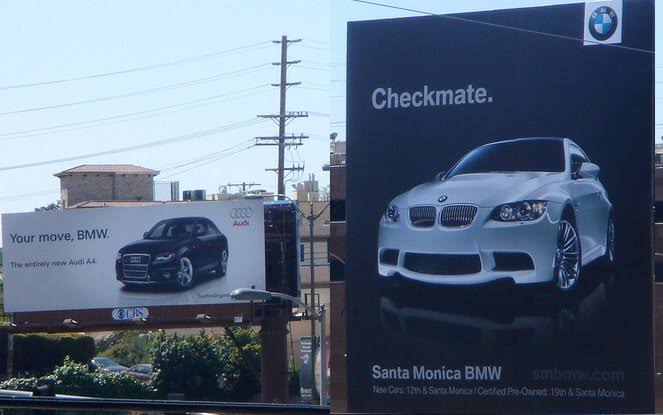
Back in 2009, Audi and BMW turned outdoor advertising into something resembling a very expensive chess match.
Audi started with a billboard that challenged BMW with the words “Your move, BMW.” BMW responded with the considerably more smug “Checkmate.”
Audi, unwilling to let BMW have the final word, came back with an R8 billboard declaring, “Your pawn is no match for our king.” BMW then escalated the whole thing by putting a branded blimp near Audi’s billboard, which is a fairly elaborate way of saying, “Actually, we win.”
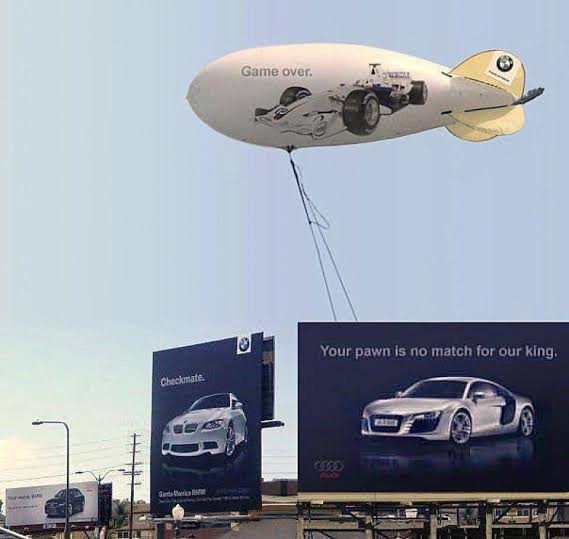
It was completely unnecessary, which is part of what made it so good.
Neither brand was simply promoting a car anymore. They were giving the public a running storyline to follow, and every new billboard became an event in itself.
Burger King Decided to Take McDonald’s Customers Literally

Burger King took the competitive conversation into the digital world with Whopper Detour in 2018, and demonstrated that if you have a competitor, you may as well use their real estate.
The campaign used geofencing to target people within 600 feet of a McDonald’s, offering them a Whopper for just one cent if they ordered through the Burger King app. Once they placed the order, the app directed them away from McDonald’s and towards the nearest Burger King.
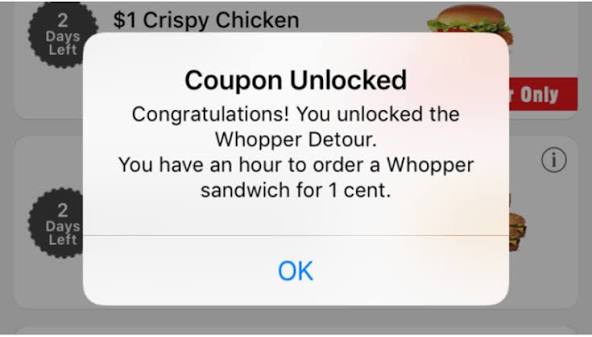
It was an unusually literal expression of competitive strategy: you are already at McDonald’s, which is unfortunate, but we can fix that.
The campaign generated more than one million app downloads within days and eventually reached around 1.5 million downloads, turning what could have been a fairly standard app-promotion campaign into one of Burger King’s most memorable pieces of marketing.
The Appeal of a Brand That Knows How to Play
What makes these examples interesting is not simply that the brands were funny. It is that they were willing to let another brand become part of their advertising.
Audi gave BMW something to respond to. Häagen-Dazs gave Stella an opening. Burger King took McDonald’s physical presence and made it part of the campaign.
That requires a slightly different attitude towards marketing because once you invite another brand into the conversation, you no longer have complete control over where it goes. For brands that are used to approving every comma, that can be mildly terrifying.
For everyone else, it can be very entertaining.
The best brand banter works because it gives audiences something more valuable than another advertisement: a story they can follow. It creates anticipation, rewards people who notice the exchange and gives social media something to talk about without having to explicitly ask everyone to “join the conversation.”
Perhaps that is why these moments stick around.
The brands are selling something, of course. They are just having enough fun doing it that we forget to be annoyed about it.
And if more brands want to flirt in public, we are certainly not going to stop them.
Frequently Asked Questions
Why does brand banter work so well?+
Brand banter introduces an element of unpredictability into advertising because audiences become interested in what the other brand might say next. Instead of consuming a single campaign message, people get to follow an unfolding interaction.
Does brand banter have to happen between competitors?+
Not at all. In fact, the Häagen-Dazs and Stella Artois exchange is a good example of how two brands with very different products can find a shared cultural joke and build something entertaining around it.
What makes a good brand comeback?+
The strongest responses are usually quick, recognisable and rooted in the original idea rather than trying to completely change the conversation. Timing matters, but so does knowing when the joke has gone far enough.
Is brand banter risky?+
It can be, particularly when a response feels forced or when the humour does not fit the brand. The appeal comes from the brands behaving confidently and naturally, not from two corporate social teams desperately trying to go viral.
Written by

Hi! I’m Mrinalini. I work on growth at Scribble, where my days mostly revolve around content, planning campaigns, speaking to creators, and occasionally yapping in front of a camera. I studied engineering at Manipal Institute of Technology and briefly worked as a Test Engineer at Siemens before realizing marketing was my calling. Outside of work, you’ll find me eating/thinking about food.