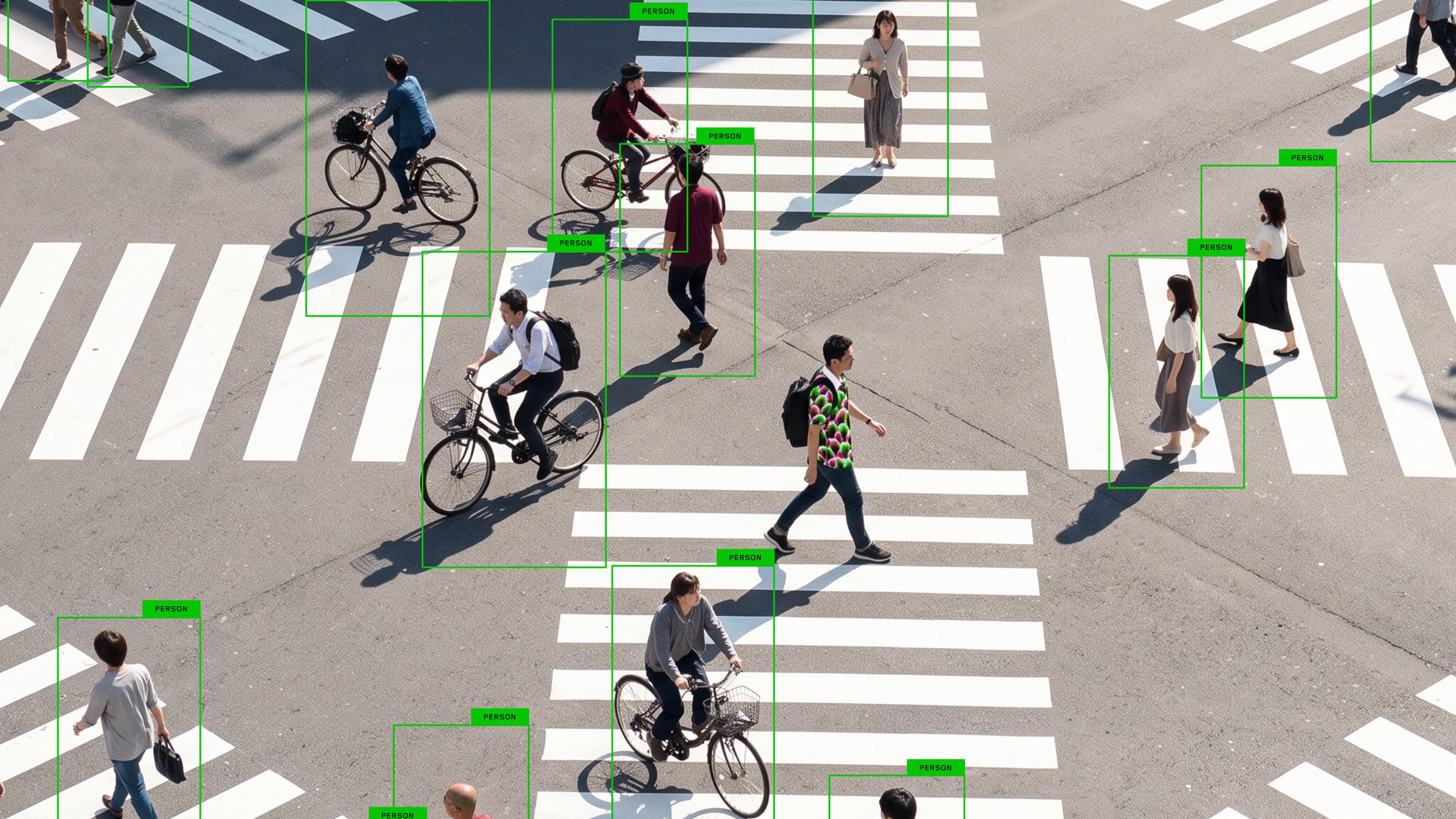
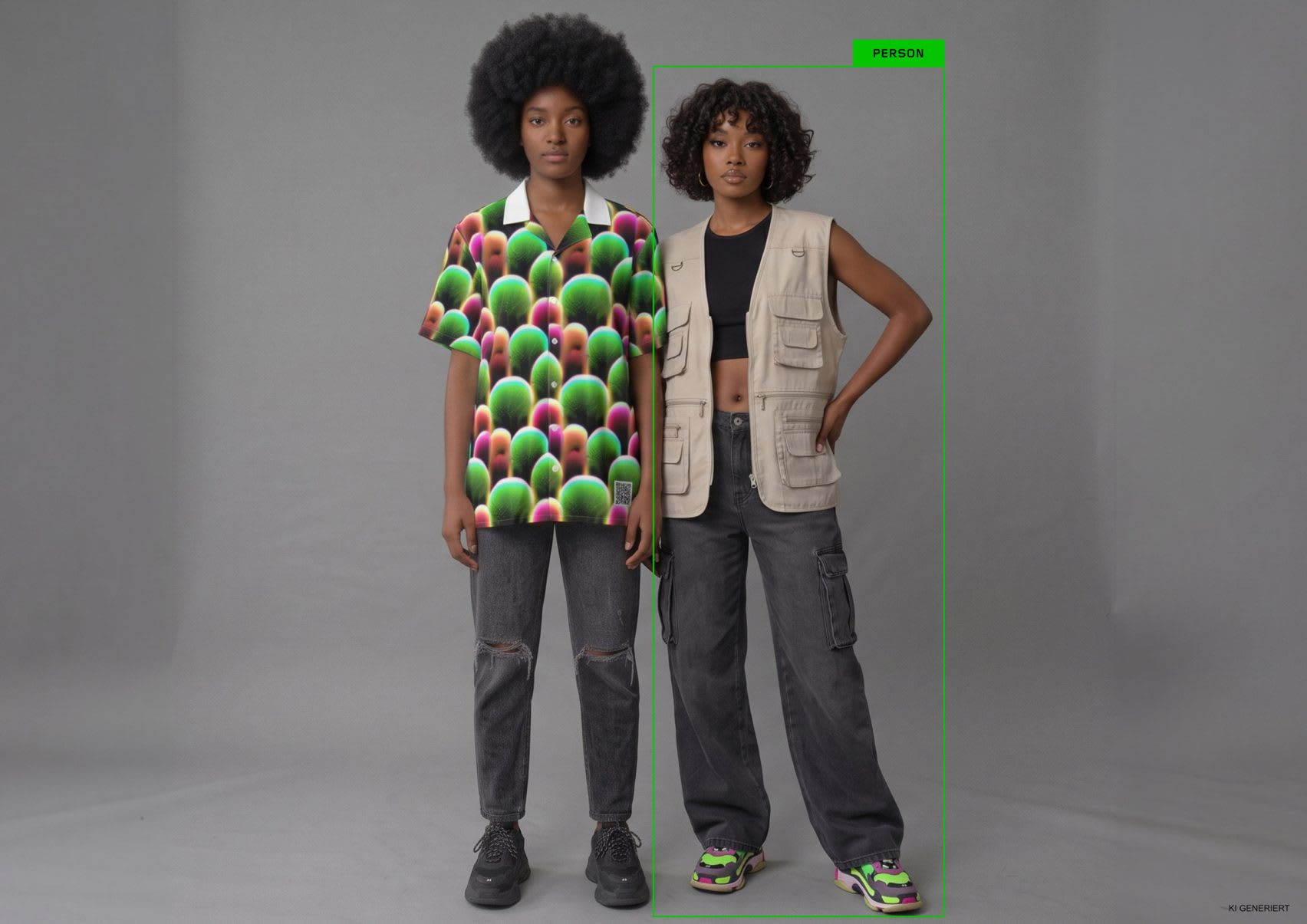
Every person walking through this Berlin square gets a green box drawn around them by the AI watching. Except one guy in a Hawaiian shirt. That's not a glitch. That's the entire product.
TL;DR
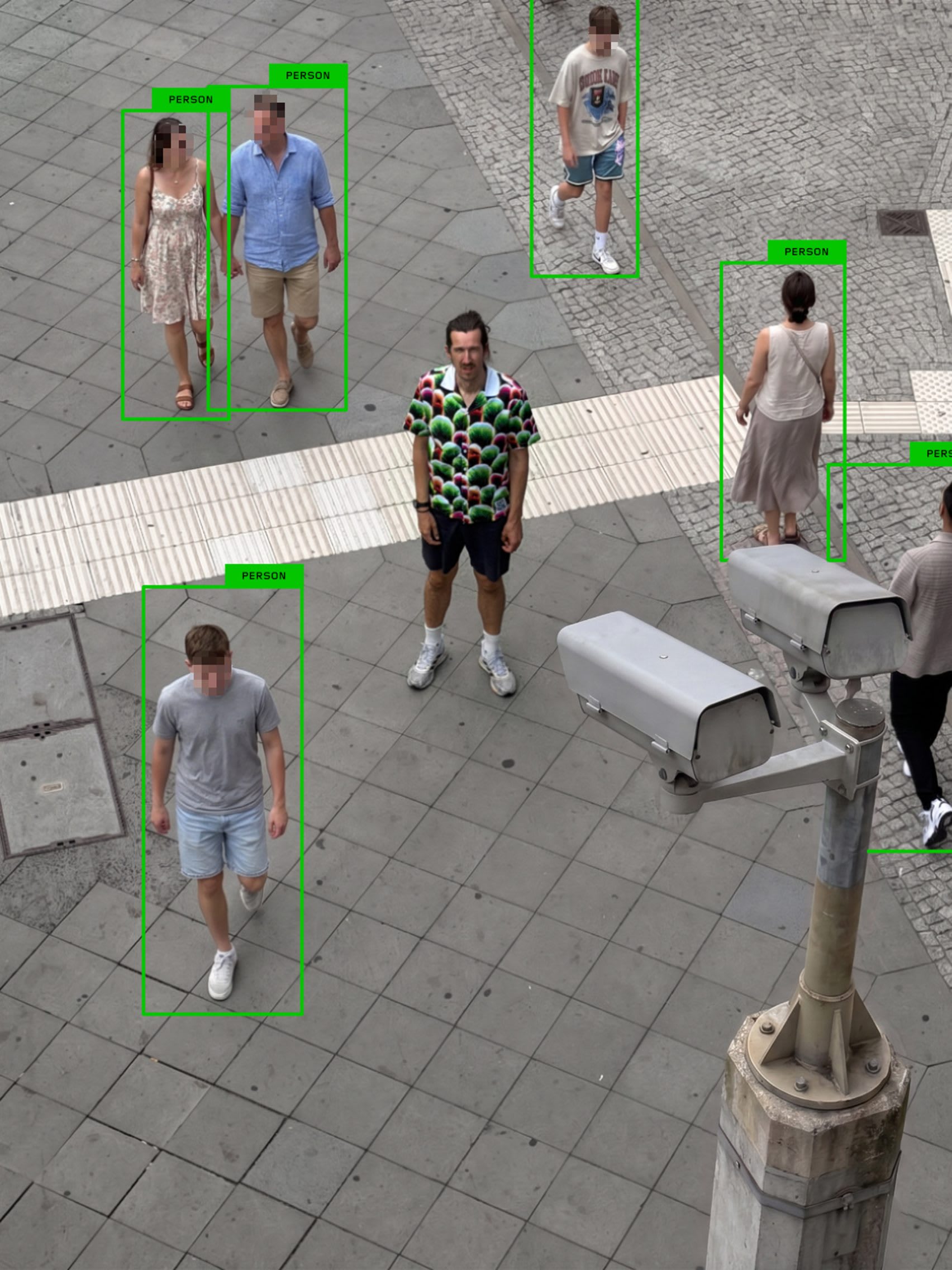
A Berlin-based artist named Simon Weckert designed a shirt to do one thing: evade AI surveillance. Called Digital Camouflage, it's a chaotic, brightly coloured button-up that, to a human eye, just looks like a loud Hawaiian print. To an AI object-detection system, it's something closer to nothing at all. Run the shirt through an open-source person-detector and every other pedestrian in frame gets boxed and labelled "PERSON." The wearer doesn't. Weckert built it in direct response to a real, current deployment: Berlin police piloting AI video surveillance at Kottbusser Tor, the first camera in the city legally allowed to film public space without specific cause. The shirt costs about £65, proceeds go to digital civil rights organisations, and it turns an abstract, hard-to-feel debate about surveillance into something you can put on your body and test in public. Here's the premise, the Berlin backdrop it's responding to, and how the pattern actually works.
The Premise
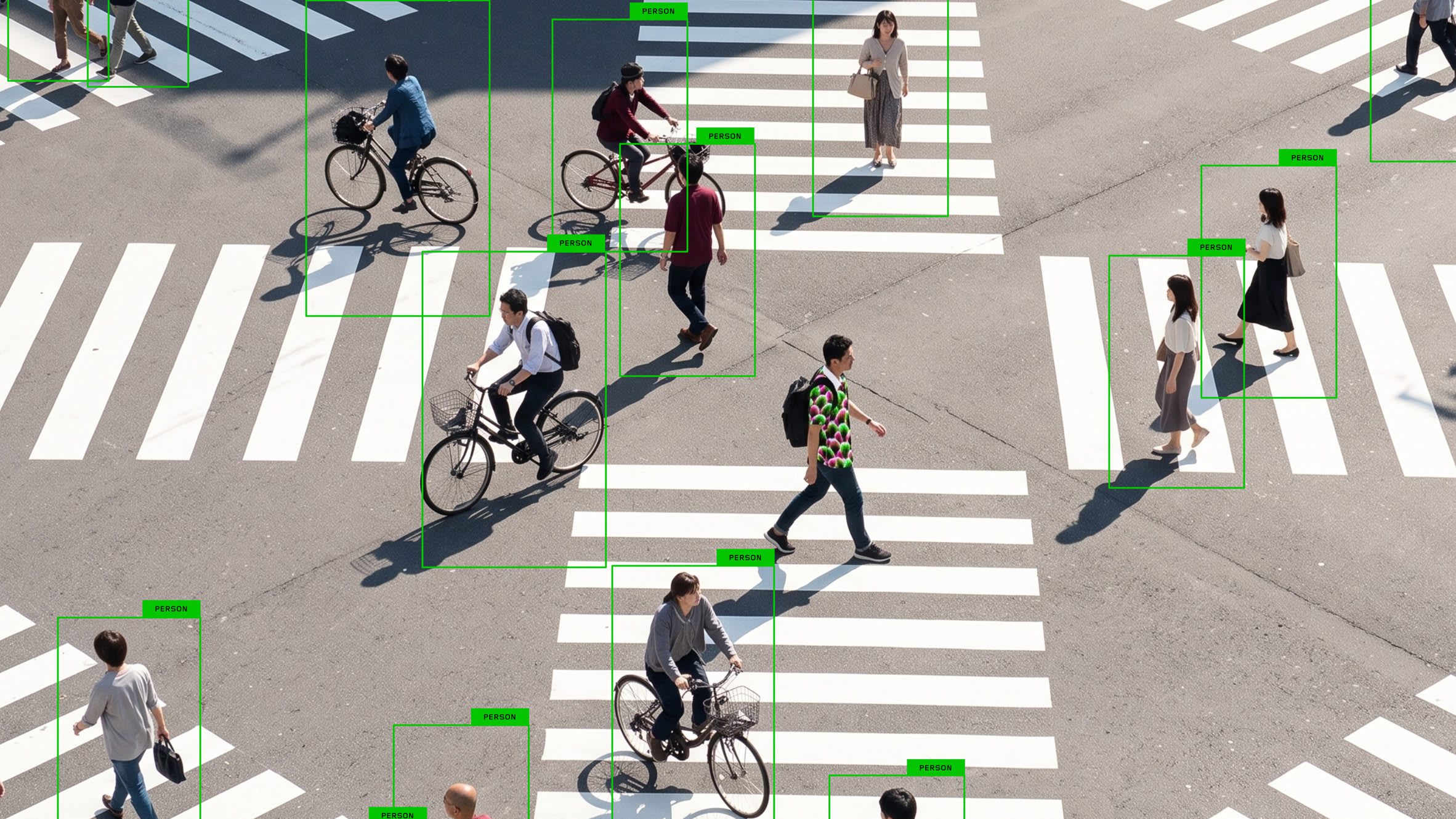
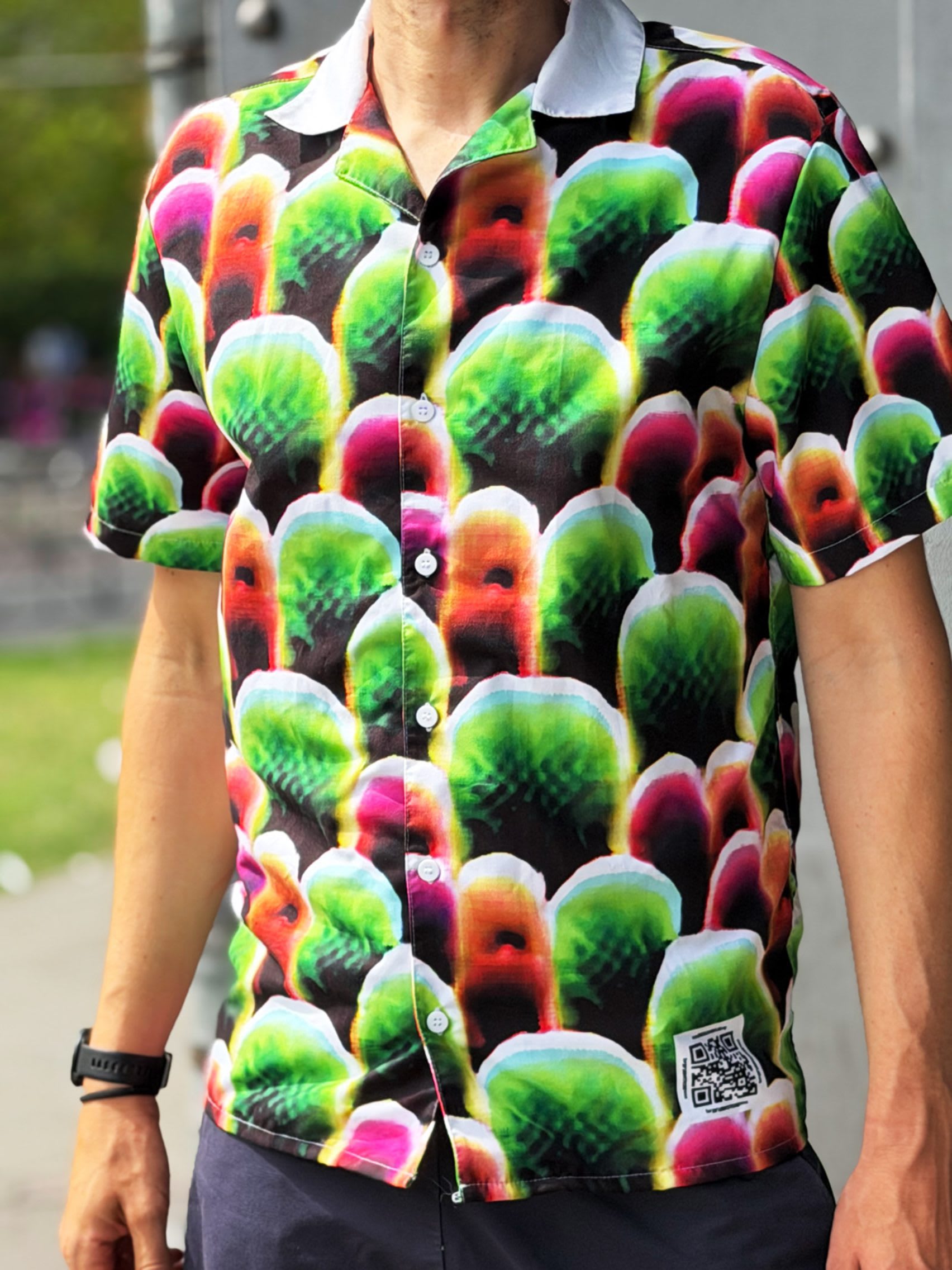
A Berlin-based artist named Simon Weckert built a shirt designed to do one specific thing: stop AI surveillance cameras from recognising the wearer as a human being. It's called Digital Camouflage, a button-up covered in a dense, swirling pattern of green, pink and orange shapes, the kind of print that reads, at a glance, as a slightly aggressive vacation shirt. Nothing about it looks technical or subversive to a passerby.
But the pattern isn't decorative. It's engineered specifically to break AI person-detection, the same category of system now watching public streets from Berlin to London to Los Angeles. Weckert tested the shirt against YOLO, a widely used open-source real-time object-detection model, and the demonstration footage is the whole pitch in one image: every pedestrian in frame gets a green bounding box labelled "PERSON." The wearer of the shirt does not.
Why This Specific Moment, in This Specific Square
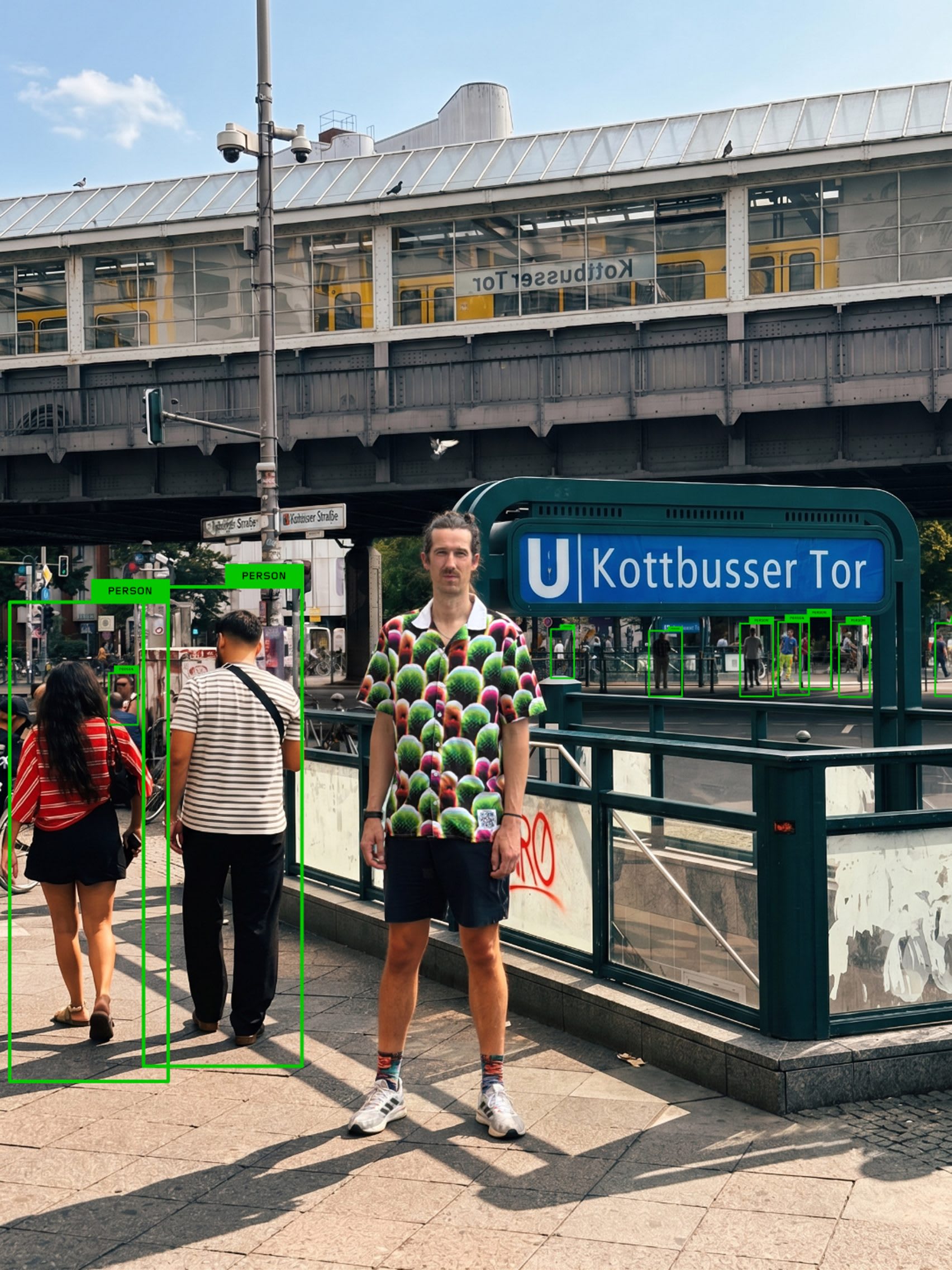
The shirt isn't a speculative art-world gesture aimed at surveillance in general. It's a direct response to something happening right now. Berlin police began piloting AI video analysis in August 2026 at Kottbusser Tor, a high-traffic U-Bahn station in Kreuzberg and, according to Weckert's own project notes, the first camera in the city legally permitted to film public space without any specific cause. What's switching on there isn't just a camera. It's a system built to sort what every passerby does into "normal" and "suspicious."
Weckert frames Berlin as an early marker on a curve that's already further along elsewhere. In the US, well over a hundred thousand networked cameras already log vehicles and movement across thousands of towns, feeding databases that police and federal agencies can search without a warrant, and 2026 has become a year of real pushback, with dozens of communities voting to cancel camera contracts. The shirt sits inside that live argument, not above it.
Why the Pattern Actually Works
Here's the mechanism, in Weckert's own words, and it's worth understanding because it's the whole idea. "AI systems are made of multiple layers and never learned what a human is, they learned what humans statistically look like in millions of training images," he told Dezeen. "In the early layers it's edges, contrasts and texture gradients; deeper in the network it's part-like patterns: the head-and-shoulders silhouette, the proportions of limbs against a torso, the continuity of a body's outline against the background."
So the shirt doesn't hide the wearer. It attacks the specific statistical shortcuts a detection model relies on to decide "this shape is a person," breaking the continuity of outline and silhouette the algorithm expects. The pattern itself wasn't hand-designed by trial and error alone. Weckert used a generative adversarial method he calls TC-EGA (Toroidal-Cropping-based Expandable Generative Attack), running round after round of an adversarial loop until the pattern stopped reading as a person to the model at all. In other words, he used AI to build the thing that defeats AI recognition, and let the fabric print itself into a paradox.
Why Wearing the Argument Beats Writing It
Here's the actual craft insight, and it's one you've seen before in different clothing: the strongest way to make an abstract policy issue land isn't to explain it, it's to give people a physical thing they can test against it themselves.
A debate about AI surveillance and consent is easy to nod along to and forget, because it lives in policy documents and news cycles most people never read closely. A shirt that visibly defeats the same category of system, worn in the actual square where the cameras are watching, collapses that distance instantly. You don't need to understand convolutional neural networks to register what's happening when a camera boxes every other person in the frame and skips the guy in the loud print. The demonstration does the persuading a thousand words of policy analysis couldn't.
This is the same mechanism behind Riksbyggen's too-small houses and TV2 Denmark's too-tall bench, take a fact people can't feel and give it a body they can stand next to, or in this case, wear. Digital Camouflage just does it with the added twist of using the very technology it's protesting to design its own defeat.
The Honest Limits
Worth being straight about this, because overclaiming would undercut the project's own credibility. Weckert doesn't claim the shirt defeats every surveillance system or the exact stack Berlin police are using. It's a credible, demonstrated defeat of open-source YOLO under demo conditions, not a guaranteed, universal invisibility cloak. And some of the online virality has flattened a considered, months-long art project into a "new product just dropped" news alert, stripped of the Berlin surveillance politics that actually motivated it. The honest read is that this is a genuine, working proof of concept and a piece of protest design at once, not a promise that you can walk past any camera system unscanned.
Tips to Steal
Give an abstract policy debate a body. People forget arguments. They remember watching a system fail in front of them. Find the physical form your issue can take.
Use the opponent's own tools against it. Weckert trained an adversarial AI process to defeat AI recognition. That irony is part of what makes the project land, and part of what makes it credible.
Anchor to a specific, real deployment. This isn't "surveillance in general." It's Kottbusser Tor, August 2026, a named square with a named pilot programme. Specificity is what makes a protest concrete instead of theoretical.
Be honest about the limits of your own claim. Weckert doesn't oversell the shirt as universal. That restraint is what keeps the project credible instead of getting dismissed as a gimmick.
Let the demonstration do the arguing. A side-by-side image, boxed crowd, unboxed wearer, communicates more in one glance than an explainer could in a thousand words.
Every camera in that square drew a box around every person it saw.
Except the guy who'd spent months training an algorithm on exactly how not to be seen.
The best way to make people question a system they can't see is to show them, in public, the one person it failed to notice.
Frequently Asked Questions
What is the Digital Camouflage shirt?+
A garment created by Berlin-based artist Simon Weckert, printed with an adversarial pattern engineered to prevent AI object-detection systems from recognising the wearer as a person, while looking to human eyes like an ordinary, brightly coloured Hawaiian-style shirt.
How does the shirt actually work?+
AI person-detection models identify humans by statistical patterns, edges, silhouettes, the continuity of a body's outline. The shirt's pattern is designed to break those specific patterns, so a detection model's internal representation of the wearer falls outside what it classifies as "human."
Why did Weckert create this shirt?+
In direct response to Berlin police piloting AI video surveillance at Kottbusser Tor in August 2026, the first camera in the city legally allowed to film public space without specific cause, as part of a broader debate about automated public surveillance.
Does the shirt actually defeat all surveillance cameras?+
No, and Weckert doesn't claim it does. It's been demonstrated to defeat the open-source YOLO object-detection system under demo conditions, but it hasn't been tested against Berlin's specific vendor system, and isn't presented as a guaranteed universal solution.
Can you buy the shirt?+
Yes, it's available for roughly £65 ($88), with proceeds going toward digital civil rights organisations, and the underlying design is released under a CC-BY-NC-SA 4.0 license.
Written by

I’m Ramaa, a writer and creator at Scribble. I’ve written two books, and writing is something I always find my way back to, whether that’s articles, scripts, captions, or overly long notes app rambles I swear will “be useful later.” I enjoy thinking about why people create, how ideas spread online, and what makes content feel genuinely human. When I’m not writing, I look after regulatory compliance and legal admin at Scribble, and I’m a graduate of the School of Policy, New Delhi. Outside of work, I’m a musician and an avid reader.